Why Winter Is the Best Time to Plan Your Outdoor Space

The gardens we love most in summer are the ones that were thought through in winter. That's not coincidence, it's process.
There's a particular kind of restlessness that sets in around this time of year. You're spending more time indoors. The outdoor furniture is damp, the garden looks its most stripped back, and the pool is doing little more than sitting there, blue and cold. And yet this is, without question, the best time of year to think seriously about your outdoor space.
Not to renovate it. Not to plant it. To think about it.
This is when we do some of our most meaningful work with clients. Not on site, not with shovels, but at the drawing table, working through a brief, developing a concept, understanding how a space might want to work differently. Winter is where the best outdoor spaces begin.
THE LONG VIEW
The problem with planning in summer
Everyone wants to start their landscape project in spring. It's understandable, the weather is warming, you're spending time outside again, the garden looks full of promise. But spring is also when every builder, landscaper and pool contractor in the country is at capacity. Lead times stretch. Decisions get rushed. The considered detail that makes the difference between a good garden and a great one gets compressed into a timeline that doesn't have room for it.
The best outdoor spaces are not built quickly. They are designed carefully, documented thoroughly, and built with a team who has had adequate time to plan the work. When we start the design process with clients in winter, we arrive at spring with a complete set of drawings, a resolved brief, approved permits where required, and the full season ahead of us. The garden gets built properly. It gets built on time. And next summer, it's ready.
THE QUIET SEASON
What winter reveals
Before thinking about what to add, it's worth understanding what winter reveals. Strip away the lush growth of summer and you see the bones of a garden, its structure, its levels, its proportions. You see which views need framing and which need screening. You see where the morning light falls and where the afternoon sun disappears behind the neighbour's extension. You notice the drain that's always a problem after heavy rain, the fence line that sits awkwardly, the area of lawn that never quite recovered.
Winter is the garden's most honest season. It shows you what you're actually working with, rather than what summer lets you overlook. For a landscape designer, there's no better time to read a site.
“Winter doesn’t lie. It shows you what the garden actually is; its structure, its problems, its potential. Everything else is make-up.”
REIMAGINING THE BRIEF
The question worth sitting with this winter
Rather than asking what does my garden need, winter is the moment to ask a more interesting question: what do I want my outdoor space to do?
It's a subtle shift, but it changes everything about the design process. A garden that is designed around how you actually live, not how gardens are supposed to look, is one you'll use year round, not just in the six weeks of summer that feel perfect. And the experiences that make a garden truly liveable in Melbourne's climate are almost never the pool alone.
The most transformative additions our clients have made to their outdoor spaces in recent years have been ones that extend the seasons: that make being outside possible, comfortable and pleasurable in the months when Melbourne would otherwise send you back indoors. Below are the ones we think about most.
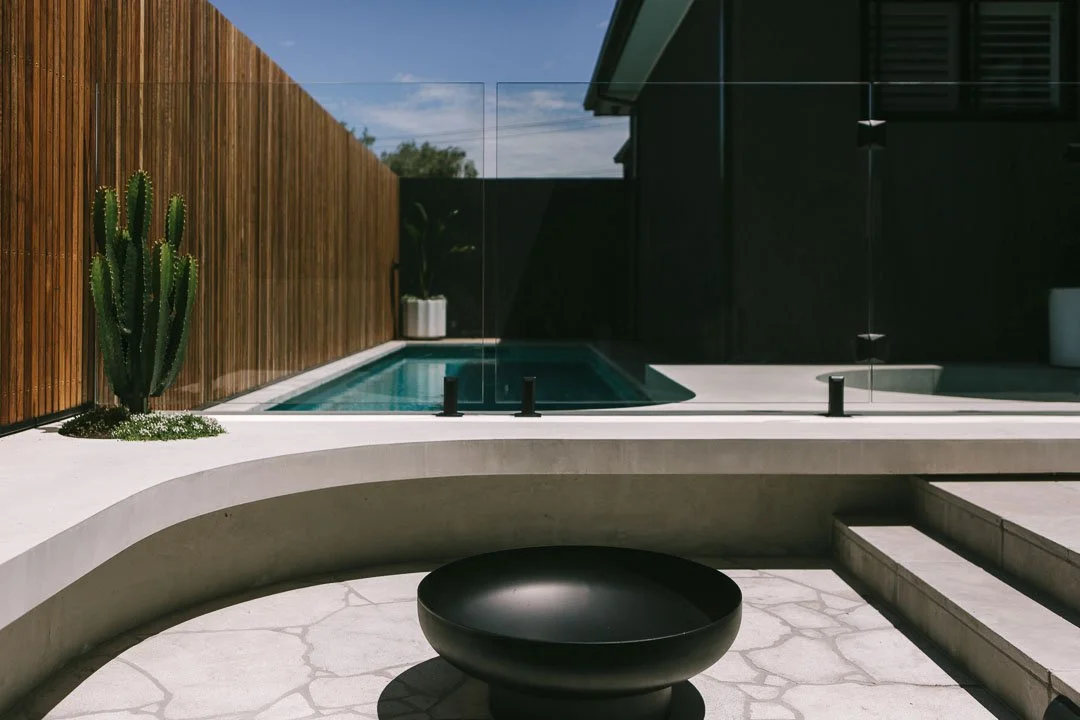
“The question I always ask is: what do you want to see from your outdoor space, and what do you want to stop seeing? Once we understand that, the plant selection becomes a design exercise, not just a horticultural one.”
WINTER WARMTH
The outdoor fireplace
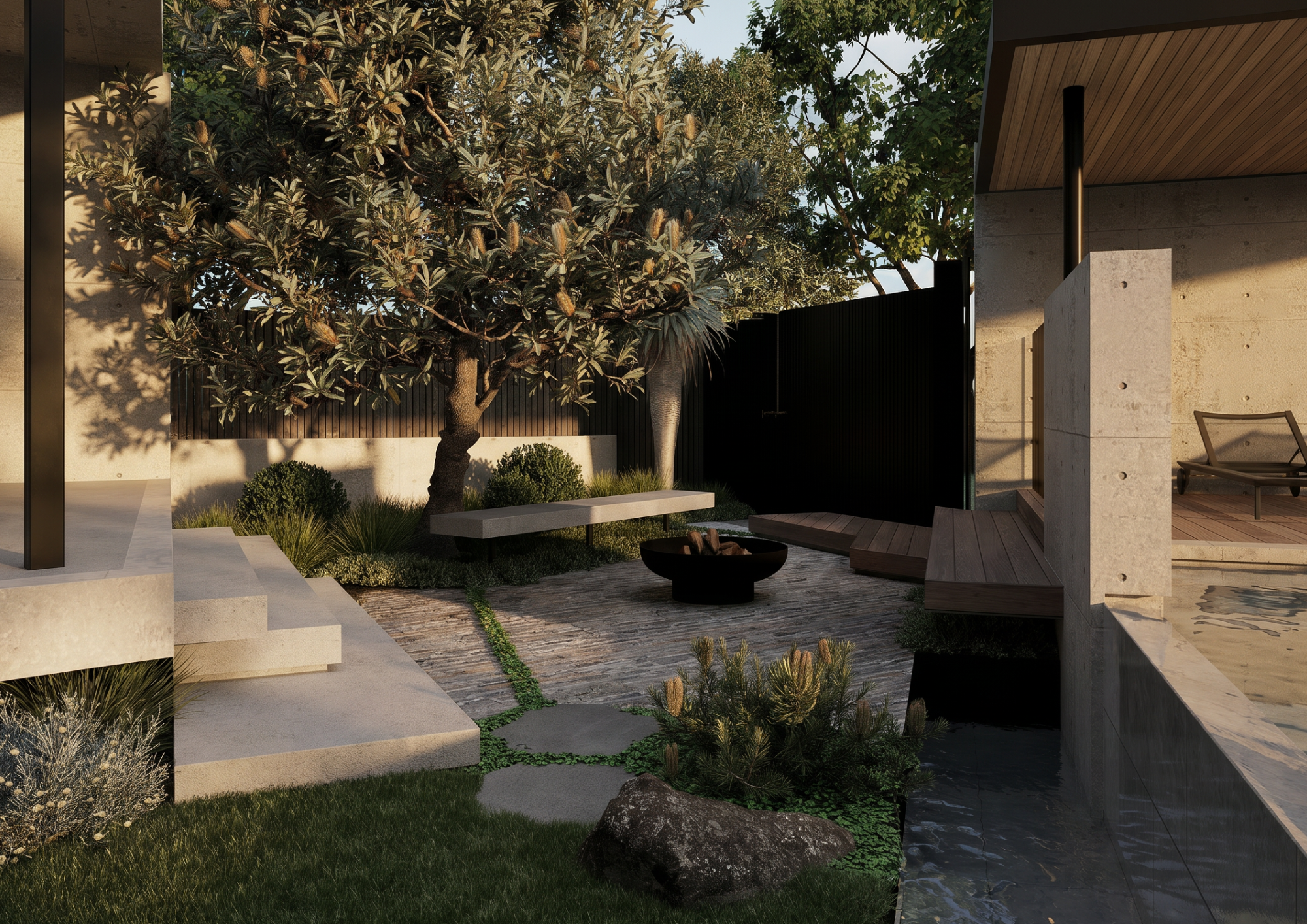
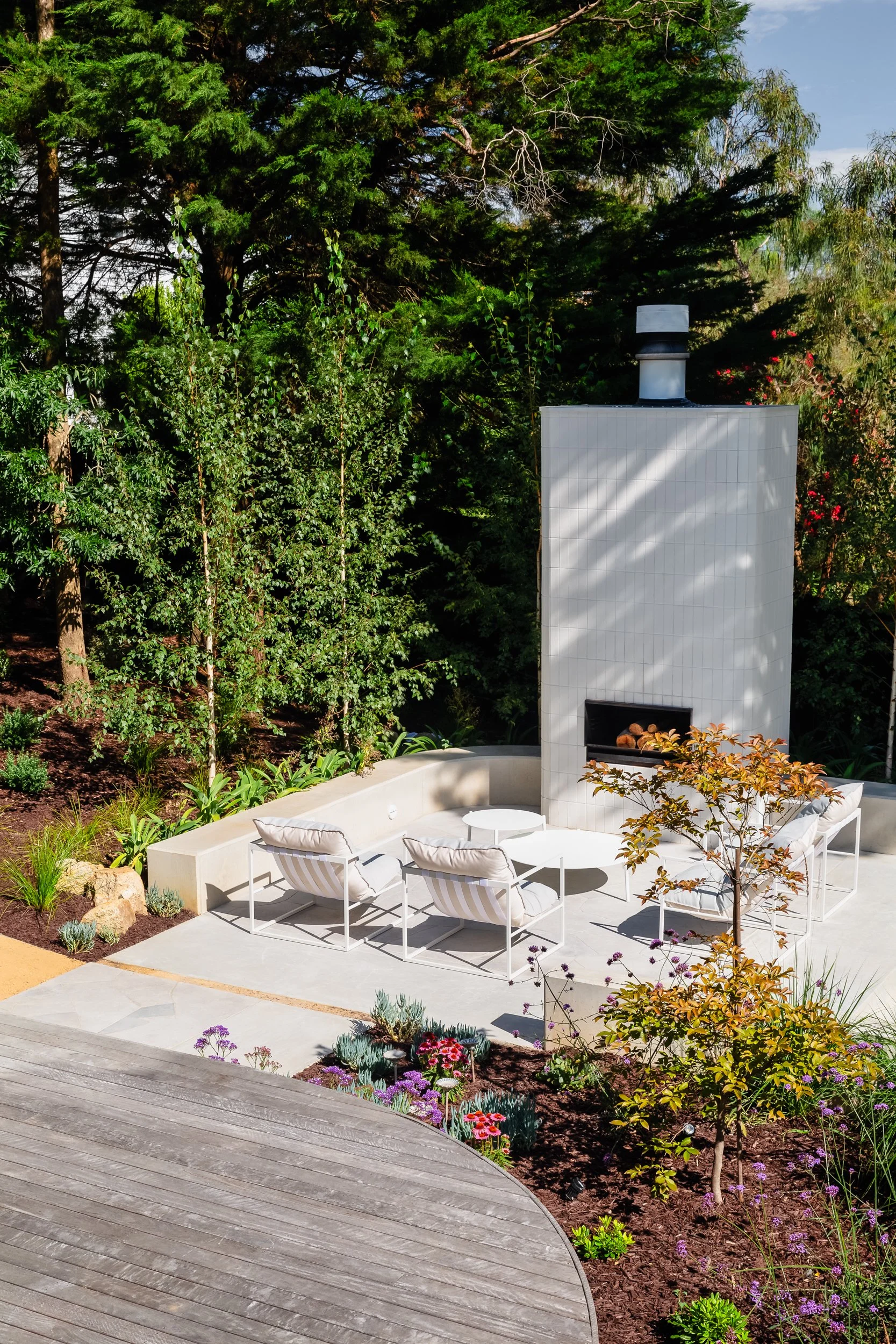
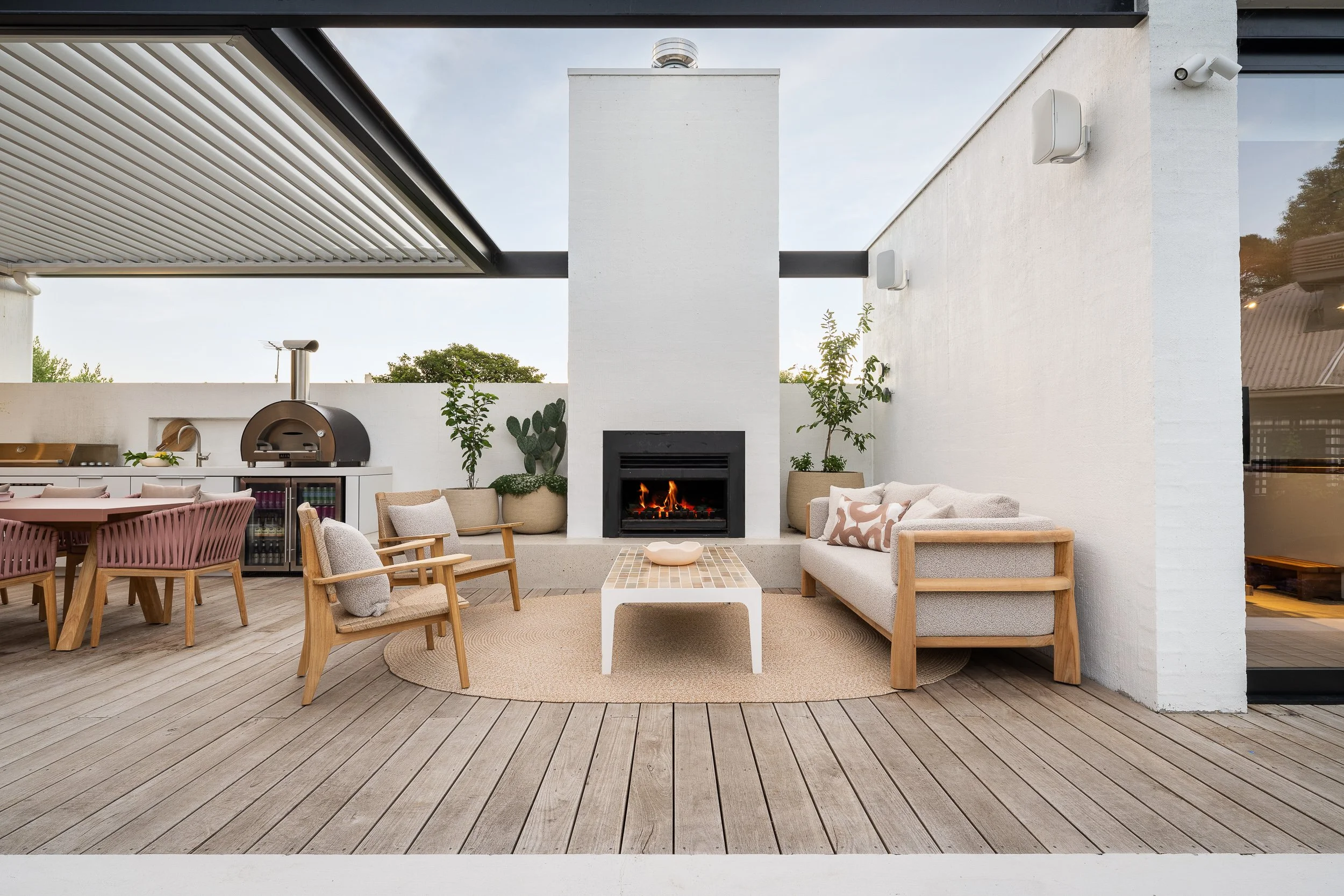
A well-designed outdoor fireplace changes the character of a garden entirely. Not a portable fire pit parked on the paving, but a considered, integrated fireplace, built in masonry or corten steel, positioned to anchor a seating area and provide warmth without smoke.
In our projects, the outdoor fireplace often becomes the heart of the alfresco space. It gives structure to an otherwise open area, creates a focal point that draws people together, and perhaps most importantly, extends the hours and months that a garden is actually used. A fireplace changes the calculus of going outside in winter from too cold to not yet.
The brief matters here. Is it purely decorative? Does it need to throw serious heat? Is it integrated with a kitchen or barbecue area? Do you want timber burning, gas, or the clean simplicity of a bioethanol flame? These decisions shape how the fireplace is positioned, detailed and specified, and they are exactly the kind of questions that benefit from being worked through in winter, without the pressure of a summer deadline.

THE DEDICATED FIREPIT
Something different from a fireplace
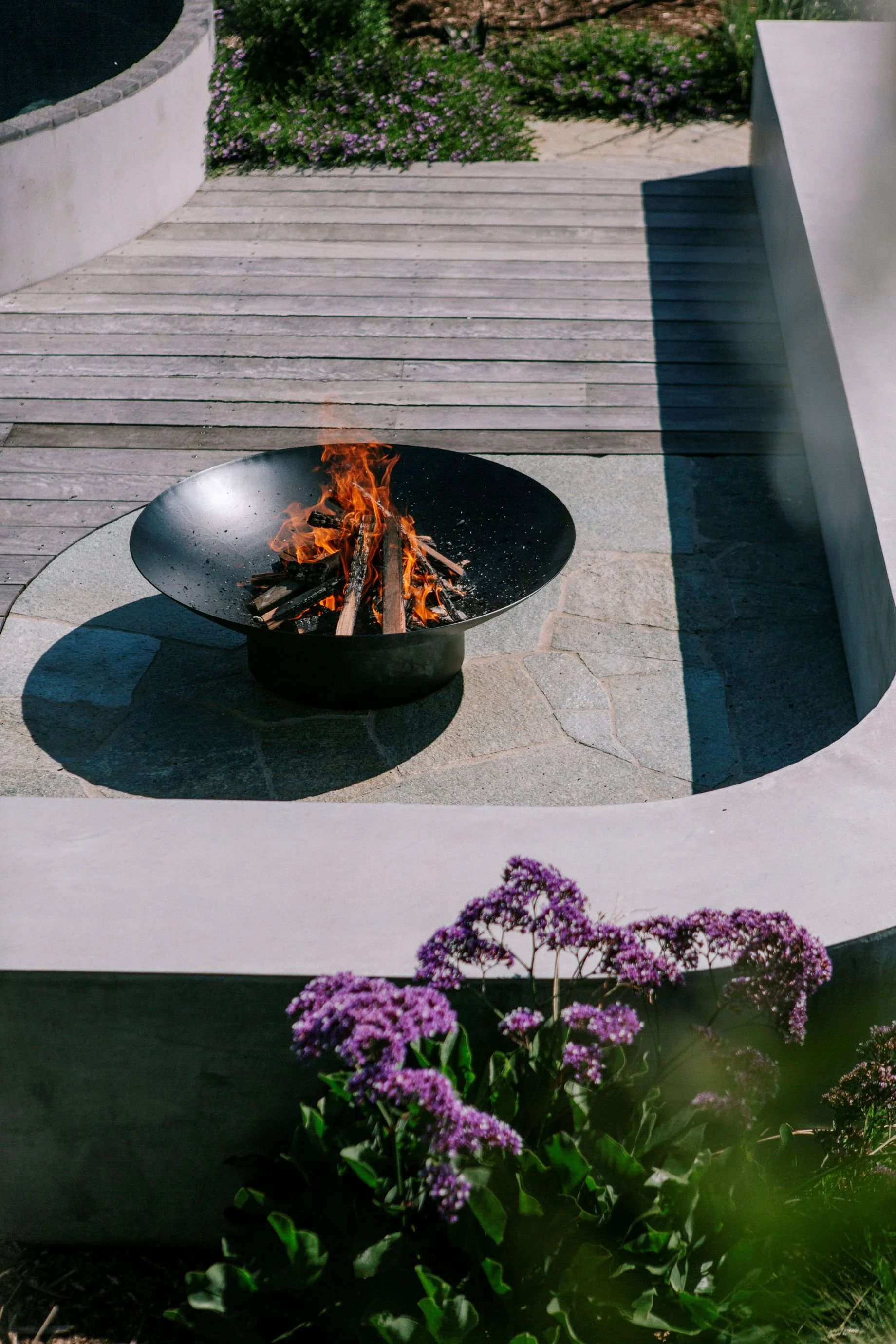
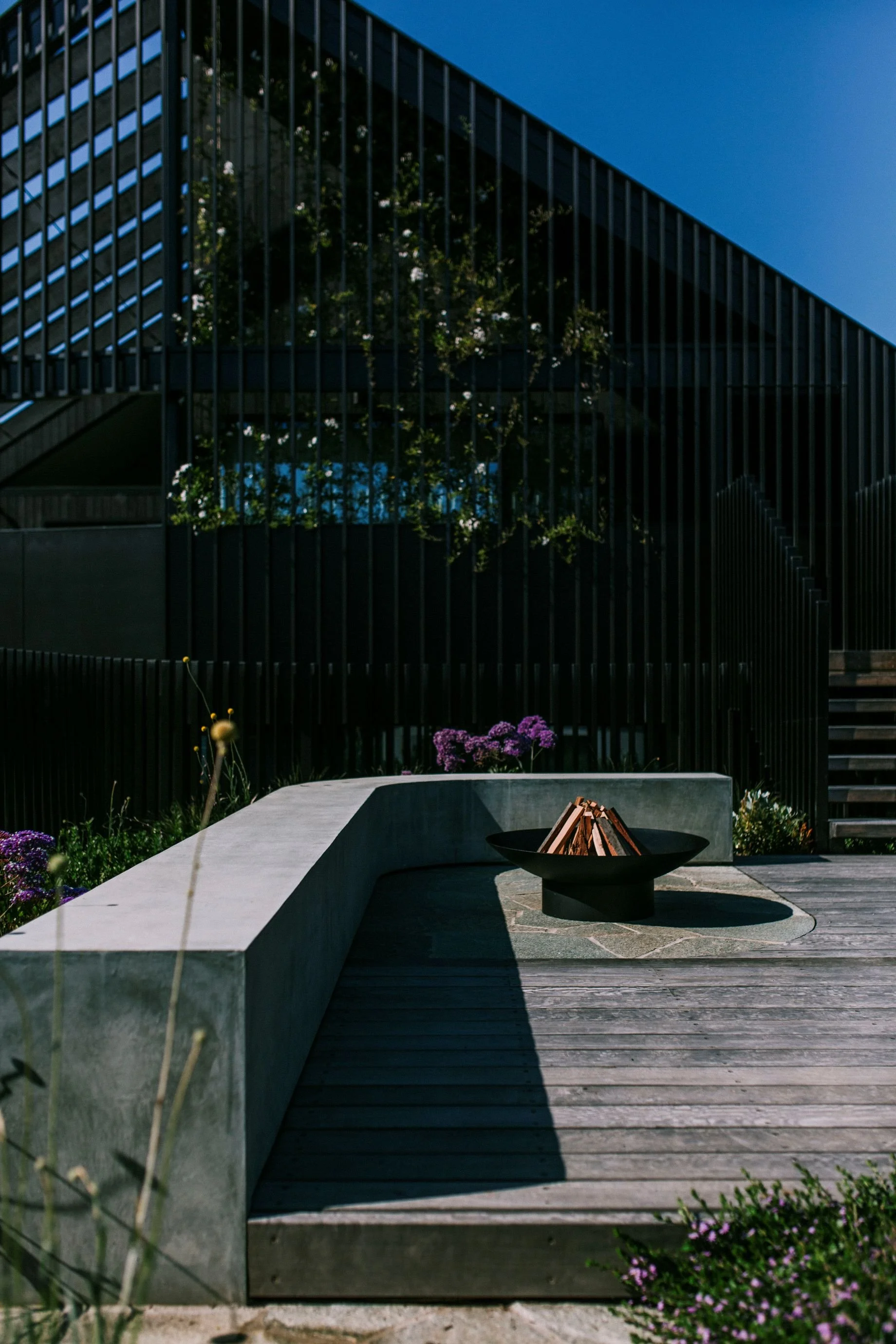
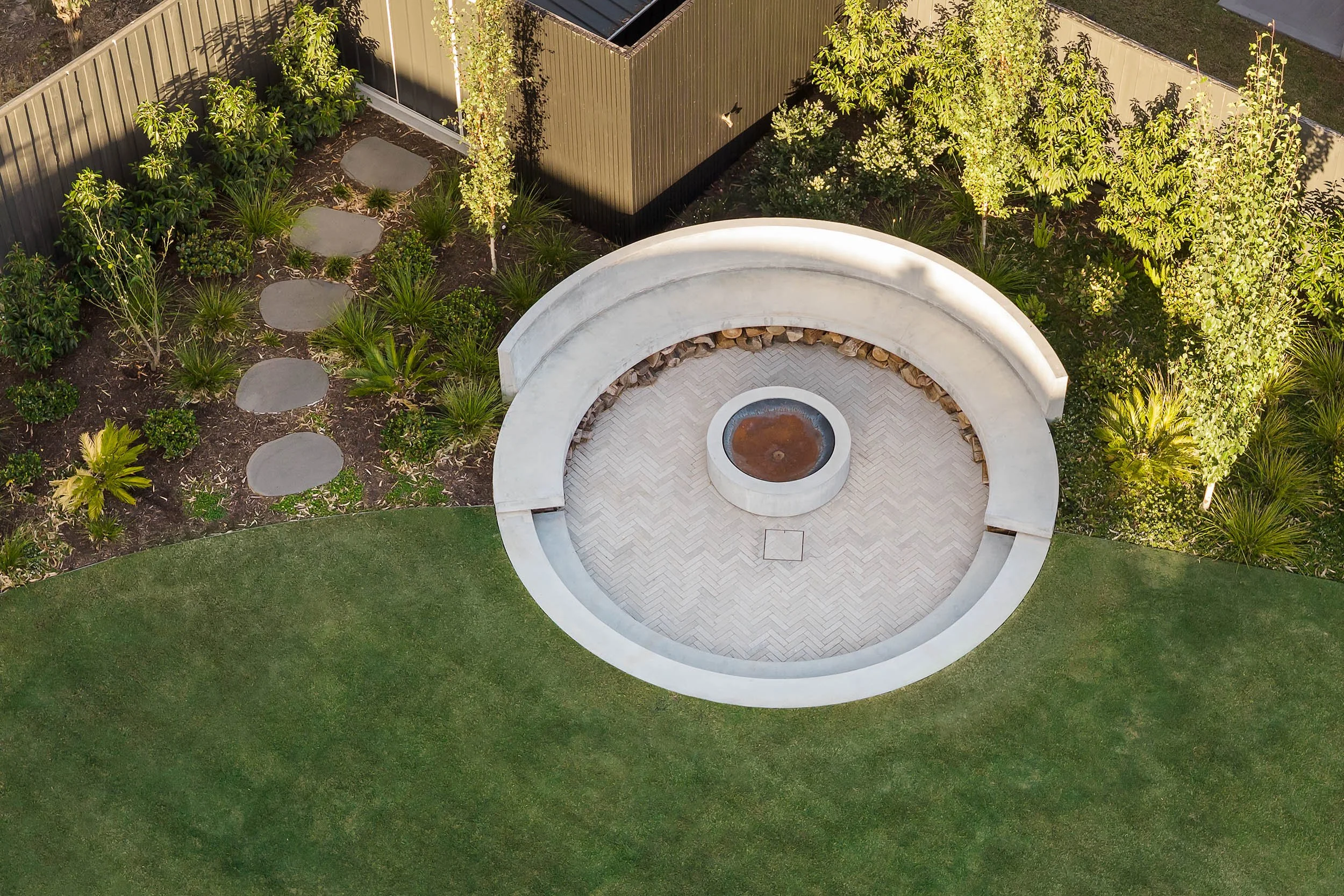
Where a fireplace is formal and architectural, a firepit area offers something more relaxed. The distinction is not just aesthetic, it's about how the space is used. A firepit invites people to pull chairs around it, to sit at the same level, to stay later than they planned. It's social in a specific way that a fireplace isn't.
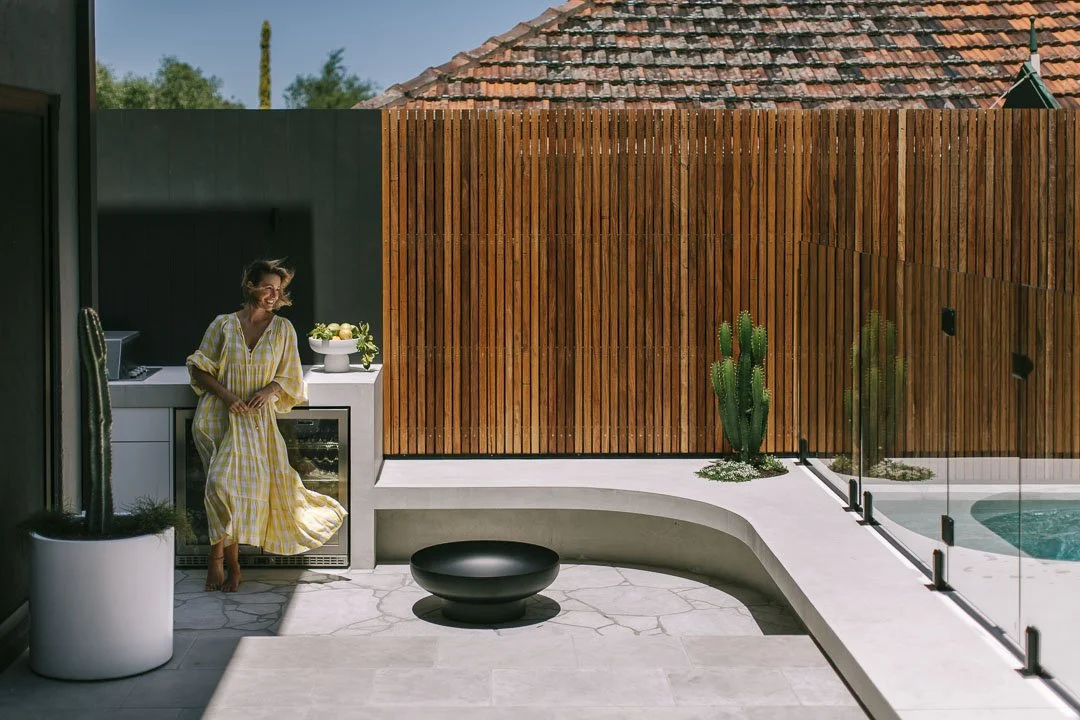
The best firepit settings we design are proper outdoor rooms: a defined area of paving, built-in seating arranged for conversation, planting that frames and encloses without blocking the warmth. The firepit itself can be a simple corten steel bowl or a bespoke concrete construction. What matters is that it is integrated rather than placed, part of the garden's design rather than a feature added to it later.

YEAR ROUND LIVING
The all-weather alfresco
Melbourne's climate will always have the last word. But a well-designed all-weather alfresco narrows the number of days when that word is no.
This is not about wrapping a pergola in café blinds. It is about designing a covered outdoor space from first principles: the right roof structure, the right aspect, the right integration with the interior, the right thermal mass in the floor and walls to hold warmth into the evening. Retractable glazing systems, outdoor heating, considered lighting and connection to an outdoor kitchen all play a role, but they work best when they are resolved as part of a single design rather than layered on incrementally.
The brief for an all-weather alfresco is also worth thinking through carefully. Is it primarily for dining? For morning coffee? For entertaining twenty people? How it connects to the interior, which room it opens from, how the threshold is handled, shapes whether it becomes a room you live in or a space you occasionally visit.

THE WELLNESS BRIEF
Spa, sauna and the outdoor room for recovery
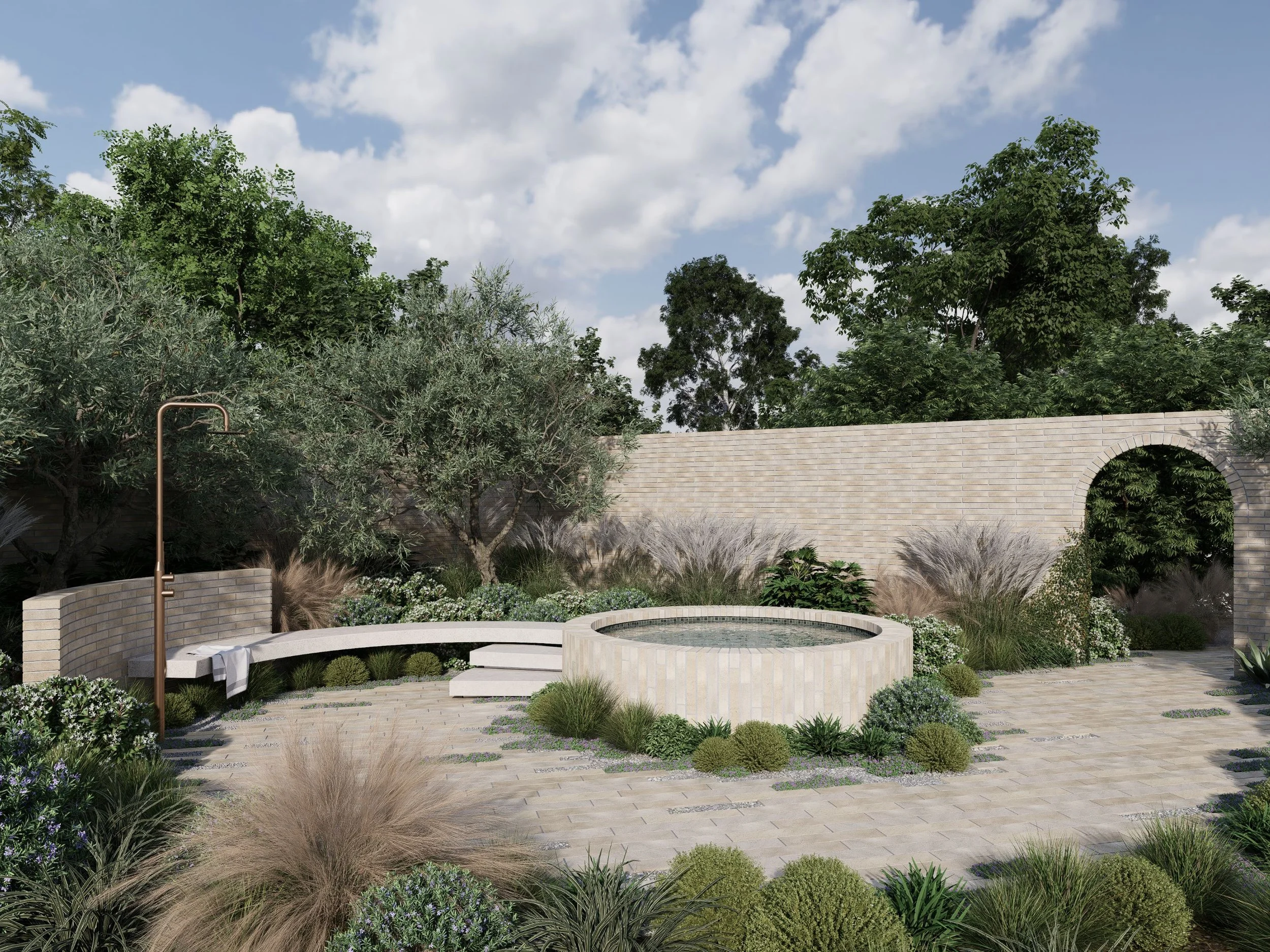
The brief for outdoor spaces has shifted meaningfully in the past few years. Pool and entertaining remain central, but alongside them, increasingly as priorities rather than afterthoughts, are wellness spaces: the outdoor spa, the garden sauna, the cold plunge. Spaces designed not for entertaining but for recovery. For stillness.
There is something about winter that makes this brief feel most alive. When you are cold and drawn indoors, the idea of stepping outside into hot water or dry heat and back again becomes genuinely compelling. The contrast is the point. And unlike a pool, a spa or sauna is usable, even pleasurable, in the depths of a Melbourne winter.
Integrating these elements requires thought. A spa positioned solely for summer use misses half its value. A sauna tucked into a corner of the garden without privacy or a clear relationship to the house rarely gets used. The wellness spaces that work best are the ones planned with the same care as the rest of the garden: positioned deliberately, detailed properly, considered as part of a complete outdoor living experience rather than added as a feature.
CONNECT DESIGN
Why winter planning produces better outcomes
The common thread through all of these is time. Not the time to build, the time to think.
When a project is designed in winter and built in spring, the brief has been properly developed. The site has been read in its most revealing season. The questions about how the space will actually be used have been asked and answered. The permit applications for pools, spas and structures have been submitted and approved. The contractor has been properly briefed. The materials have been selected with care rather than urgency.
The result is a garden that works. Not just aethetically, but practically. One that serves the way you actually live rather than the way you imagined you might, and one that does so across the full year, not just the postcard months.
This winter, the most useful thing you can do for your outdoor space is spend some time with it. Sit in it on a cold afternoon. Notice what you wish were different. Start building the brief in your head: the experiences you want, the problems you want to solve, the version of next summer you're working toward. That is where every garden we have ever designed has begun.
EXPLORE OUR WORK