The Best Screening Plants for the Modern Australian Garden
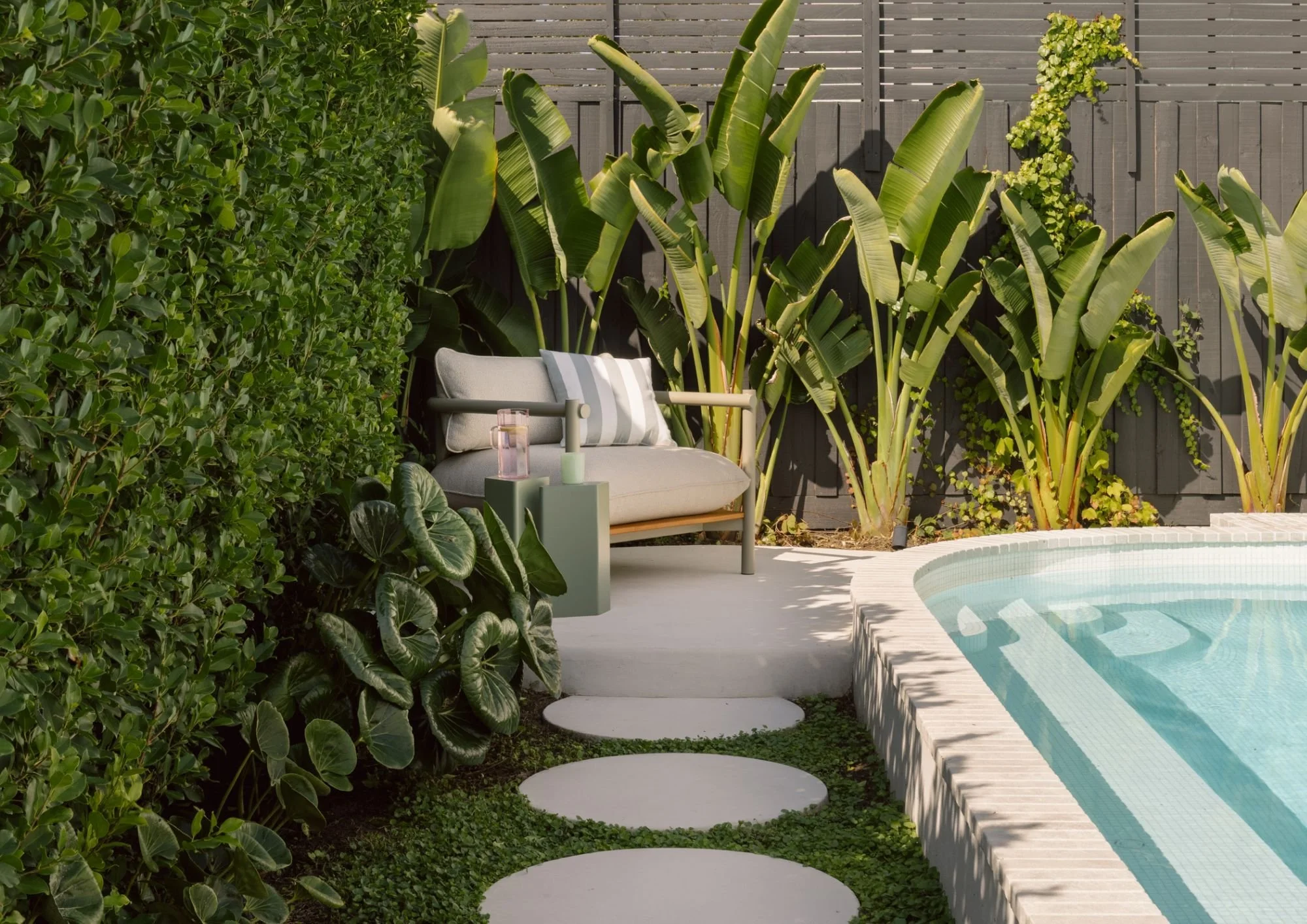
Privacy is one of the first things our clients ask for, and one of the last things they want to notice.
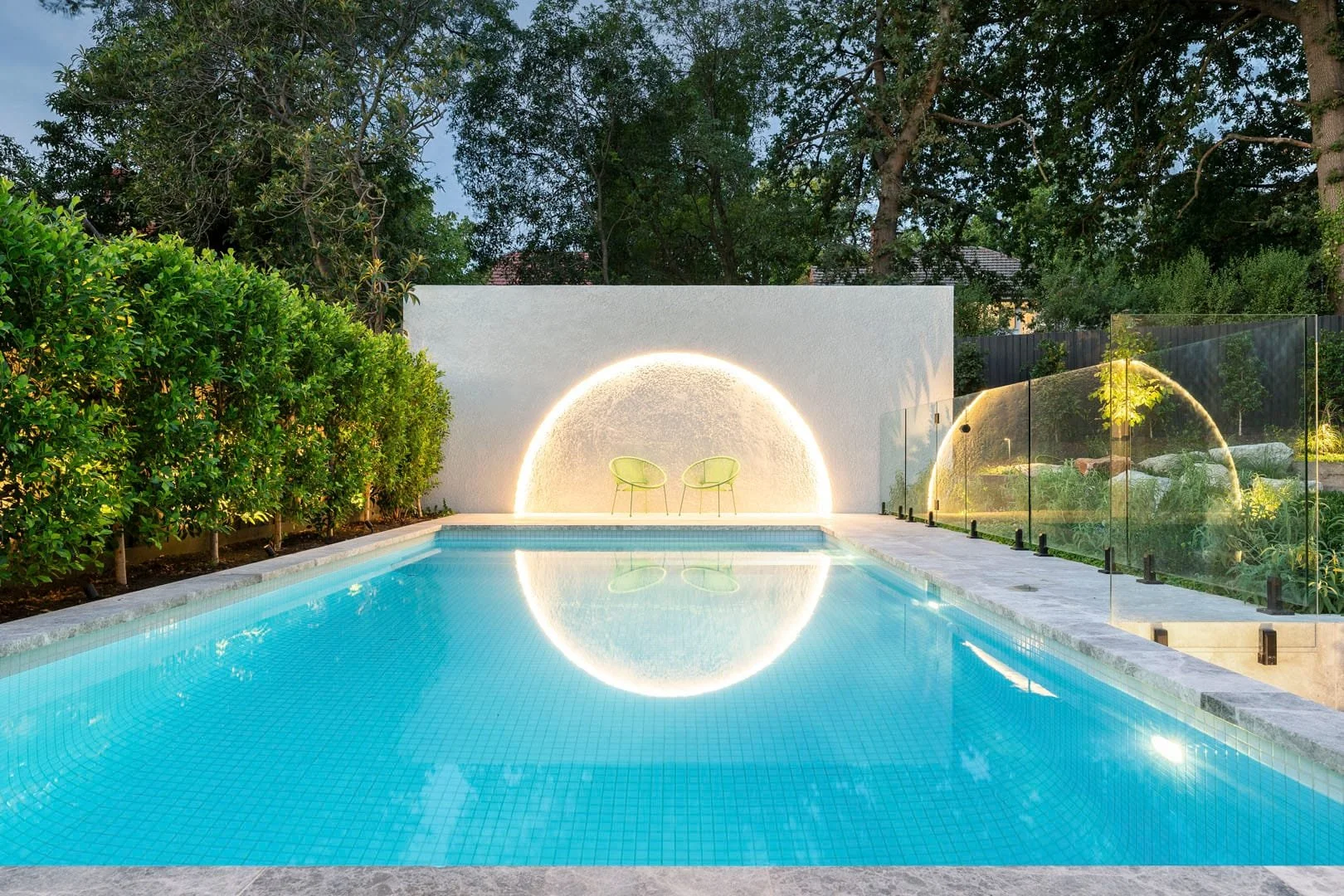
The very best screening disappears into the landscape. It doesn't announce itself as a barrier, it softens a boundary, introduces texture and layering, attracts birds, moves in the breeze, and quietly gives you the freedom to live fully in your outdoor spaces. Most importantly, screening plants are effectively the walls around your property and just like the walls in your home, add to the intimacy of your outdoor living spaces. Rather than being open to the world, they create your own private sanctuary.
Whether you're poolside, entertaining friends, or enjoying a quiet morning in the garden, the right screening plant changes everything. It brings enclosure and intimacy without any sense of being hemmed in.
People want privacy and screening from neighbouring houses and developments, but physical barriers can only do so much. Boundary fences can't exceed 1.95m without consent from neighbours and council, and achieving screening above that height through built structures alone is rarely practical or permitted. Screening hedges are often the only way to achieve privacy above 3m, and when done well, they're far more beautiful than any fence.
“Privacy planting isn’t about building a wall with greenery. It’s about creating a sense of enclosure that feels natural and considered, where the boundary is felt rather than seen.”
THE DESIGN CASE
Why planting almost always outperforms fencing
Fencing solves a functional problem. Planting solves it beautifully. A well-selected screening plant does something no paling fence ever can: it evolves with the seasons, provides habitat, moderates temperature, and introduces a living, breathing layer of beauty to the garden's perimeter.
In our practice, we rarely rely on fencing alone to deliver privacy. Instead we work with it, setting planting in front of or alongside structures to soften and extend the screen with depth. A single layer of Bamboo or Ornamental Fig can be an effective screen in a narrow space, but as garden designers we prefer to see a more layered planting that adds depth and interest to the garden.
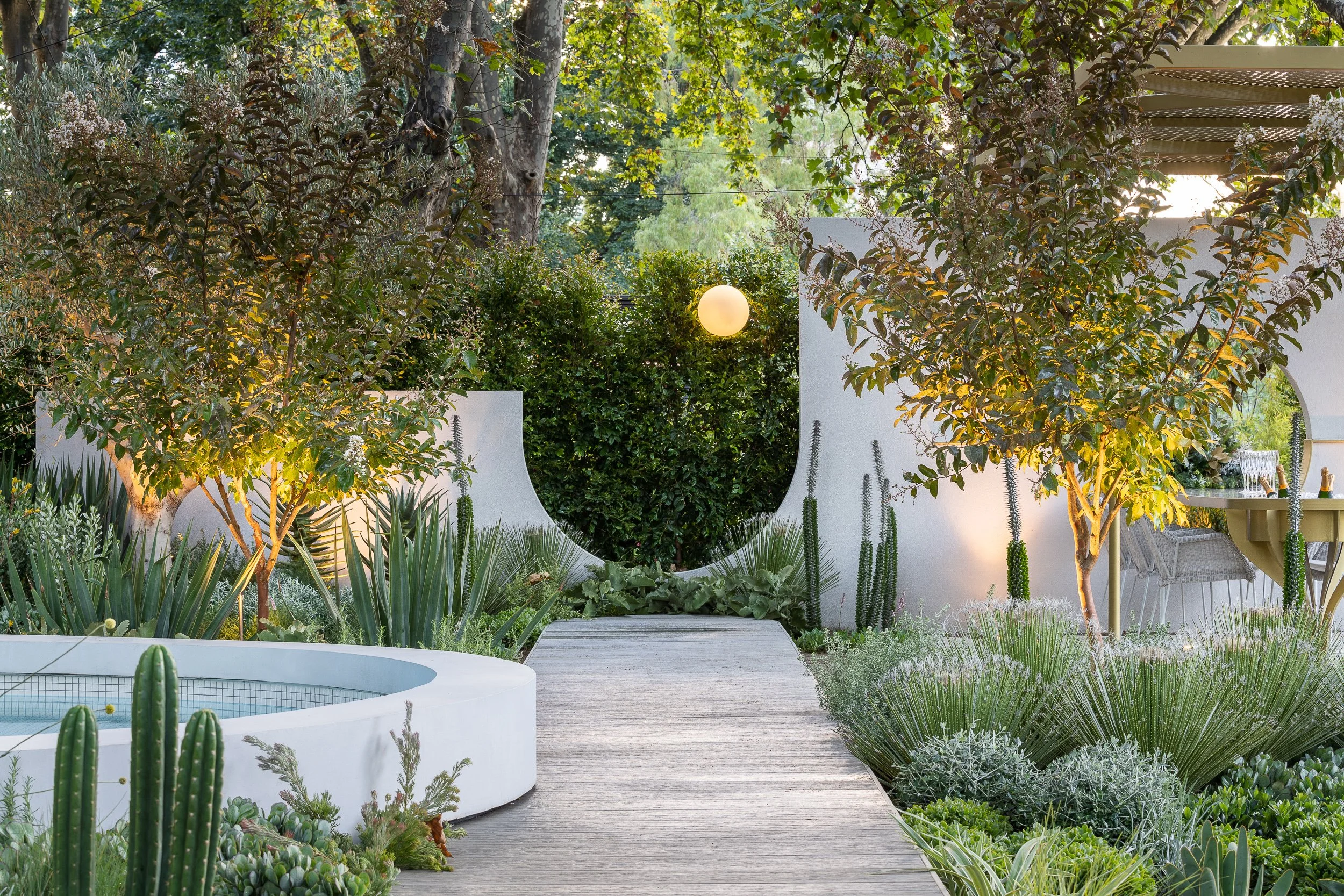
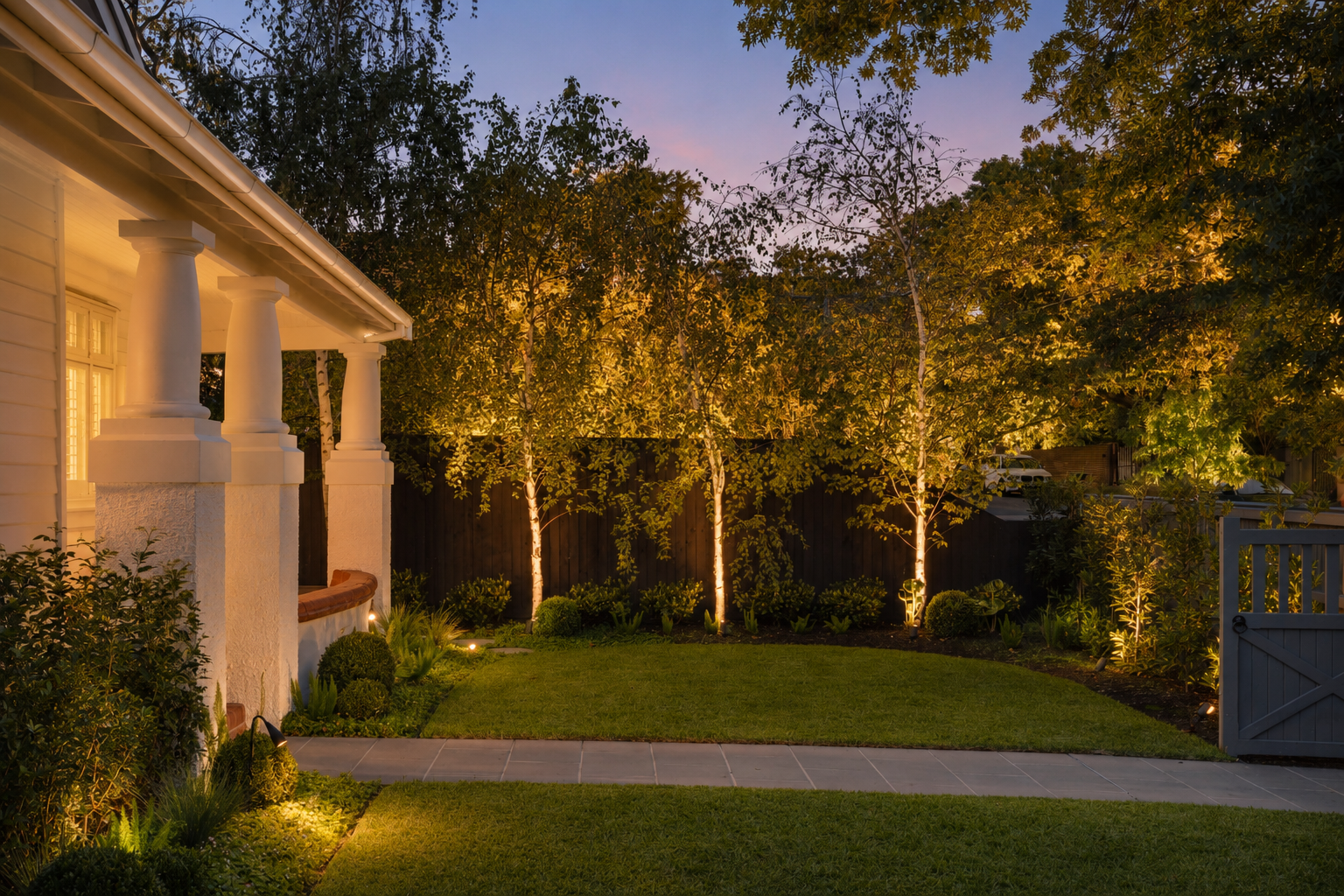
One of our favourite design features is the pleached hedge. Pleaching is like having a hedge on stilts. We strip away all the lower foliage to a certain height (anywhere from 600–1000mm), exposing the single trunks of each plant. This allows us to plant beneath the hedge, adding a layer of foliage below while maintaining the screening above. Pleaching also creates a wonderful opportunity to uplight each trunk for a striking nighttime feature.
When it comes to plant selection, we always talk to clients about the trade-off between fast and slow growing varieties. Clients often want quick screening, but a fast growing hedge can become a maintenance burden over time. We tend to favour slower growing varieties. They may not achieve your screening goals in year one, but given a little extra time you'll typically end up with a denser, more beautiful hedge that doesn't need cutting every weekend through summer.
Leaf size is also worth considering. As a general rule, the smaller and denser the leaf, the more precisely a plant can be clipped into formal geometric shapes. Fine-leafed varieties like Lilly Pilly and Ornamental Fig lend themselves beautifully to crisp, architectural hedges. Mid-sized leaves still work well in a formal context, while larger-leafed varieties, Viburnum and Magnolia, for example, are better suited to more relaxed, naturalistic screening where a softer outline is part of the appeal.
The key distinction is between planting as a screen and planting as a garden edge. When you design the boundary well, the privacy becomes incidental; a by-product of considered, beautiful landscape design rather than an afterthought bolted to the perimeter.
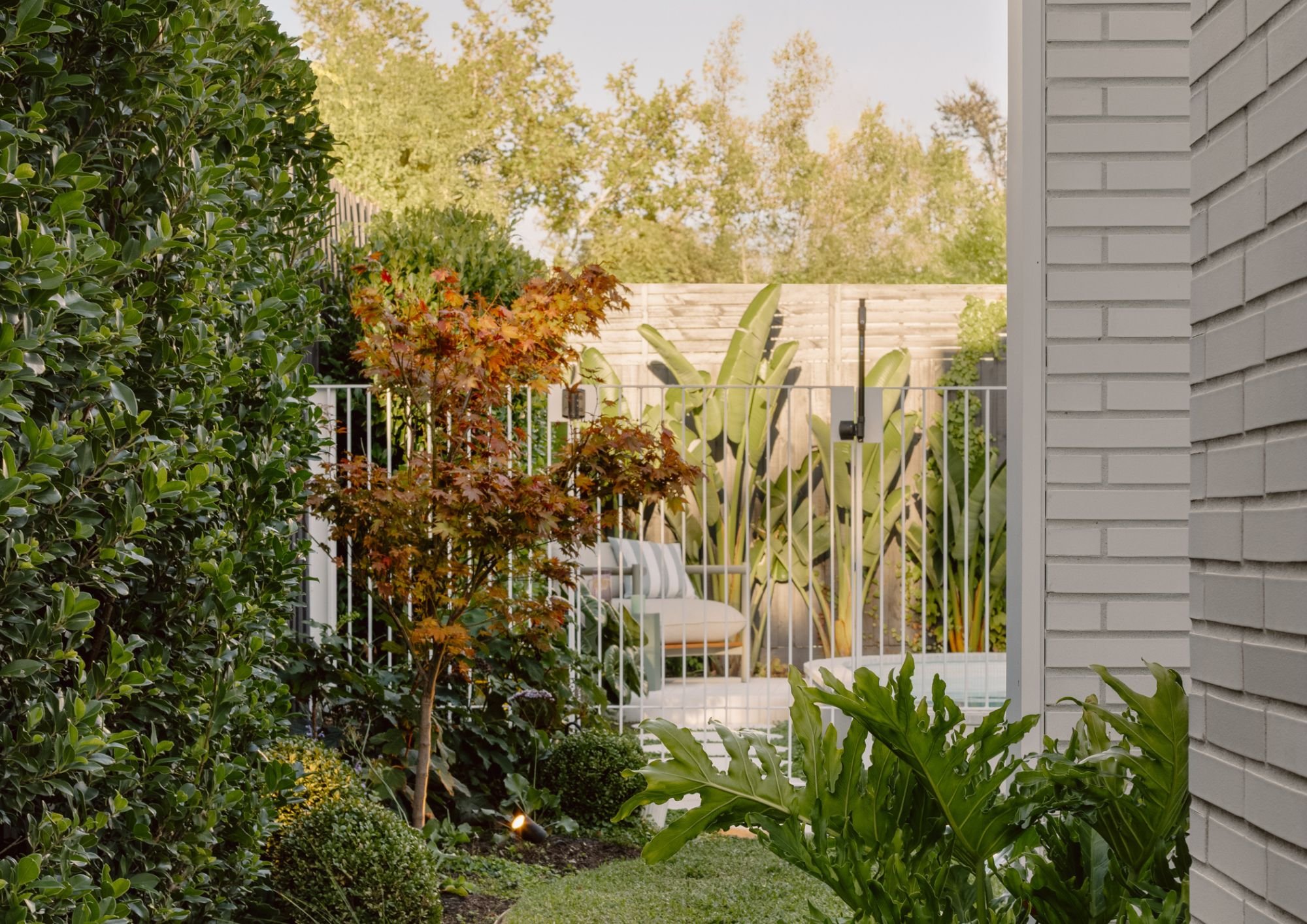
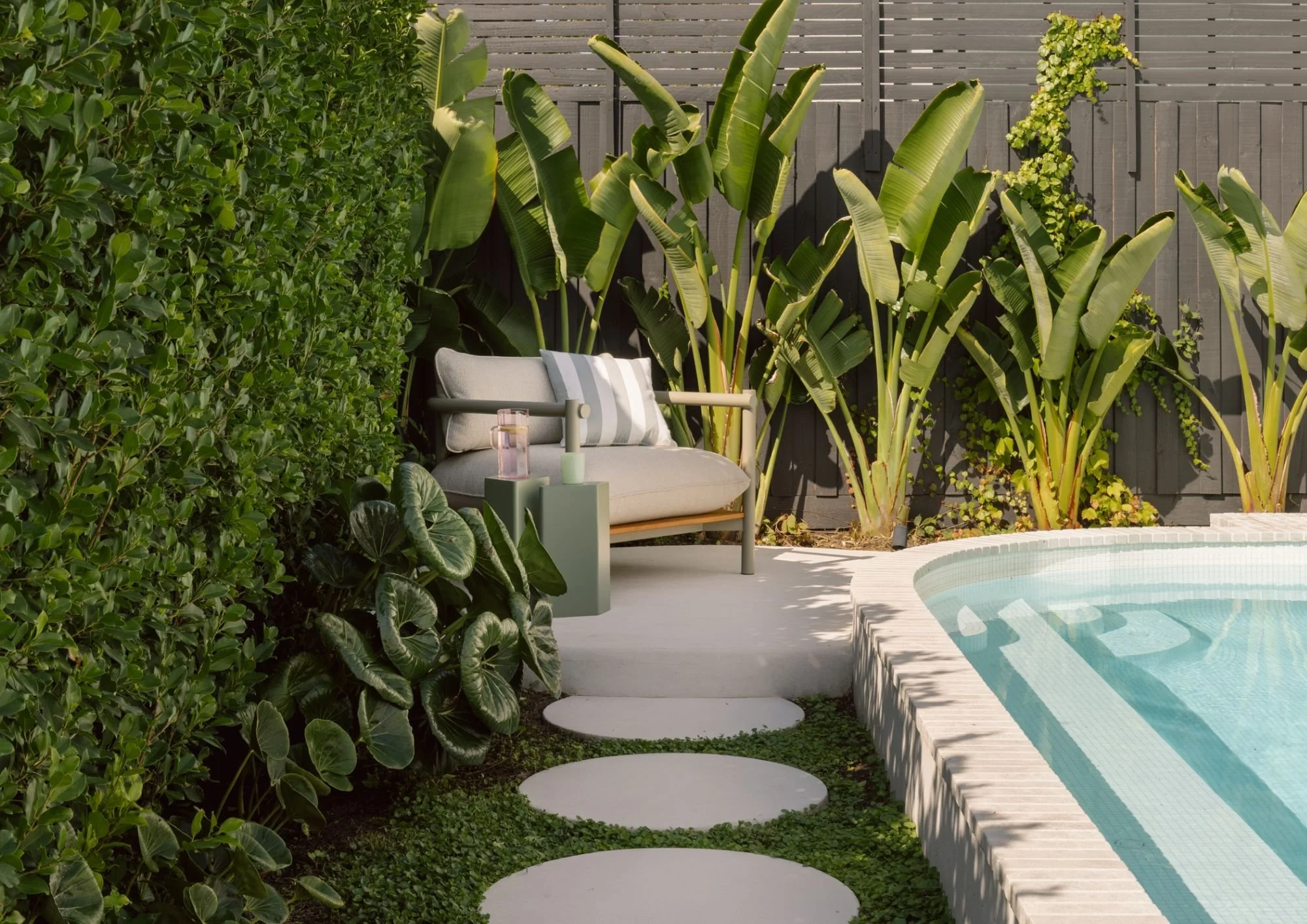
“We always look at the boundary first. Once we understand what the client needs to screen (a neighbour’s window, a street, a roofline) we can design the planting to address that specific view line. The selection flows from that conversation, not the other way around.”
OUR PLANT PALETTE
Nine screening plants we specify again and again
These are the varieties that have proven themselves across Mint projects, selected for their reliability in Australian conditions, their design versatility, and their capacity to create beautiful, liveable garden boundaries.
Lilly Pilly
Syzygium australe & varietiesAustralia's most reliable screening plant for good reason. Lilly Pillies offer fast, dense growth, vibrant new red foliage, and edible pink-red berries. Varieties like 'Resilience' and 'Straight and Narrow' resist psyllid damage. Many newer cultivars are bred tall, narrow and dense — perfect for smaller spaces. Our favourite is Syzygium 'Backyard Bliss'.
Ornamental Fig
Ficus hilliiThe king of hedging plants. Evergreen, drops almost no leaves, produces no significant flowers or fruit, and forms an incredibly dense dark green habit that clips beautifully. The only drawback is its appetite for regular pruning — it needs consistent attention through the growing months to stay compact and at its best.
Clumping Bamboo
Bambusa textilis 'Gracilis'The go-to for quick, high screening. Gracilis grows tall and slender without spreading — unlike running varieties — and delivers an immediately lush, architectural result. The whispering movement of its canes in a breeze adds an almost meditative quality. One caveat: bamboo drops leaves year round, so factor that into your maintenance expectations.
Orange Jessamine
Murraya paniculataA hugely useful native shrub and the hedge of choice throughout much of coastal Australia. The flowers are profuse and carry a wonderful fragrance reminiscent of gardenias. Dense, easily kept compact, and growing to around 3m at maturity — though older specimens can reach 5m. Slow growing, which is ultimately a virtue.
Sweet Viburnum
Viburnum odoratissimum 'Emerald Lustre'Fast-growing and incredibly versatile. Sweet Viburnum delivers a dense, light green screen with large lustrous leaves and fragrant white flower clusters in late spring. Our go-to for a more relaxed hedge in a lush planting scheme. The larger leaf means it won't give a razor-sharp formal edge, but in informal or naturalistic gardens it's outstanding.
Photinia
Photinia × fraseri 'Red Robin'The fiery red new growth gives Photinia a genuinely striking quality that few screening plants can match. As a clipped hedge it delivers a dense, year-round screen with a burst of vivid colour each time new growth emerges. Works beautifully alongside warm materials — timber, stone, render.
Blueberry Ash
Elaeocarpus reticulatus & E. eumundiiA quality Australian shrub that comes into its own where a tall screen is required. E. reticulatus has a smaller leaf and performs well across Victoria; its larger-leafed cousin E. eumundii has also proven successful in cooler climates. Both are elegant, underused and worth knowing.
Bay Tree
Laurus nobilisConsistently underestimated and one of our favourites. Bay is remarkably tough, slow growing, and produces a lovely dense habit in almost any condition except deep shade. Suits formal applications beautifully and will fill the neighbourhood with its incredible scent when pruned. A genuinely long-term investment in the garden.
Magnolia 'Little Gem'
Magnolia grandiflora 'Little Gem'Where height and architectural form are needed, 'Little Gem' delivers. Large, glossy evergreen leaves with bronze undersides create a rich year-round screen, complemented by spectacularly fragrant white blooms from summer into autumn. A strong performer in coastal areas. Where more height is required, M. 'Alta' is a variety we also love.
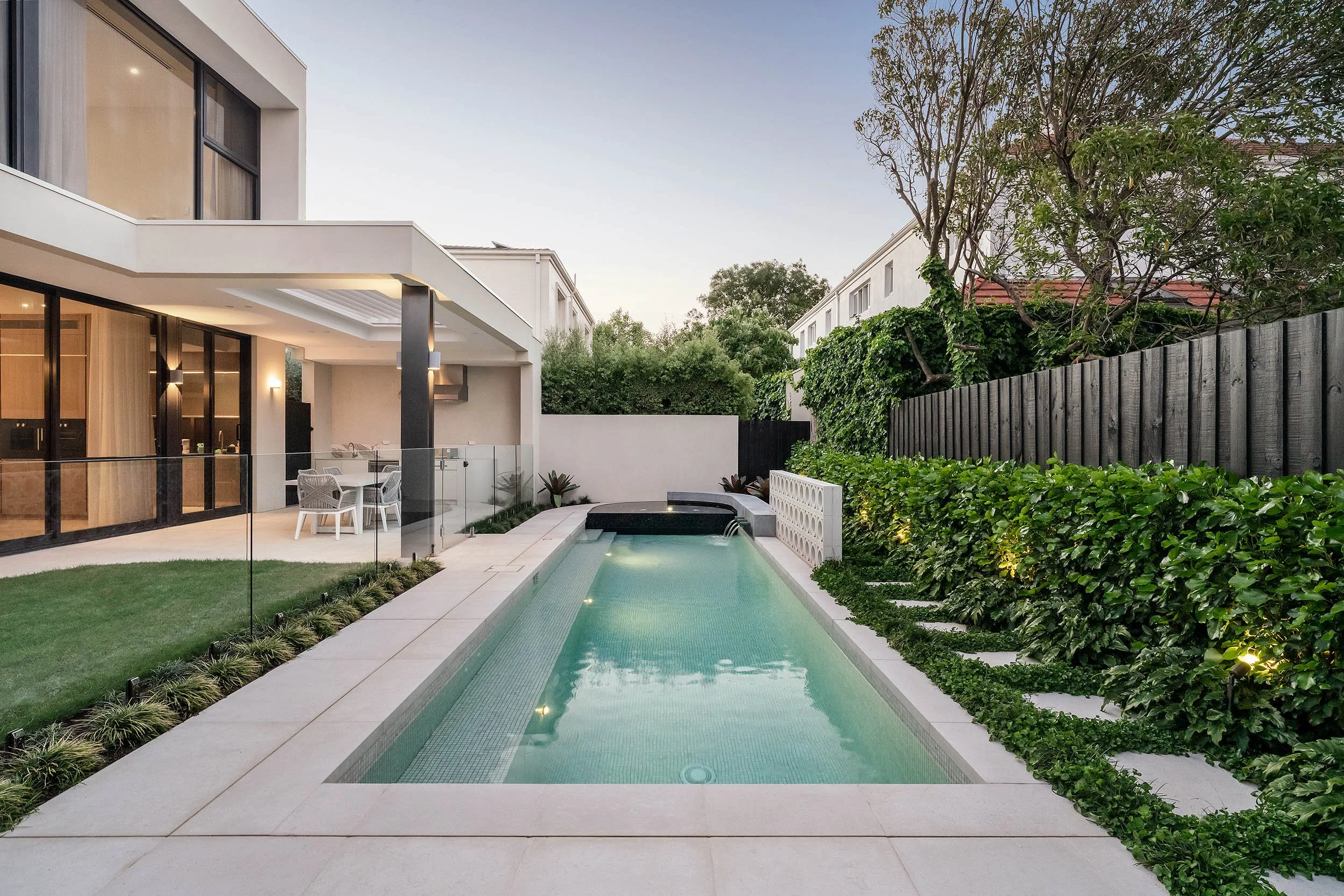
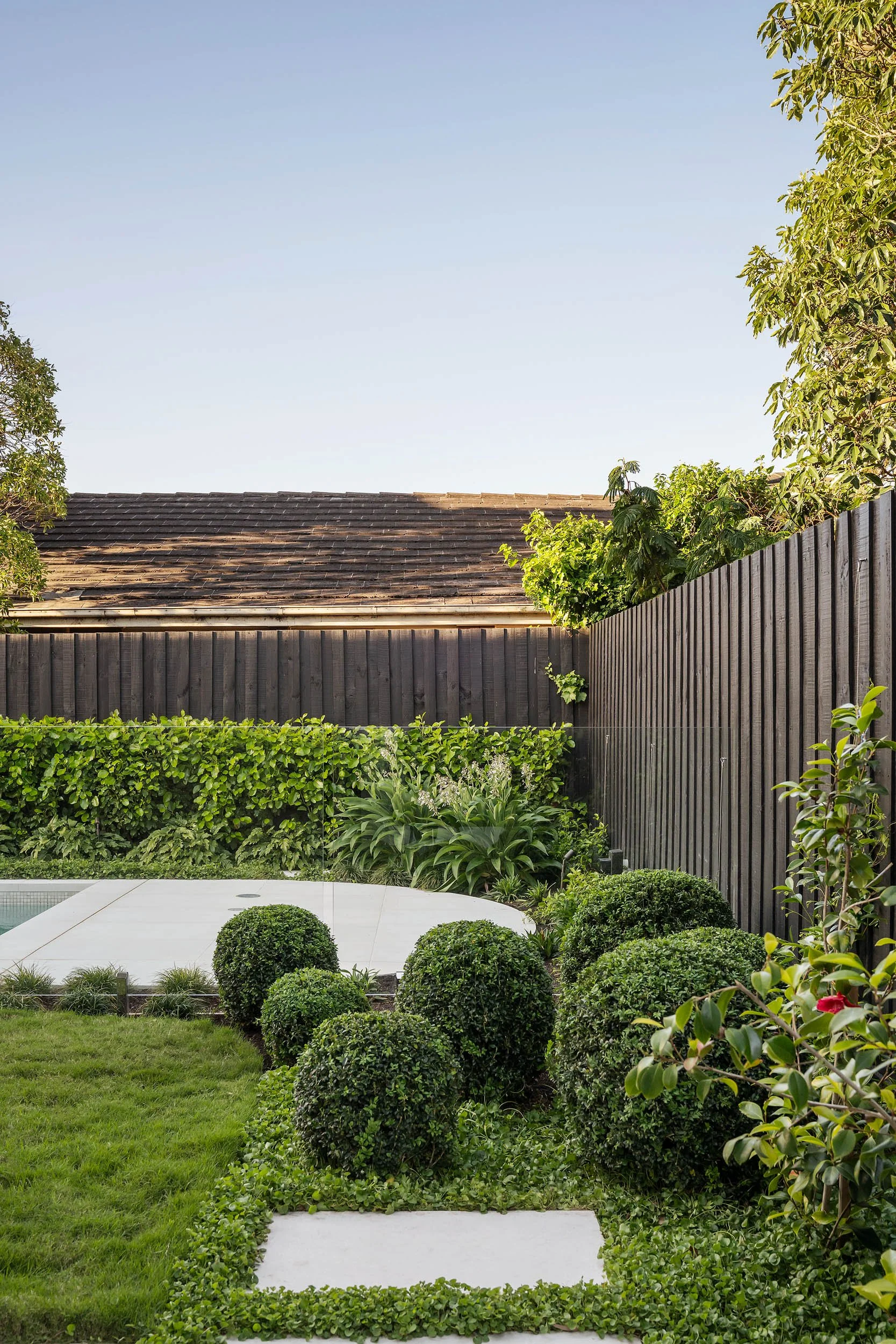
“The question I always ask is: what do you want to see from your outdoor space, and what do you want to stop seeing? Once we understand that, the plant selection becomes a design exercise, not just a horticultural one.”
DESIGN STRATEGY
The Layering Principle
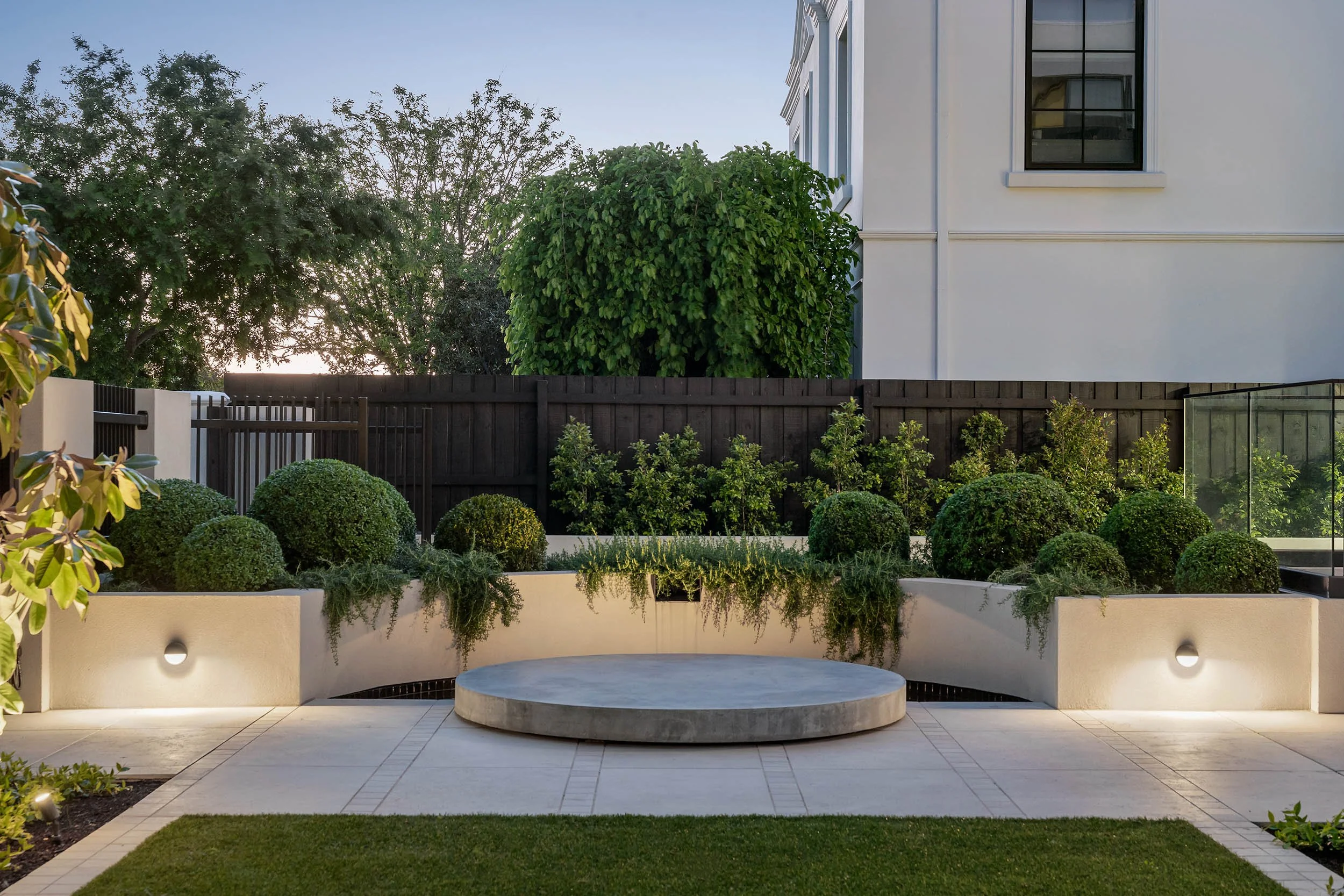
The most successful privacy plantings we create are never a single row of the same plant. They are ecosystems, layered compositions with a canopy, mid-storey and ground plane, each element playing a distinct role in creating depth, texture and enclosure.
In a typical Mint planting scheme, the boundary layer begins with a structural canopy element, often a Lilly Pilly, Ficus hillii or Magnolia 'Little Gem'. Below this, we introduce a dense mid-storey planting, and at ground level, Lomandra, Dianella, or bold foliage plants fill in the base to ensure there are no visual gaps at eye level. The result is a screen that works across multiple heights simultaneously, creating a garden boundary with genuine visual depth.
One of our favourite expressions of the layering principle is beneath a pleached hedge, where the exposed trunks create a beautiful opportunity for shade-tolerant ground planting. A layer of soft textural plants sitting below a crisp formal screen above. It's a combination we return to again and again, and one we'll explore in much more depth in an upcoming dedicated post on pleaching.
“A single hedge does one job. A layered planting does five. It screens, it softens, it creates habitat, it frames your views into the garden, and it ensures that what you see from inside your home is something beautiful, not just a fence.”
BEFORE YOU PLANT
Six things to consider
Know your view lines first
Stand in every key space (your outdoor dining area, pool edge, kitchen window) and identify exactly where you need coverage. This determines planting heights and positioning far more precisely than guesswork from a plan.
Match the plant to the site
A coastal garden and an inner-city garden need fundamentally different screening plants. Wind tolerance, salt exposure, soil type and available moisture all shape what will thrive. Get the species match right from the outset.
Design for establishment
Even fast-growing screens take time. Buy the largest stock your budget allows for the screening plant, and fill in with smaller plants in front of it. If immediate screening on the boundary is required, you can use a woven lattice fence extension of the top of your paling fence - this will give you an additional 600-900mm in height.
Layer, always
A single-species hedge is visually monotonous. Build three layers where space allows. Even in a 60cm-deep garden bed, you can achieve canopy, mid-storey and ground plane with careful selection.
Maintain with intention
Clipped formal hedges of slow growing varieties can require as little as twice-yearly maintenance to stay crisp. Fast growing varieties may need shaping up to 8-10 times per year depending on the growing conditions so factor ongoing care into your selection. A high-maintenance hedge such as Ficus hillii requires real, sometimes professional commitment, whereas Lilly Pilly varieties or Bay will largely stay compact and require just a gentle, irregular tidy up.
Frame what you love
Screening is as much about curating views as blocking them. A well-positioned planting scheme should frame the sky, borrow views from a neighbouring tree, and ensure every sightline from inside your home lands on something worth looking at.
See more of norsuHOME
BY SETTING
Screening by setting
Different Australian gardens demand different approaches. Here's how we think about screening across the environments where we most commonly work.
Inner-urban gardens
Compact lots · courtyard gardens- Bambusa 'Gracilis' — columnar, contained, fast
- Viburnum odoratissimum — fast, lush foliage, informal
- Magnolia 'Little Gem' — compact, glossy and lush leaves, slow
- Ficus pumila — self-climbing evergreen climber, great for screening ugly walls and fences
Coastal gardens
Peninsula · Surf Coast · Bellarine- Adenanthos sericeus — tall, soft silver foliage, fast
- Laurus nobilis — tough, fragrant, formal
- Olea europaea — silver foliage, incredibly hardy
- Banksia 'Sentinel' — native, wind-hardy canopy
- Magnolia 'Little Gem' — vertical, narrow footprint
- Callistemon spp. — wildlife value, extremely tough, stunning floral display
Acreage & rural
Large blocks · rural properties- Syzygium varieties ('Resilience' & 'Backyard Bliss') — fast, reliable, dense
- Callistemon spp. — wildlife value, extremely tough, stunning floral display
- Photinia 'Red Robin' — bold Spring colour, dense form
- Cupressocyparis leylandii 'Leighton Green' — dense, formal, fast
- Feijoa sellowiana — tough, slow, edible
Pool & entertaining
Year-round outdoor living zones- Bambusa 'Gracilis' — tall and narrow
- Syzygium varieties ('Resilience' & 'Backyard Bliss') — fast, reliable, dense
- Laurus nobilis — tough, fragrant, formal
- Ficus hillii — compact, fast, dense and tall
Pool compliance regulations must be considered when selecting screening plants to be planted along boundary fences in pool areas.
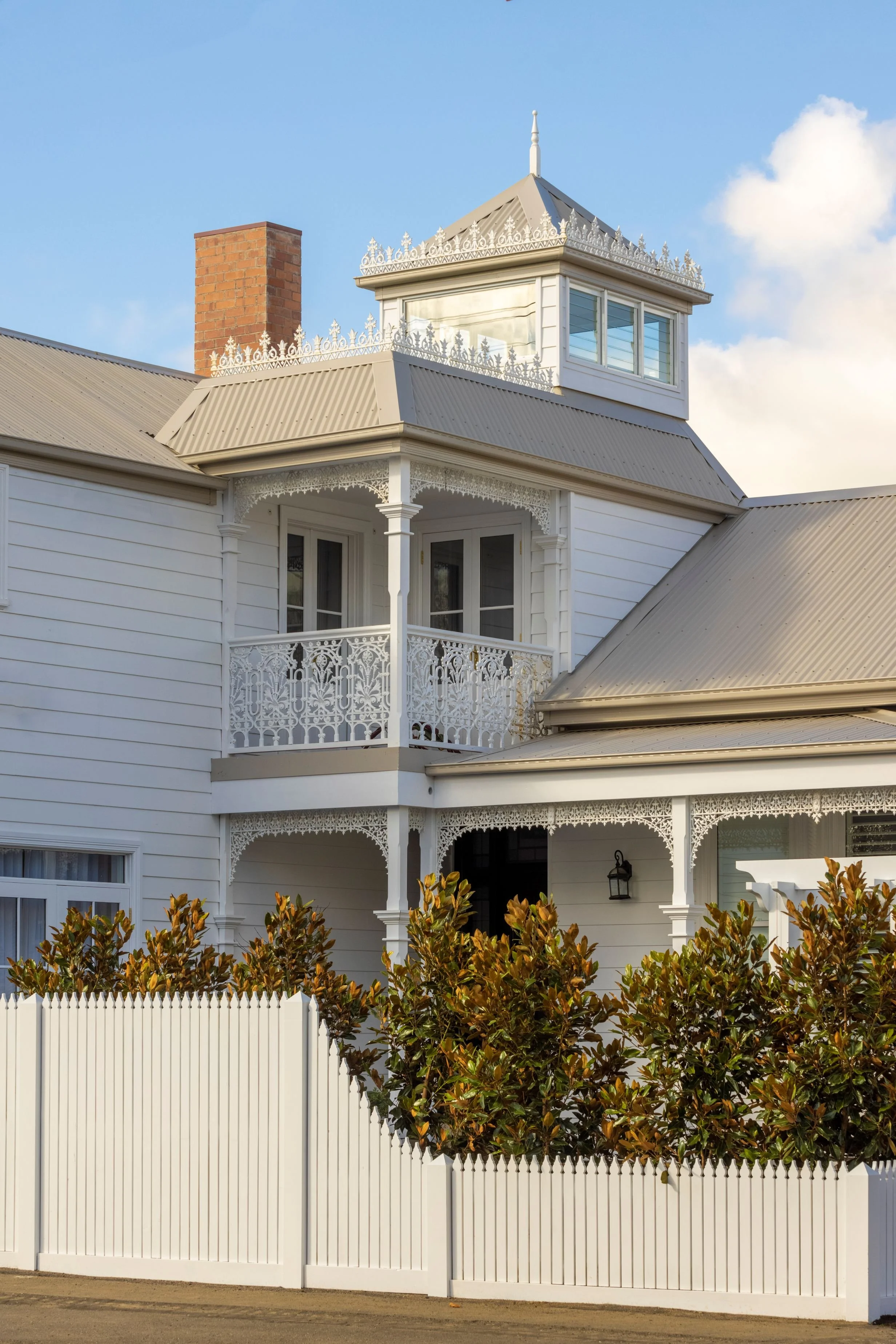
Explore more of Shaynna Blaze’s Garden
“The goal is always for the garden to feel like it belongs to the home and to its surroundings. When screening planting is done well, it doesn’t feel like it was installed for privacy. It feels like it was always there.”
EXPLORE OUR WORK