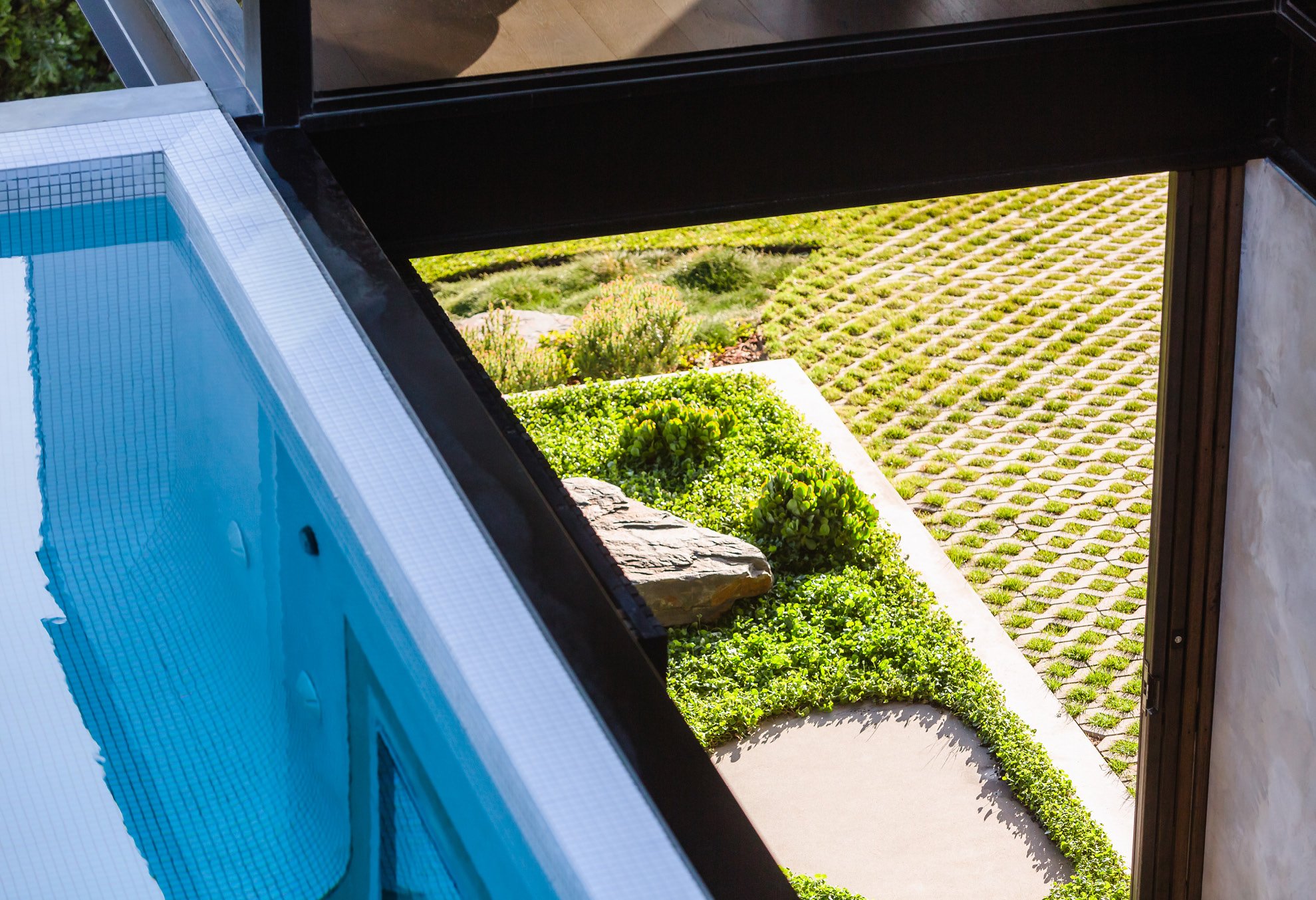
Grass Paving for Driveways: Everything You Need to Know
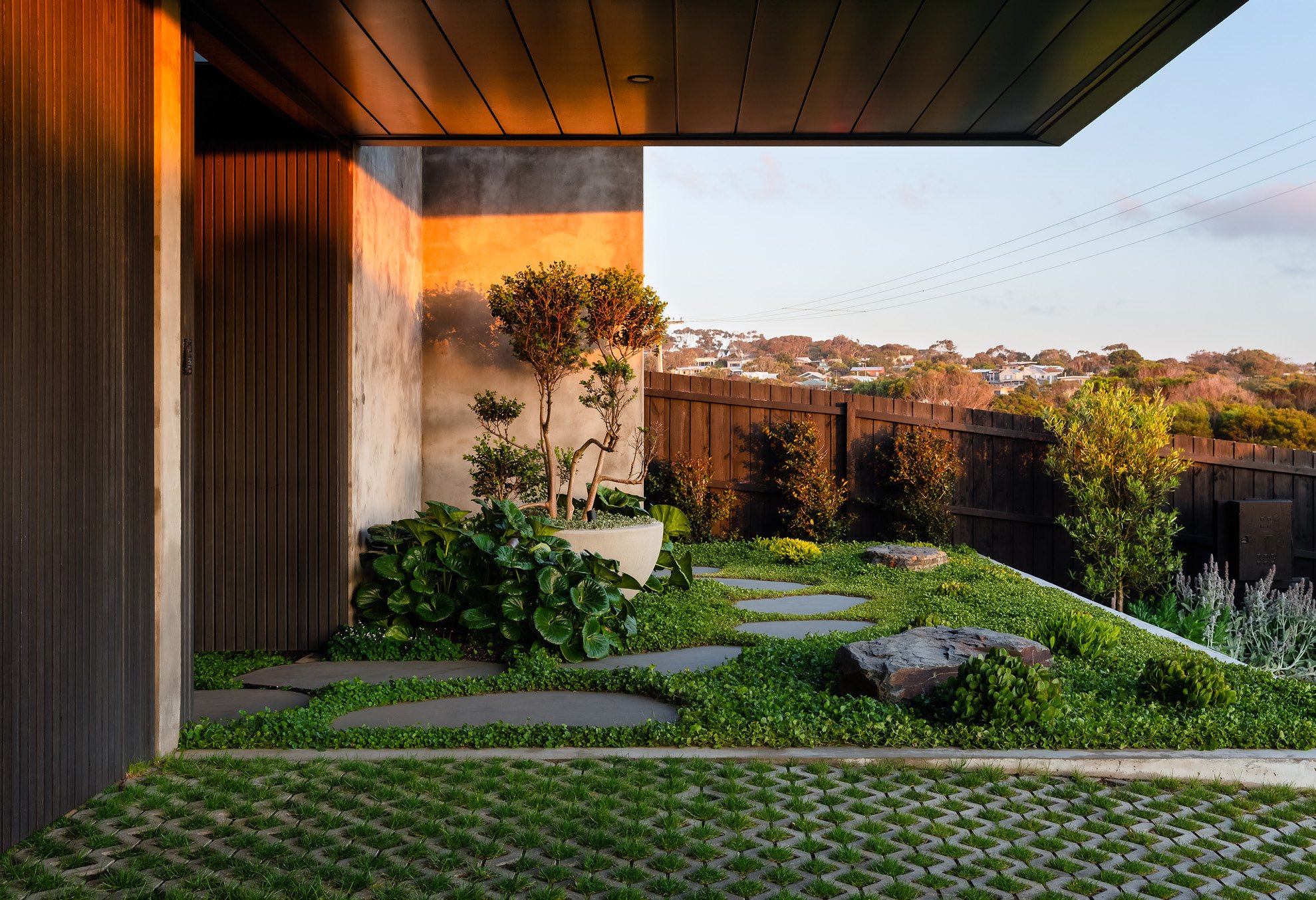
Grass paving is one of those landscape features that attracts a lot of questions.
It looks beautiful in photographs, but homeowners usually want to know the practical things first. Is it durable enough? Does it cost more than a traditional driveway? What happens in the shade? How much maintenance does it need?
Like most things in landscape design, the answer is usually, "It depends."
Grass paving has genuine advantages, but it's not the right solution for every home or every site. Understanding where it works well, where it doesn't and how it's constructed will help you decide whether it's the right choice for your project.
What is grass paving?
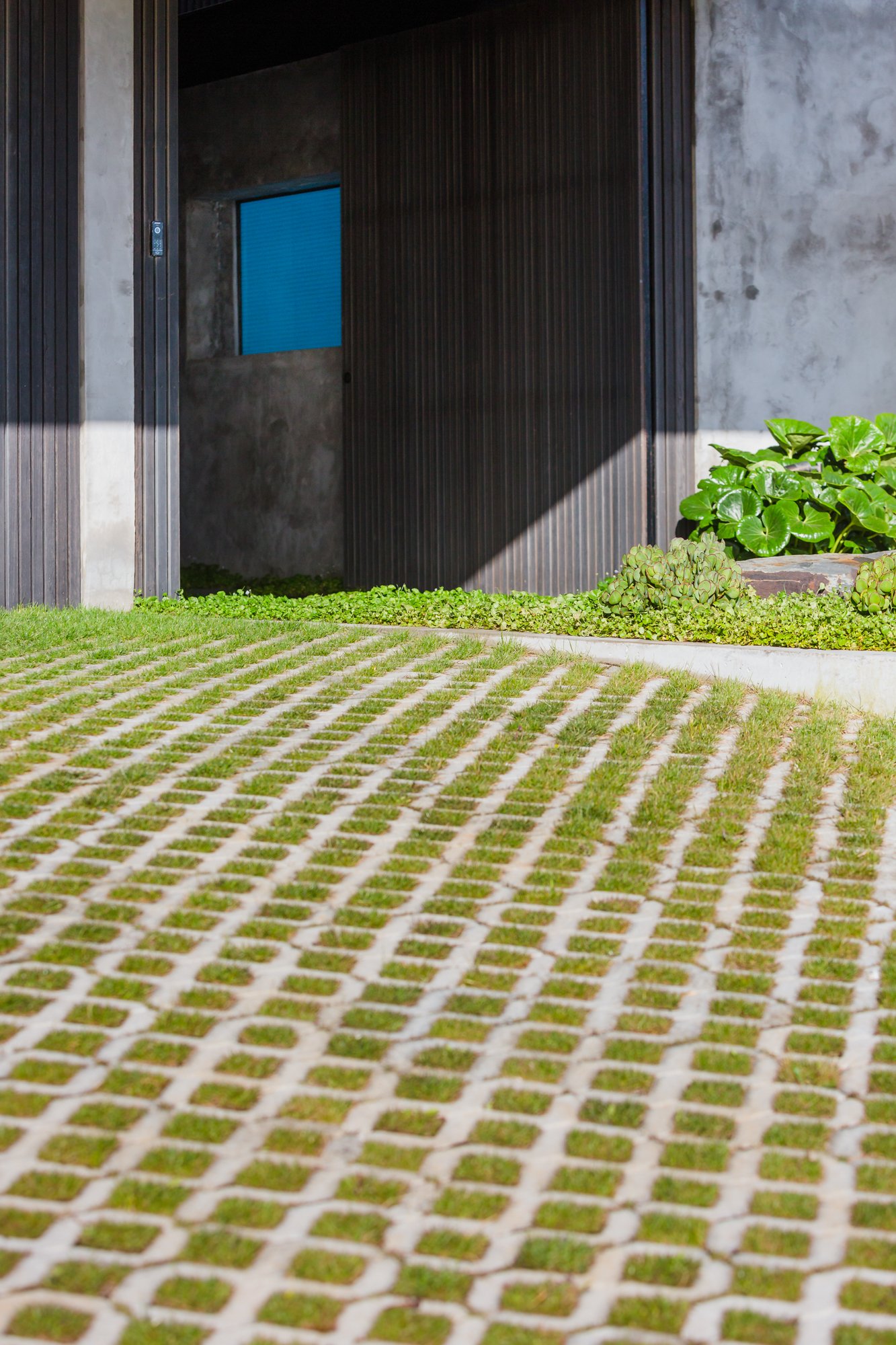
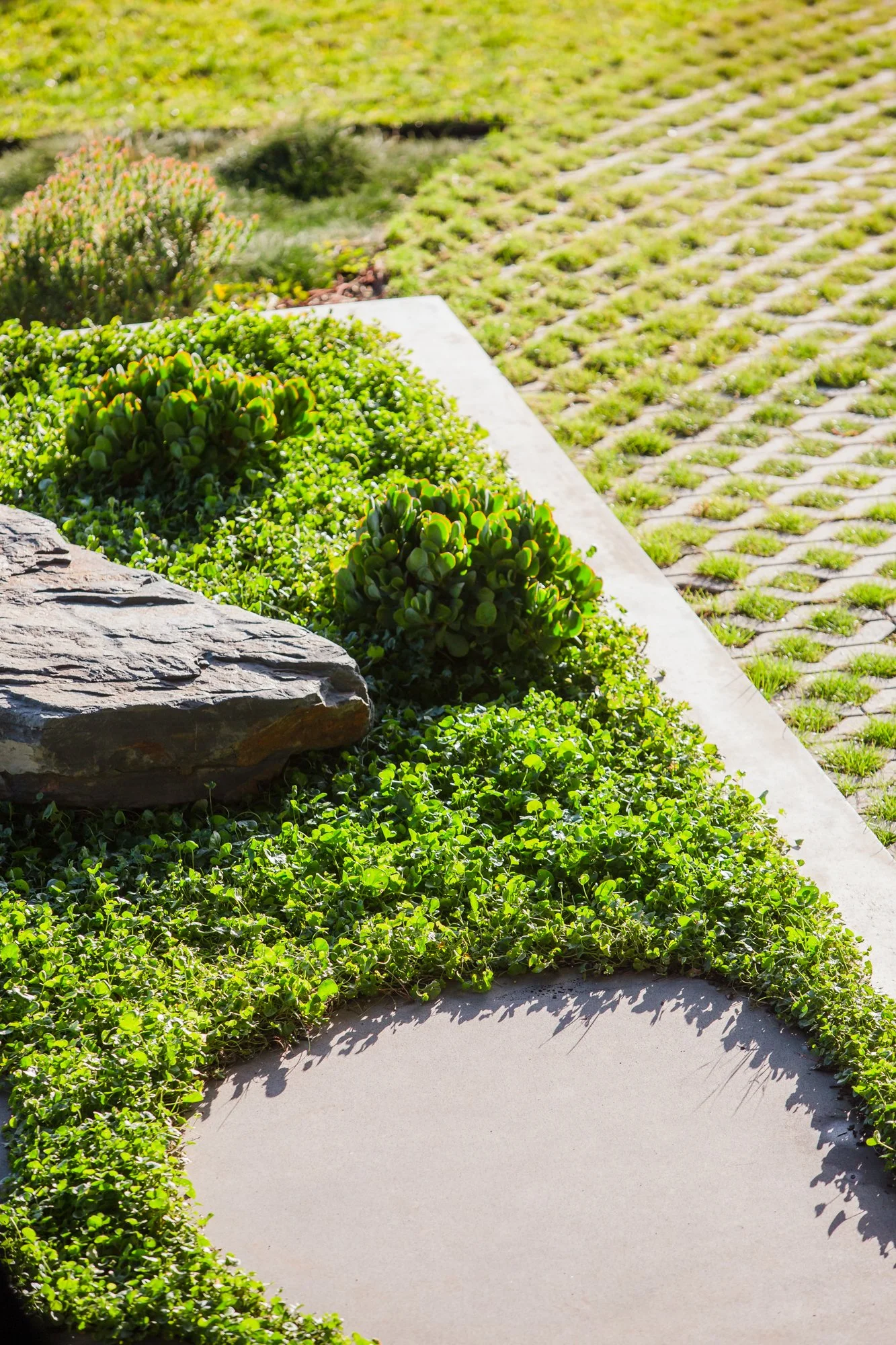
Grass paving is a permeable structural paving system that allows turf or groundcovers to grow between paving units while still creating a surface suitable for vehicles.
Although it's most commonly used for driveways, it can also be incorporated into parking areas, accessways and pathways where reducing the amount of hard paving is part of the landscape brief.
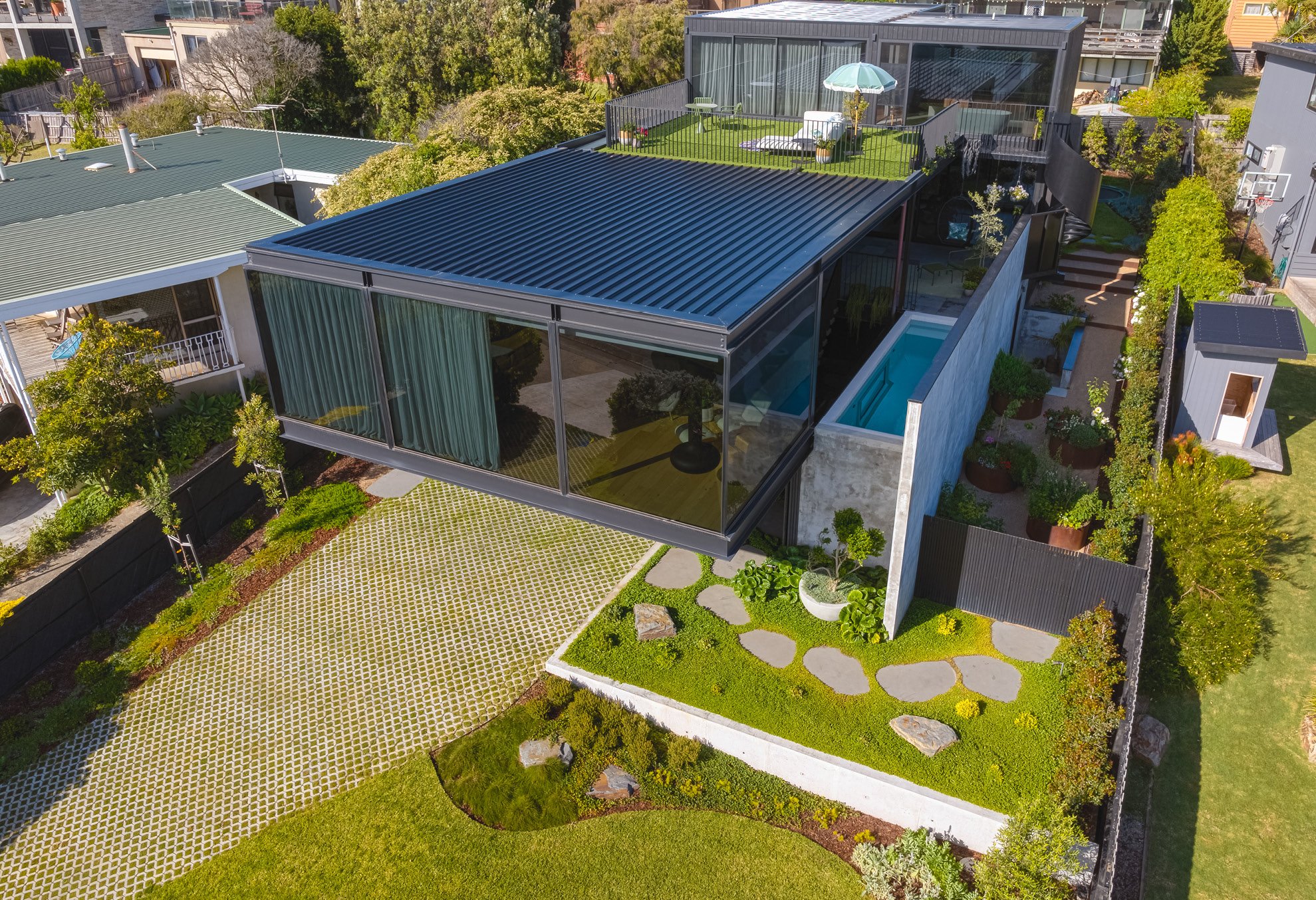
The biggest difference compared to a traditional driveway isn't simply that it's greener. It's that the driveway becomes part of the landscape rather than a large hard surface sitting within it.
"Most driveways create a break between the house and the garden. Grass paving can do the opposite by allowing the landscape to continue through the arrival space."
What are the advantages of grass paving?
A major advantage of grass paving is that it's both permeable and structural. It can handle the weight of vehicles while still allowing rainwater to pass through the surface into the ground below.
This can become particularly important when you consider how much of a residential site can be taken up by a driveway. Traditional concrete and exposed aggregate create large impermeable surfaces, whereas a correctly constructed grass paving system allows the driveway to contribute to the permeable area of the landscape.
Site permeability can also be a planning and building consideration. Requirements vary according to the property and relevant planning controls, so these should always be checked as part of the design process. Permeable surfaces can be particularly important around significant existing trees, where driveways or paths may fall within Tree Protection Zones.
Then there's the visual impact.
Grass paving introduces greenery into what would otherwise be one of the largest hard surfaces around a home, but the more interesting advantage is what that does to the overall composition of the landscape.
Large uninterrupted areas of paving naturally draw your eye. Breaking that surface into a repeating pattern of paving and planting softens its visual impact, allowing the architecture and surrounding landscape to become the focus instead.
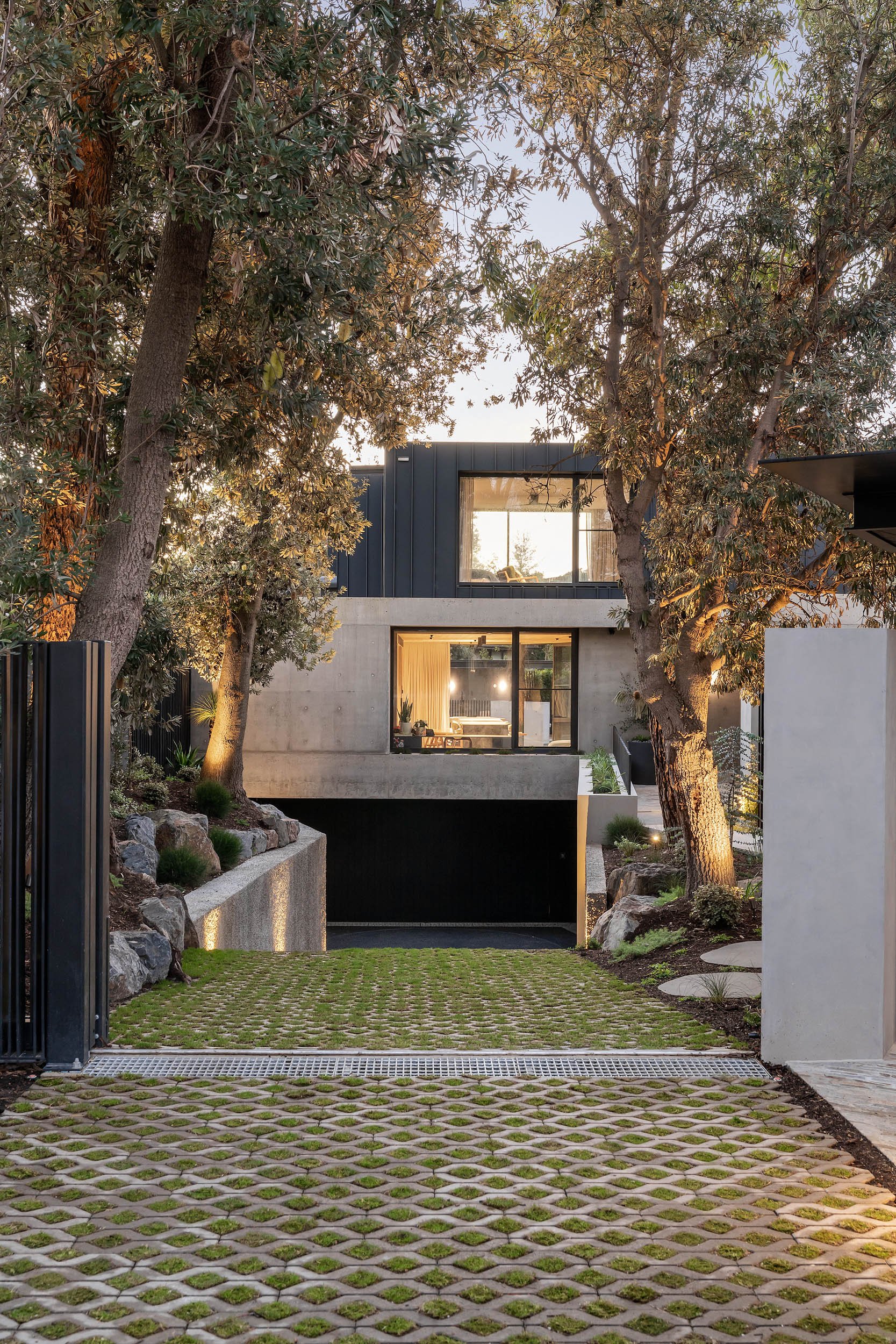
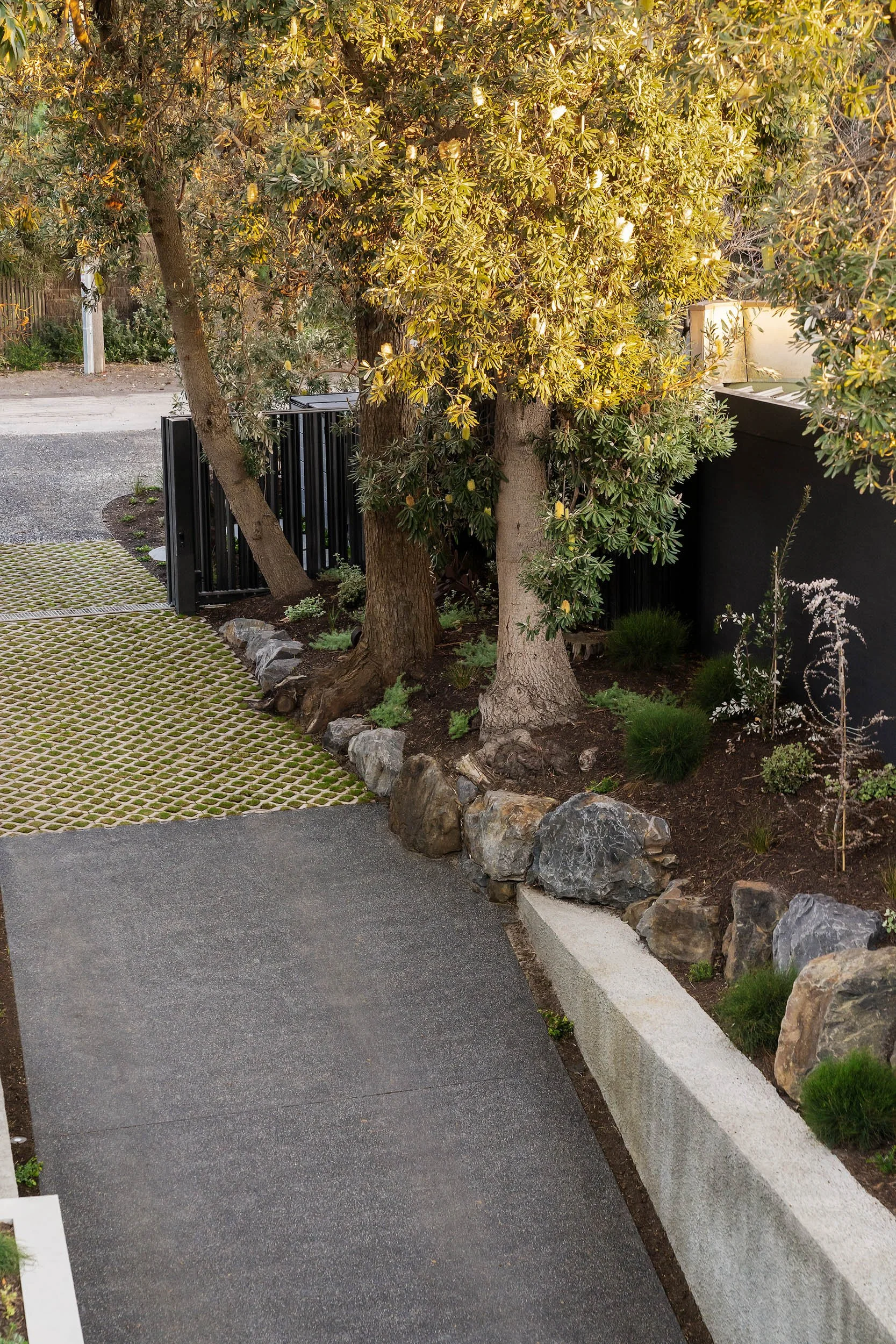
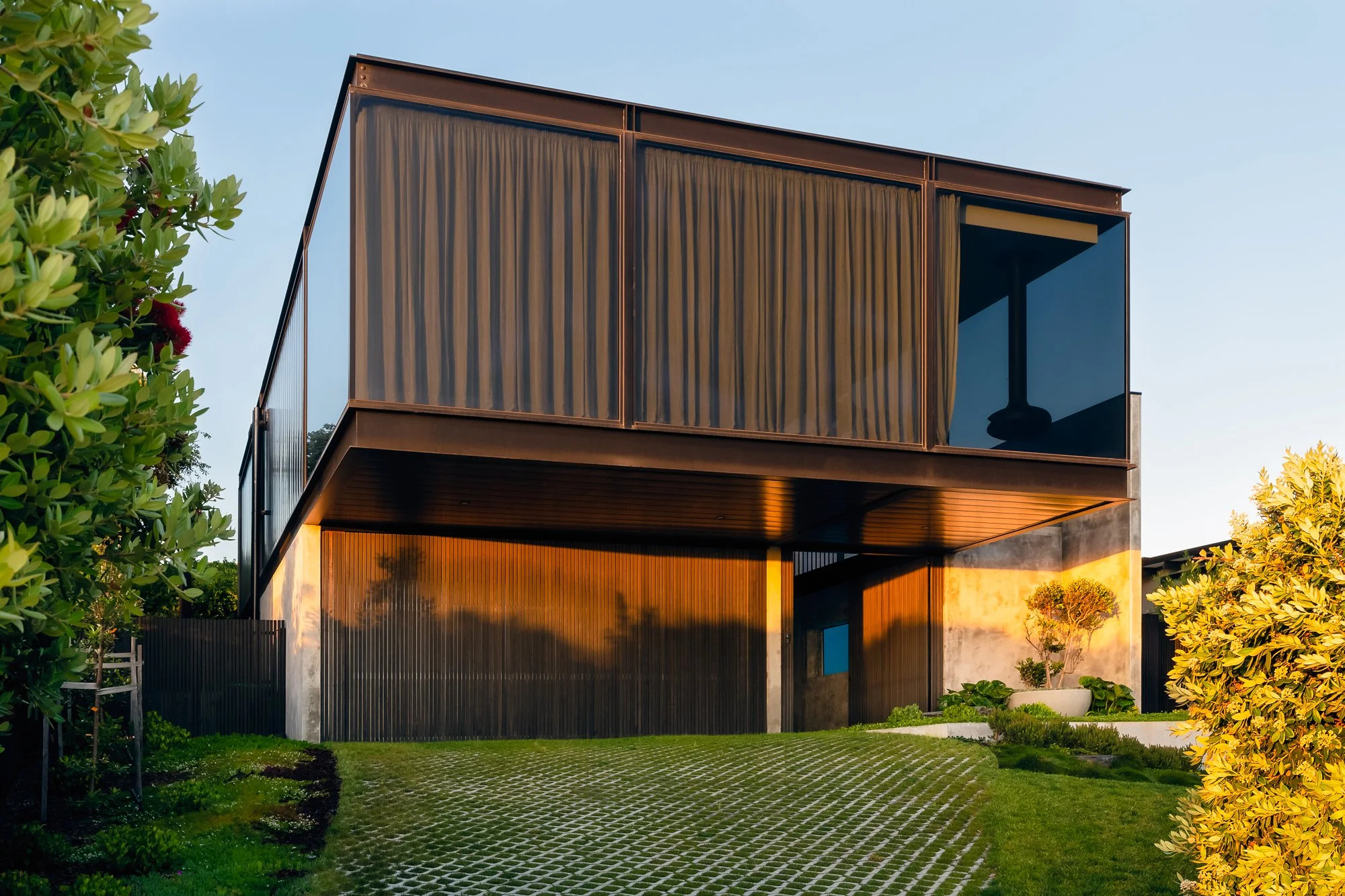
At our Jan Juc project, grass paving allowed the planting palette to extend through the arrival space rather than stopping at the driveway. The driveway still performs exactly the same function, but visually it becomes part of the landscape rather than something separate from it.
There are environmental benefits too. Rainfall can infiltrate the ground rather than immediately running off a hard surface, while the planted surface can help reduce some of the heat build-up associated with large expanses of concrete or asphalt.
What should you consider before choosing grass paving?
Like every landscape material, grass paving comes with trade-offs.
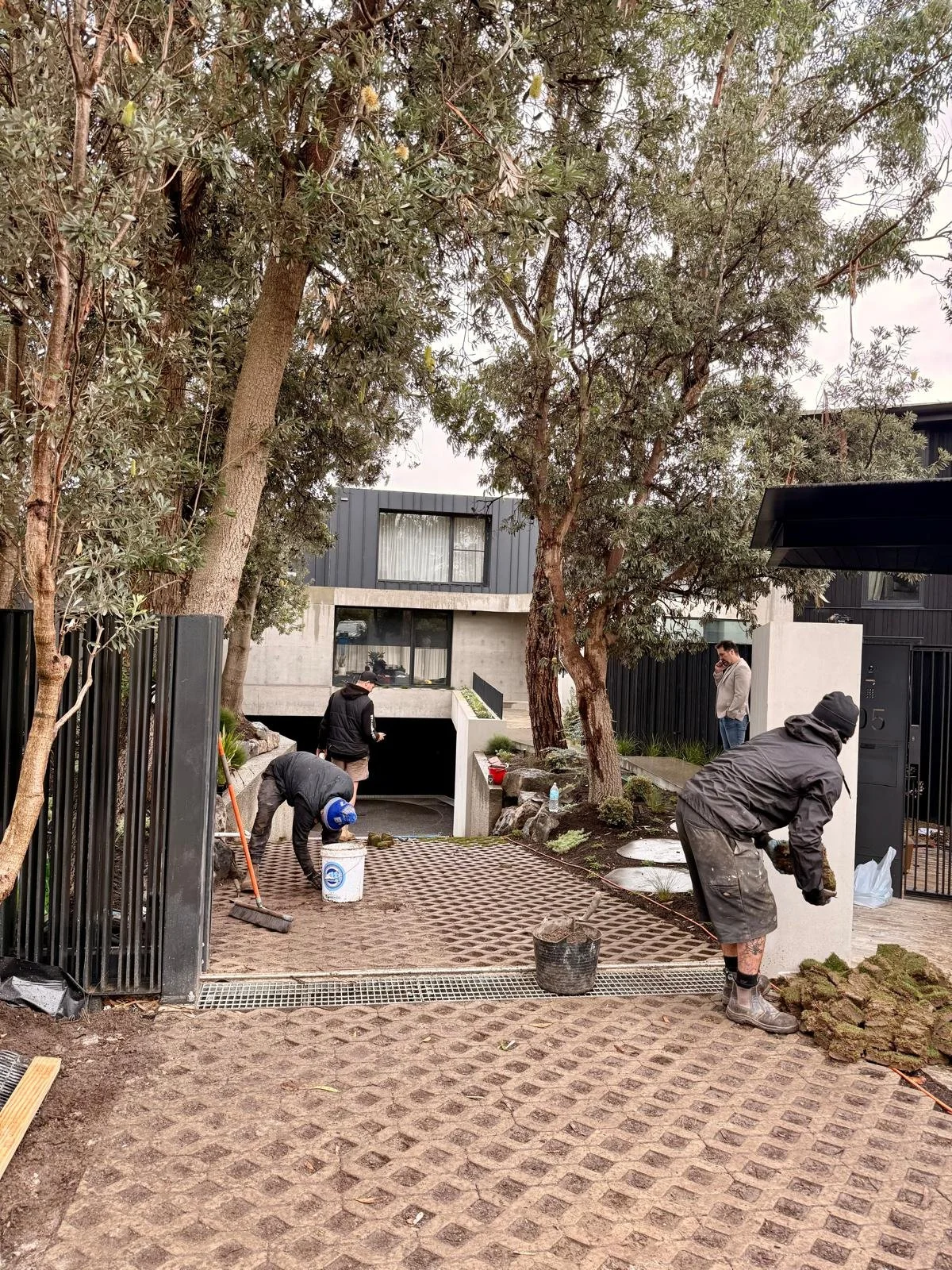
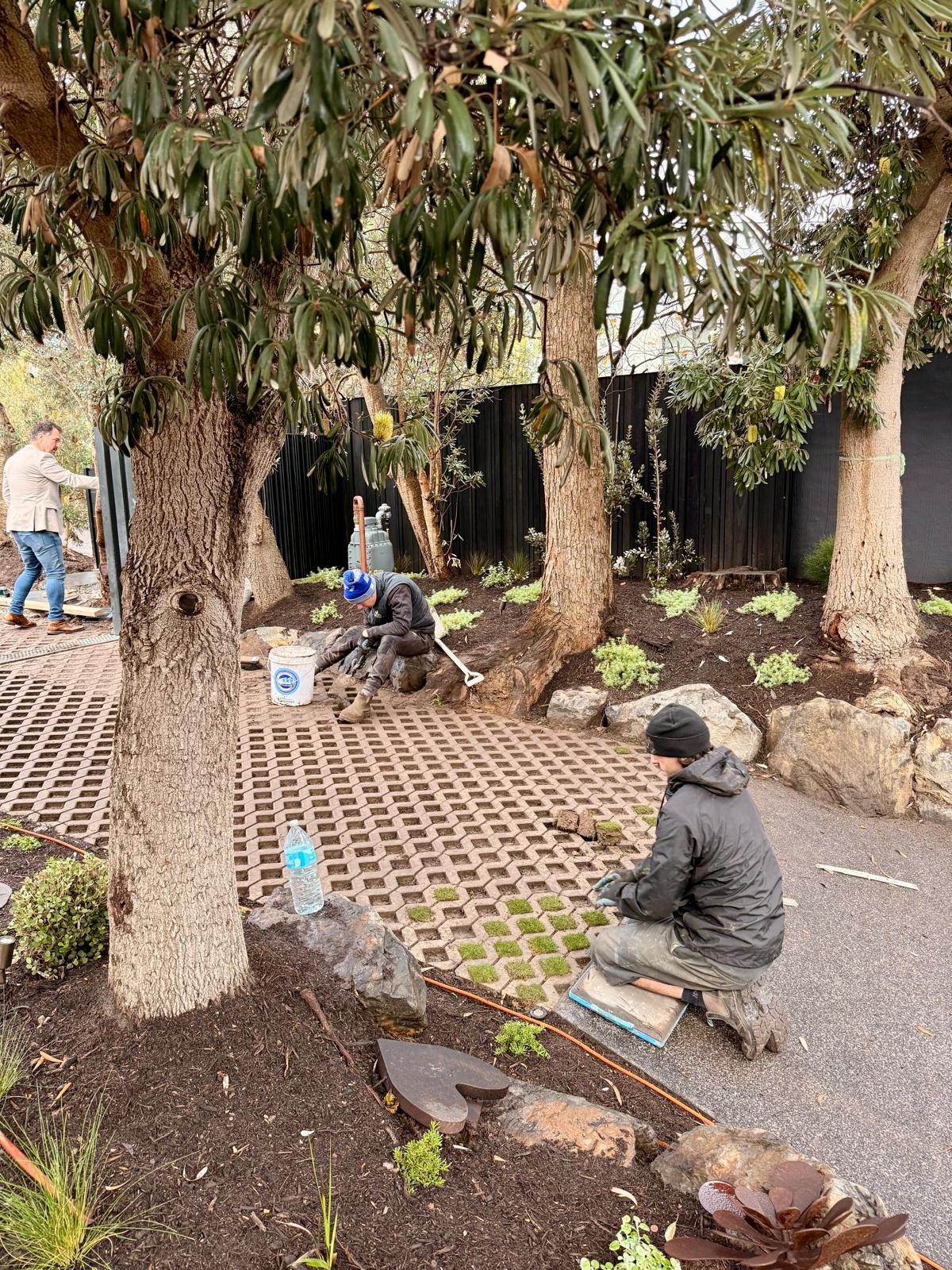
If you're planning to grow turf or another groundcover within the paving, it will generally require more maintenance than a traditional concrete driveway. Sunlight, irrigation, the amount of vehicle traffic and the planting species all need to be considered, and correct installation is critical to the long-term performance of the surface.
If the paving cavities are being filled with pebbles or fine toppings instead of planting, sunlight becomes much less important and maintenance requirements will be different.
Cost is another consideration. Grass paving doesn't require the steel-reinforced concrete base of a traditional concrete driveway, but there is considerable labour involved in installing the system and, where greenery is desired, planting and establishing the individual cavities.
Ultimately, the best material isn't necessarily the one with the lowest maintenance or upfront cost. It's the one that's best suited to the home, the site and the way you'll use the space.
"Every material has strengths and limitations. The goal isn't to find the 'best' driveway material. It's to find the one that's best suited to the home, the site and the way you'll live with it."
Does grass paving cost more?
In most cases, yes. A planted grass paving driveway is generally more expensive than typical concrete once the complete installation is taken into account.
For vehicle traffic, the grass paving system is typically installed over a minimum 100mm compacted crushed-rock base with a 30mm layer of sand. The paving system itself then needs to be installed and, where greenery is desired, the individual cavities planted and established.
Rather than comparing materials on price alone, it's worth considering what each contributes to the landscape. If reducing the visual impact of a driveway and increasing permeability are important parts of the design, grass paving can achieve something a conventional concrete driveway can't.
A cheaper permeable alternative is a compacted fine granitic material such as Dromana Toppings. These surfaces can look great, but generally require topping up over time as a result of vehicle use and rain. Erosion is also worth considering on sloping driveways.
A structural grass paving system stabilises the driving surface, helping to reduce that ongoing movement and maintenance.
Will grass paving survive everyday vehicles?
This is probably the question we're asked most often. The success of grass paving has much less to do with the grass itself than what's happening underneath. Correct excavation, drainage, sub-base preparation and installation of the paving system are essential.
Provided the base and paving are installed correctly, grass paving should be very durable for everyday residential vehicle use.
The planting is a slightly different story.
Where cars repeatedly travel over exactly the same section of driveway, wheel lines can develop as the plants struggle with ongoing compression. Some species cope with this better than others, and the frequency of vehicle traffic will also affect how well the planting performs.
Allowing the turf or groundcover to become properly established before vehicles begin driving over it is particularly important.
What if my driveway is mostly shade?
Shade is one of the first things we'd assess before recommending a planted grass paving driveway.
Like any planted area, the amount of sunlight available has a significant influence on which planting options are suitable and whether greenery within the paving is realistic in the first place.
Shade doesn't automatically rule out grass paving because the structural paving system can still be used without grass.
A simple alternative is to backfill the paving cavities with a fine 7–14mm pebble or a compacted granitic material such as Dromana Toppings. Both can look great and will generally require less ongoing maintenance than greenery.
If you still want a planted surface, an alternative groundcover such as Dichondra repens may be worth considering in areas with lower vehicle traffic or heavier shade.
The important distinction is between choosing the grass paving system itself and choosing what grows, or doesn't grow, within it.
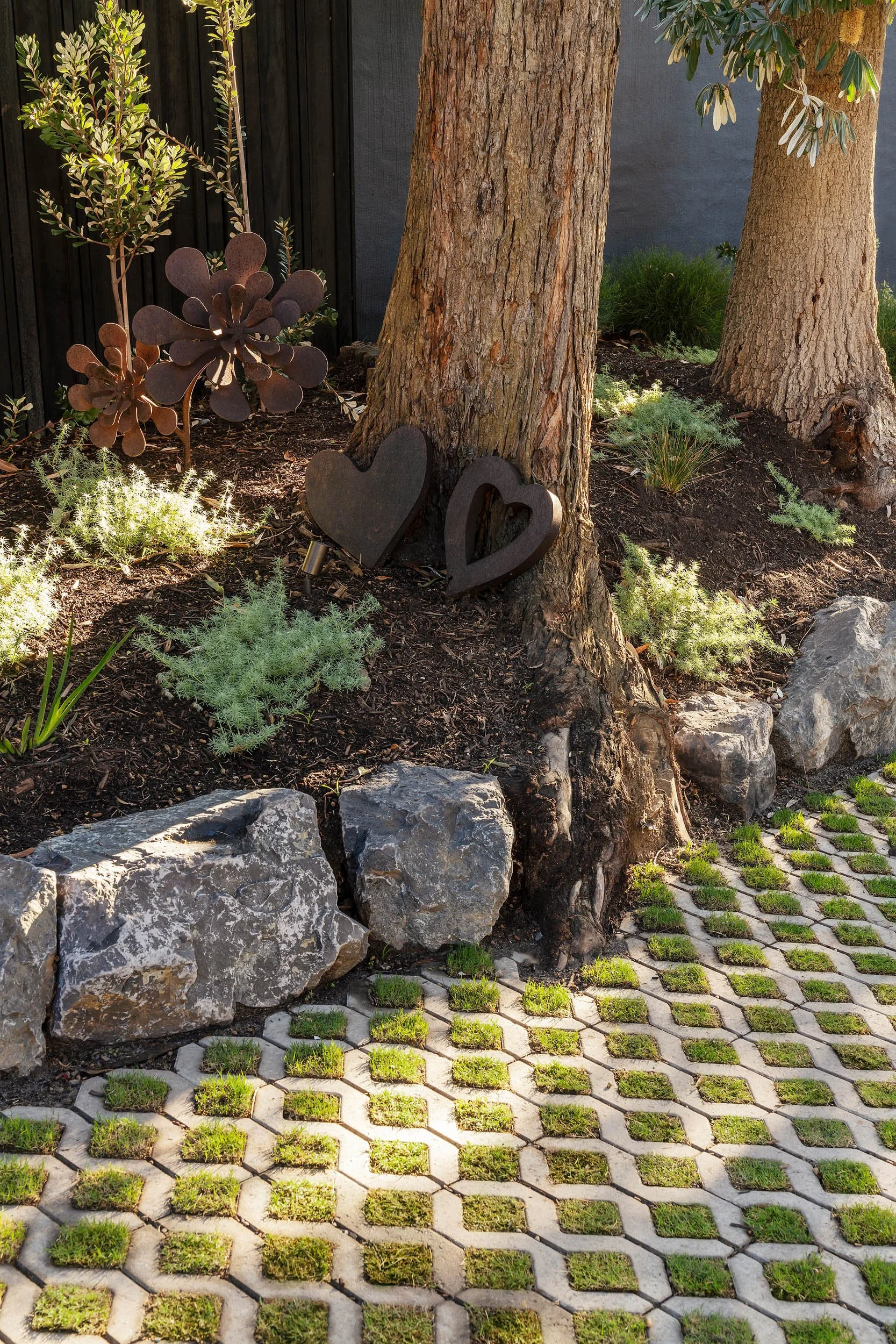
What grass works best in grass paving?
There isn't one answer, but TifTuf is a grass we regularly specify.
It's one of the tougher turf varieties available and copes relatively well with the compression that comes with residential vehicle traffic. Like other warm-season grasses, it also has the ability to spread and repair itself during active growing periods.
The important part is giving it time to establish properly before cars begin driving over it. Even a tough turf will struggle if it's subjected to regular vehicle traffic before the root system has had a chance to develop.
Its fine leaf also gives the finished driveway a clean, architectural appearance, which is important when grass paving forms a significant part of the home's arrival.
Dichondra repens is another option we consider when the conditions call for something different. It can be particularly useful where vehicle traffic is lighter or the driveway receives more shade.
Whichever planting is selected, sunlight, local climate, irrigation, vehicle frequency and the level of maintenance you're prepared to undertake all need to be part of the decision.
For the projects we design, TifTuf and Dichondra are generally the two planted options we come back to most often.
What if I don't want the maintenance?
Grass paving doesn't necessarily have to mean grass.
If your priority is reducing maintenance while avoiding a large expanse of concrete, the paving cavities can be filled with fine graded pebbles or granitic toppings rather than planted.
You can also combine grass paving with more traditional driveway materials rather than using one surface across the entire area.
At our Beaumaris project, grass paving was combined with exposed aggregate rather than replacing it completely. Each material was used where it made the most sense, creating a softer arrival while keeping the driveway practical to live with.
Landscape materials don't have to be all or nothing. Combining them can often give you the visual benefit you're looking for without asking a single material to solve every problem.
Does grass paving have environmental benefits?
Compared with a traditional impermeable driveway, grass paving can offer several environmental benefits when designed and constructed as an appropriate permeable paving system.
Rainfall is able to infiltrate the ground rather than immediately running off the surface, helping reduce the amount of impermeable area around the home.
Where the paving is planted, the additional greenery can also help soften the landscape and reduce heat build-up compared with a large uninterrupted area of concrete or asphalt.
This can be particularly valuable on sites where retaining existing trees is important. Permeability around established trees and within Tree Protection Zones may influence the driveway design and construction method from the outset.
As with any landscape material, environmental performance depends on appropriate design, construction and planting rather than the paving product alone.
Is grass paving right for every project?
No.
The amount of sunlight, existing trees, maintenance expectations, budget, architecture and the way the driveway will be used all play a part in determining whether grass paving is the right solution.
It can be an excellent choice when the goal is to soften the arrival, increase permeability, reduce the visual dominance of hard paving and create a stronger connection between the house and landscape.
On another site, a different material may simply make more sense.
Choosing a driveway material isn't about following a trend. It's about understanding what each option does well and choosing the one that's appropriate for your home and the way you want to live with it.
"A driveway might be one of the most practical parts of a landscape, but that doesn't mean it can't be one of the most considered."
With thanks to Chris and the team at ACM Outdoors for their technical input on grass paving construction.
Grass Paving Frequently Asked Questions
Frequently Asked Questions
Is grass paving suitable for driveways?
Yes. When installed over the correct structural base, grass paving is suitable for everyday residential vehicle traffic. For vehicle use, the system is typically installed over a minimum 100mm compacted crushed-rock base with a 30mm layer of sand.
Is grass paving more expensive than concrete?
Generally, yes. A planted grass paving driveway is typically more expensive than standard concrete once installation, planting and establishment are taken into account.
What is the best grass for a grass paved driveway?
We regularly specify TifTuf because it is a tough, self-repairing grass that handles vehicle compression relatively well once properly established. Dichondra repens can be an alternative where vehicle traffic is lighter or there is more shade.
Does grass grow well in grass paving?
It can, but sunlight, irrigation, vehicle frequency and correct establishment all matter. Repeated vehicle traffic over the same areas can create wheel lines where the grass struggles under ongoing compression.
Can you use grass paving in a shaded driveway?
Yes, although grass itself may not be the best infill. In heavily shaded areas, the paving cavities can instead be filled with a fine pebble or compacted granitic material such as Dromana Toppings. Dichondra repens may also be suitable where traffic is lighter.
Is grass paving permeable?
Yes. A correctly constructed permeable grass paving system allows rainwater to pass through the surface into the ground below, reducing the amount of impermeable hard surface around the home.