Backyard Basketball Court Design: What to Consider Before Adding One to Your Landscape
Over the past few years, one inclusion has consistently risen to the top of our clients' wish lists: a backyard basketball court.
More specifically, a shooting area. A defined key. A space for daily practice that becomes part of family life.
We're seeing real momentum across Australia around lifestyle-led outdoor spaces. Gardens are no longer purely aesthetic, they're active, social and genuinely used. A well-designed residential basketball court often becomes the most-used space in the entire backyard.
The success of these projects isn't about scale. It's about integration.
Like a pool or outdoor kitchen, a basketball court is a significant architectural element. When considered early in the landscape design process, it feels intentional and proportioned. When added as an afterthought, it risks dominating the garden.
Getting the Orientation Right
You may not always have a choice, but in an ideal world the face of your backboard would face north so you're never shooting into the sun. The second best aspect is a west-facing backboard, you're less likely to be playing in the early morning when the sun is low and directly in your eyes.
Sun direction, surrounding architecture and adjacent entertaining areas all influence how we position a court within the landscape.
Choosing the right ring assembly
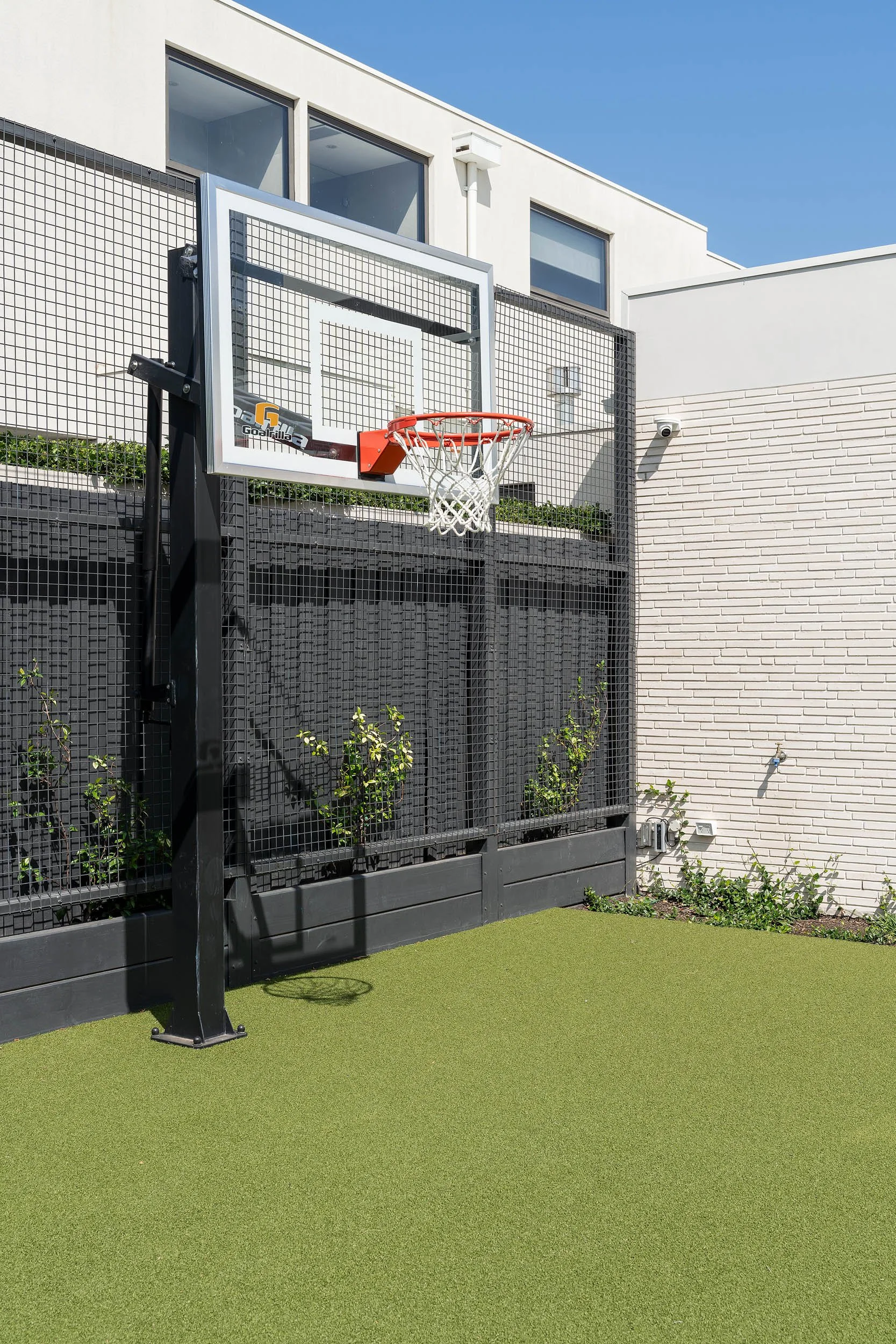
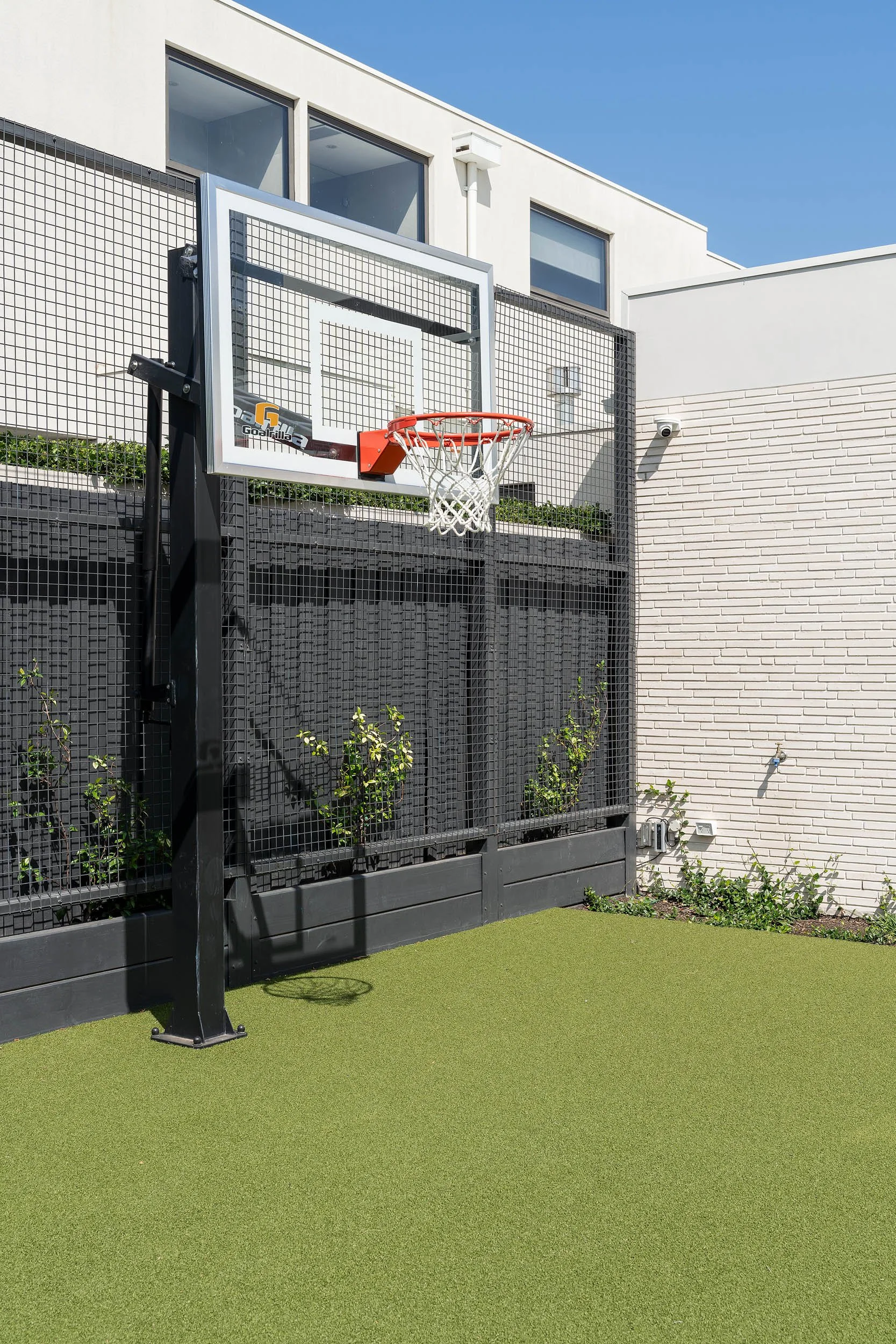
The ring assembly typically includes the ring and net, a backboard, overhang and post. The key decision is whether to go portable or built-in.
Portable vs Built-In: Which Is Better for Residential Projects?
For most residential projects we recommend a built-in assembly with overhang (the distance from the post to the backboard). Overhang isn't absolutely necessary (plenty of us grew up bouncing off the garage door), but it's safer and better for developing layup skills to have some clearance behind the backboard before you hit a wall or fence.
The built-in option gives you a more rigid backboard and rim, resulting in a more stable, professional feel when shooting. That said, a built-in isn't always practical. You may need the flexibility of moving the ring around, particularly if the court serves a dual purpose in the driveway, or if you're not yet convinced the space will be used for basketball long term.
Understanding Overhang and Why It Matters
Overhang typically ranges from 700mm to 1200mm and needs to be factored into your total court length, as does the footprint of the ring assembly base. Built-in assemblies also require a concrete footing designed to specifications provided by the supplier.
How Big Does a Residential Basketball Court Need to Be?
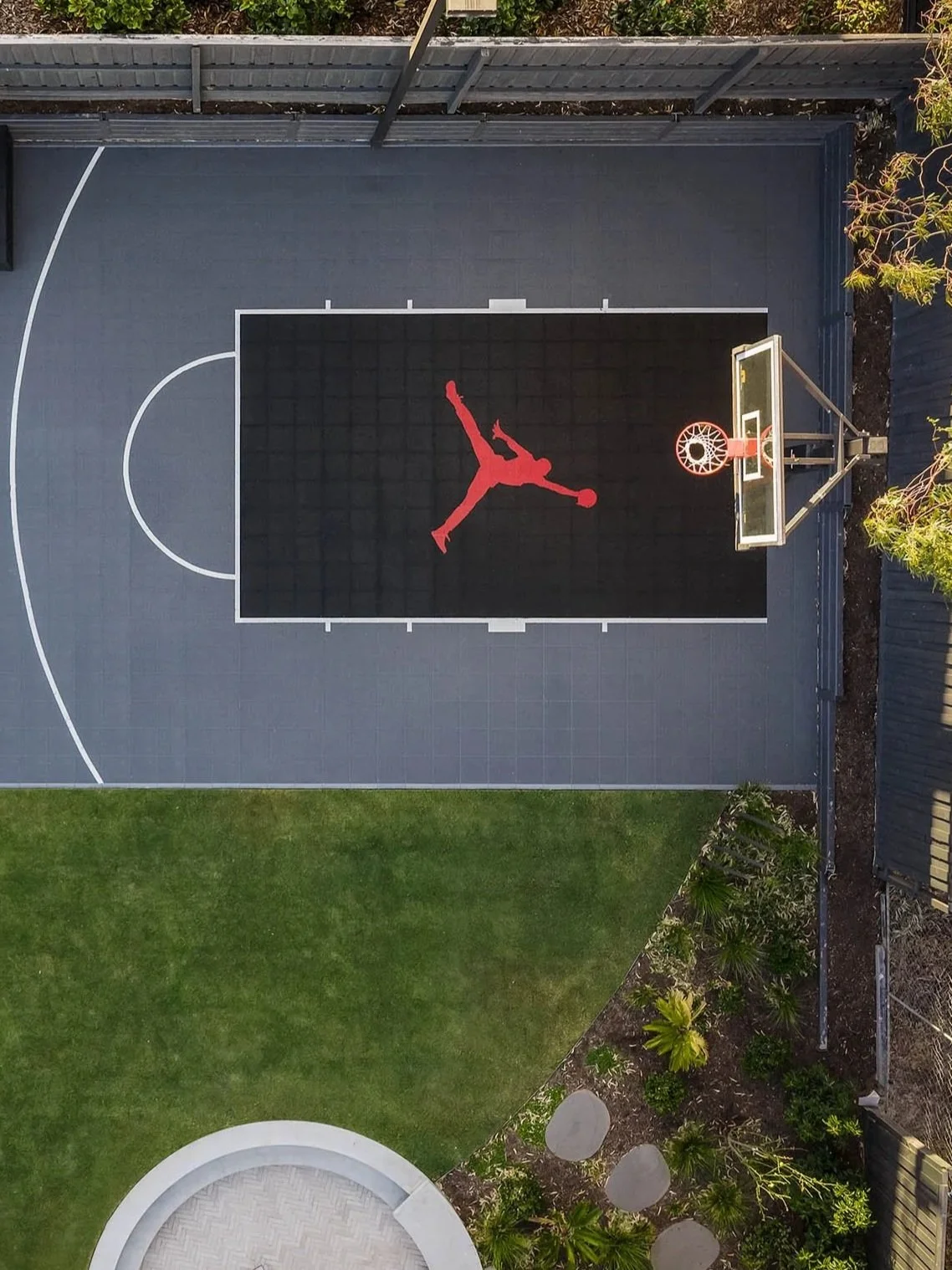
This is usually the first question and the answer depends entirely on available space. Court size is often the limiting factor for residential properties and people frequently underestimate just how much space a court with a full three-point line actually requires.
Here's a practical guide to residential court sizes, based on a built-in ring assembly with overhang:
Smallest viable court — 7.5m x 5.8m
This is basically the key area only. Allows for free throw practice, layups and short-range jump shots. You'll want decent netting around the perimeter if you're close to boundary fences.
Mid-range — 9.2m x 5.8m
Captures the top of the three-point line, which is often the minimum goal for serious young players.
The sweet spot — 9.2m x 9.5m
If you can get to this size, you'll have most of what you need. Good angles for layups, mid-range jump shots, free throw line and more of the three-point arc to work with.
The full court — 9.5m x 15m
The full three-point line and all shooting angles. Only achievable on larger properties but the ultimate for serious players.
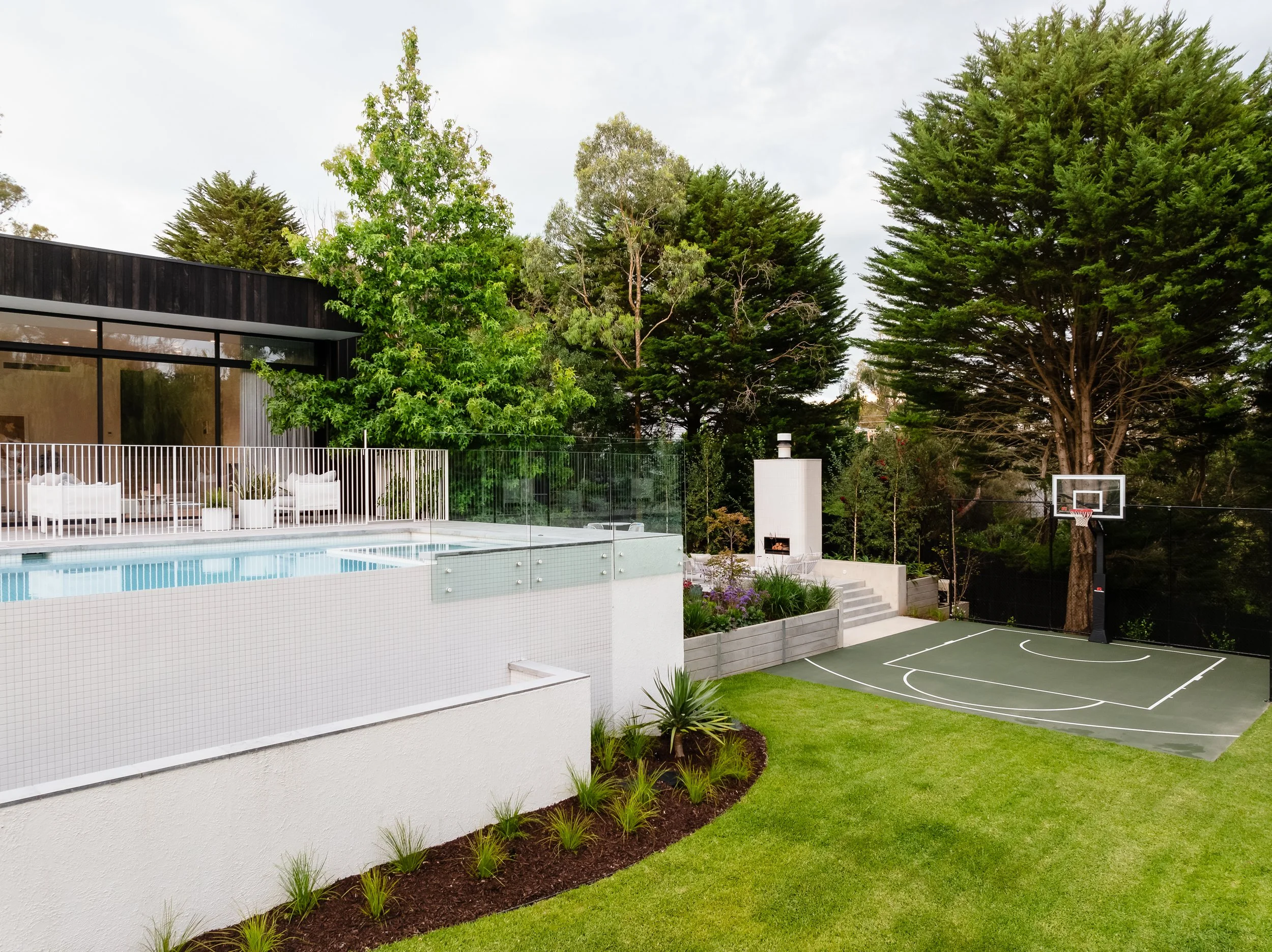
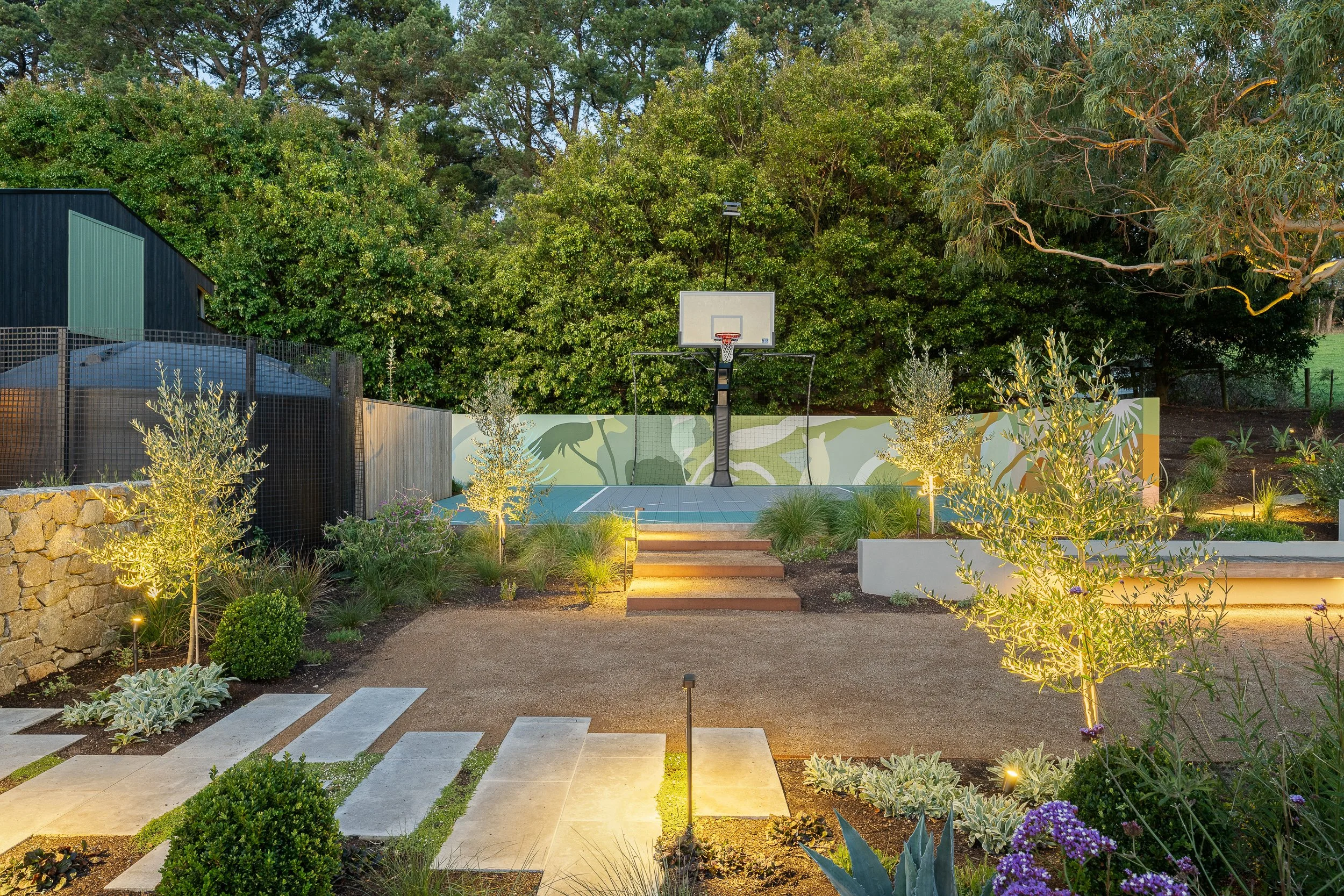
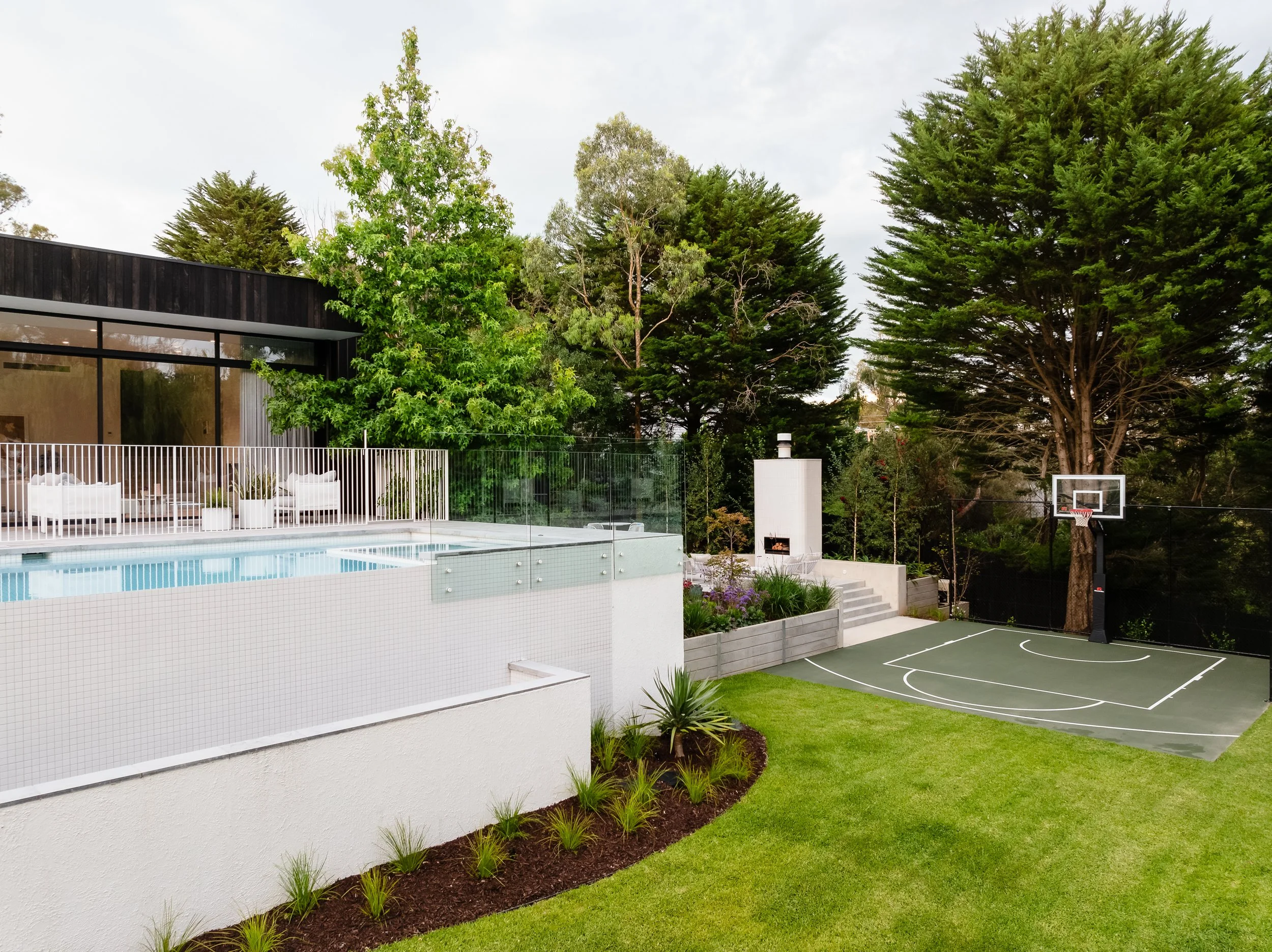
For the Muston family on the Mornington Peninsula, maximising size within the constraints of a sloped block was the priority.
“We tried to maximise the size as much as possible given our sloped block, while still maintaining a good balance with the rest of the backyard. It was important to us that the court didn't completely take over the grassed area - we still wanted space for general play. In the end, we found a size that feels just right."
— Sarah Muston
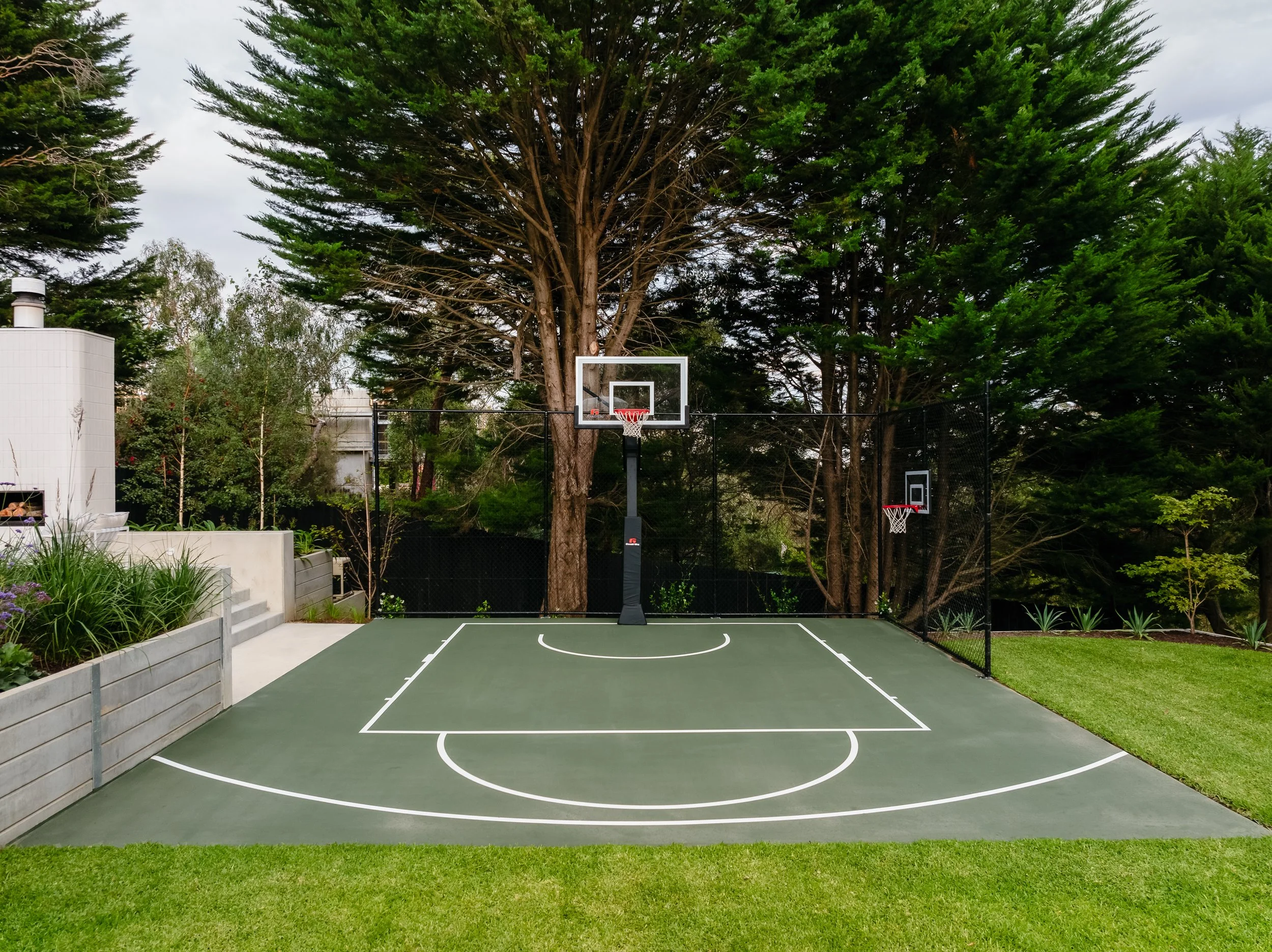
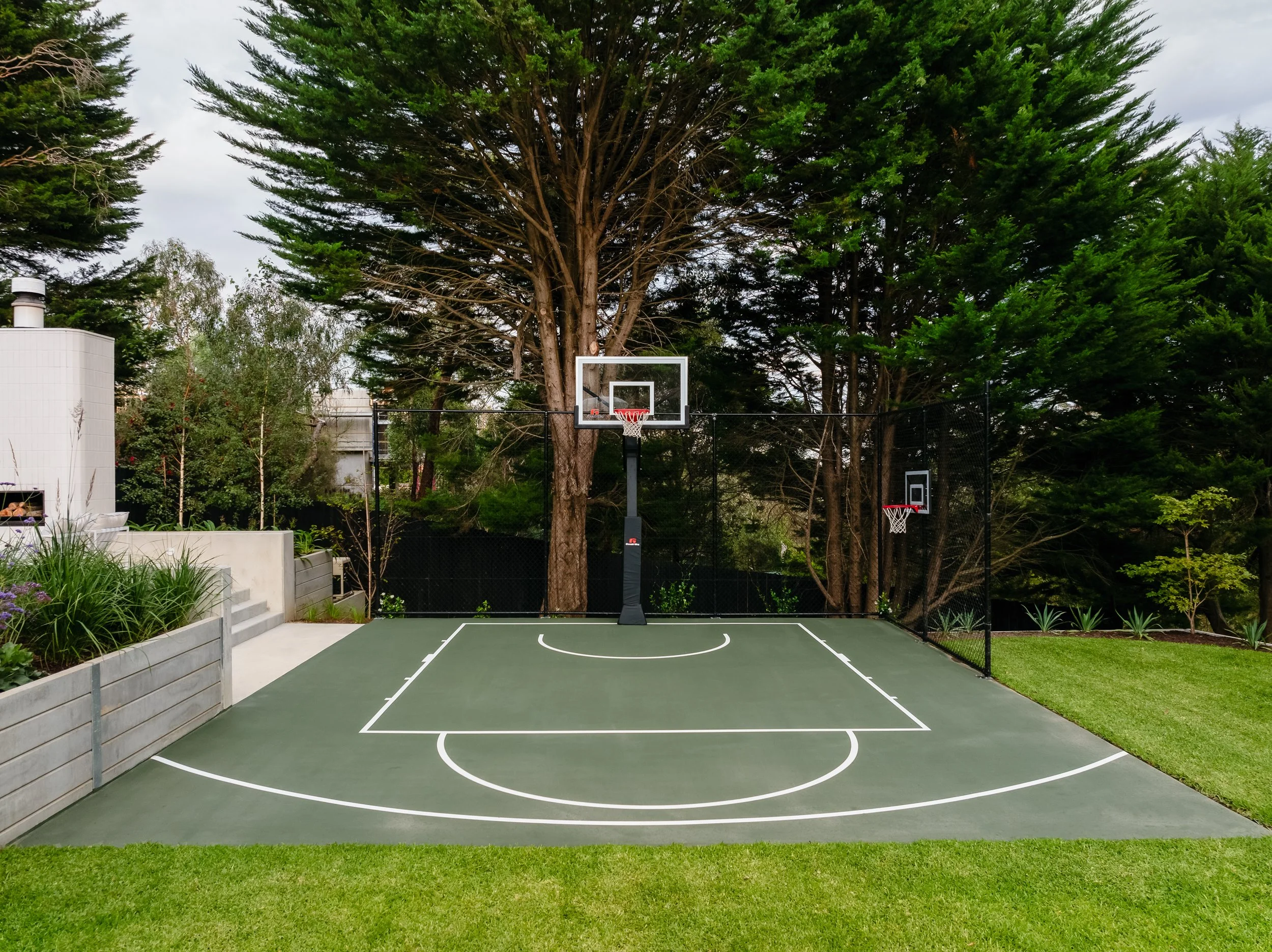
Their court was set up for VJBL under-16 three-point lines at 8000mm wide by 8500mm long, a practical, well-proportioned result on a challenging site.
Basketball Court Surface Options for Residential Properties
Surface selection is often what clients want to talk about first because it's the most visible element, often seen directly from the main living areas of the home.
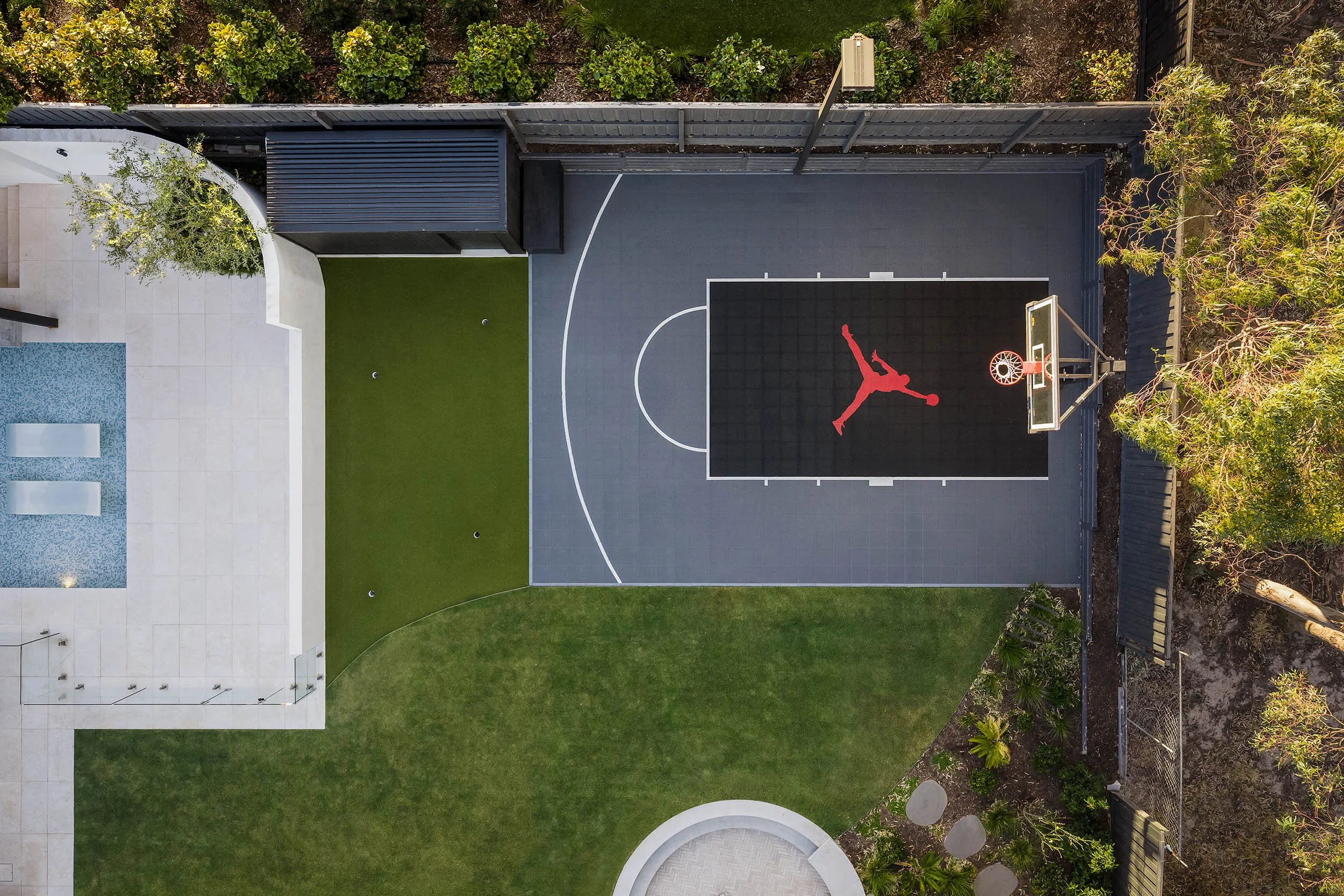
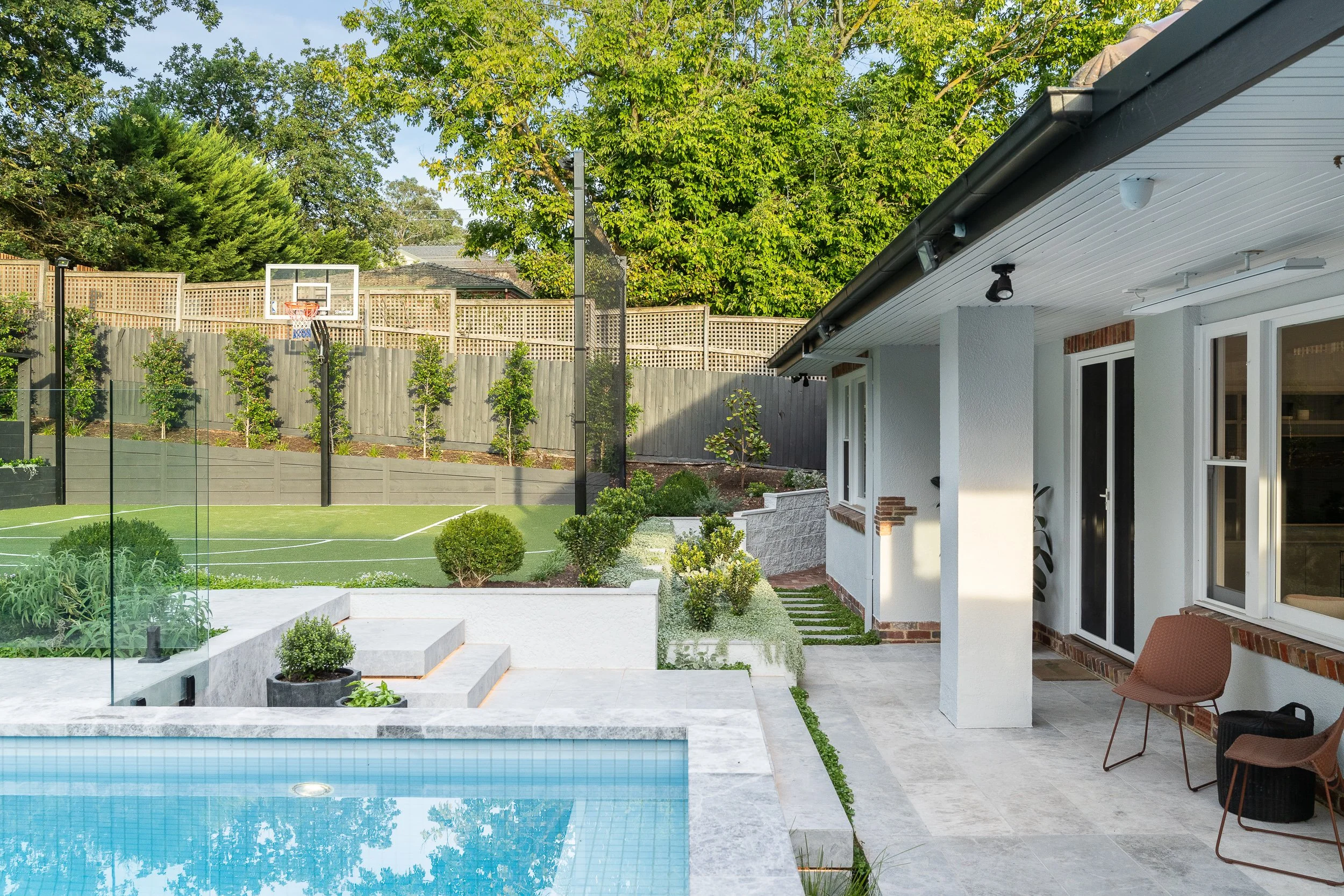
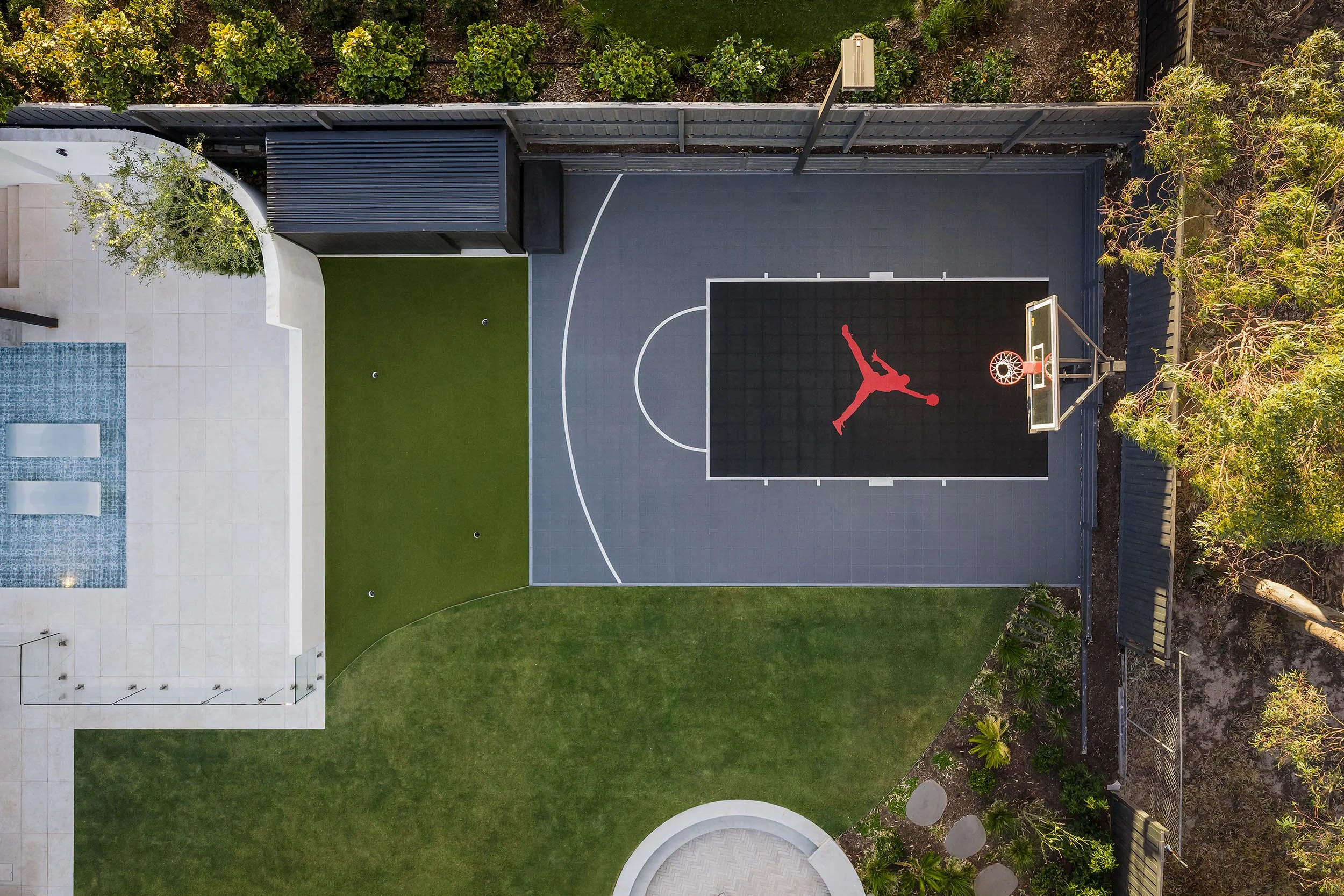
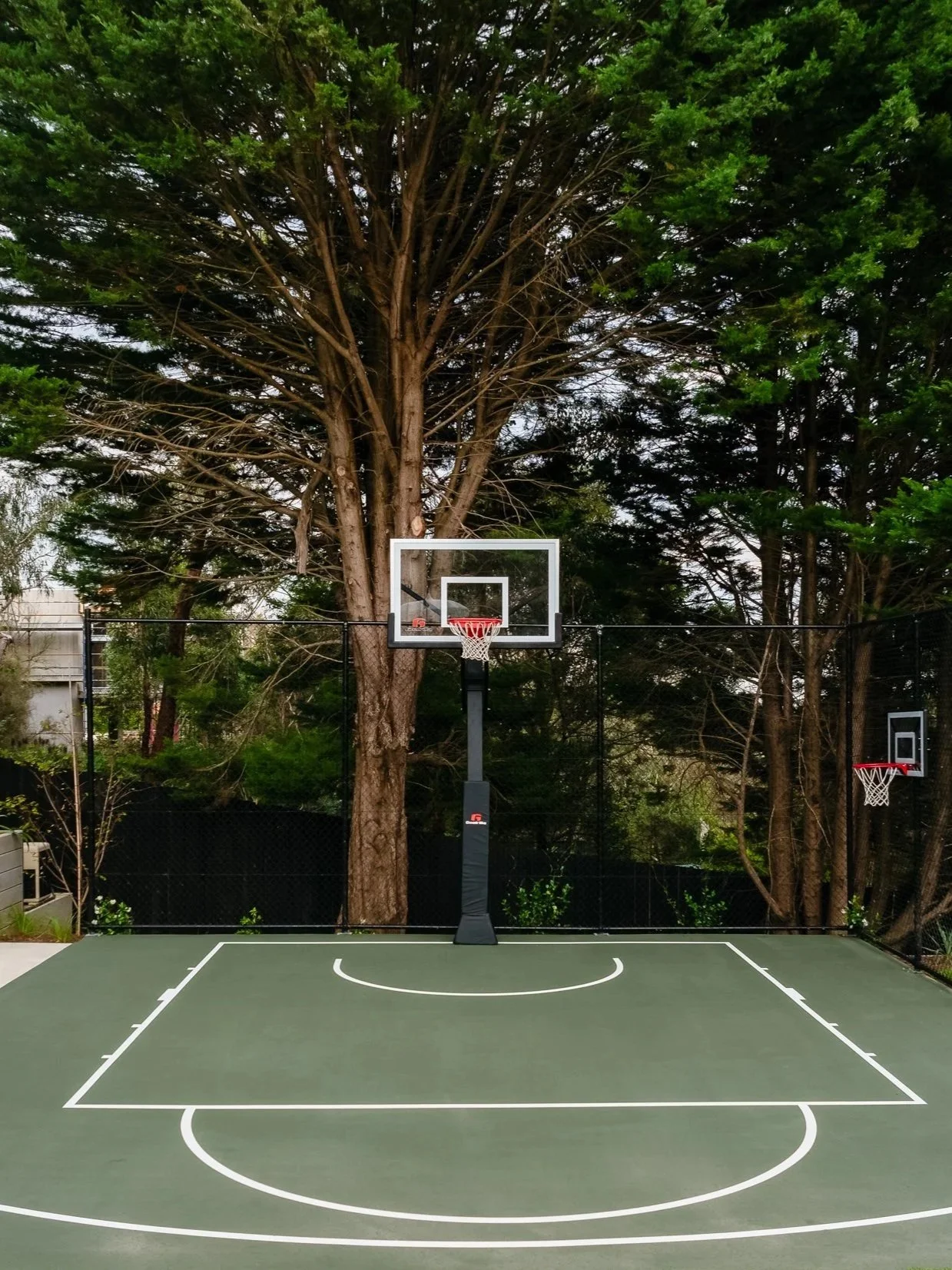
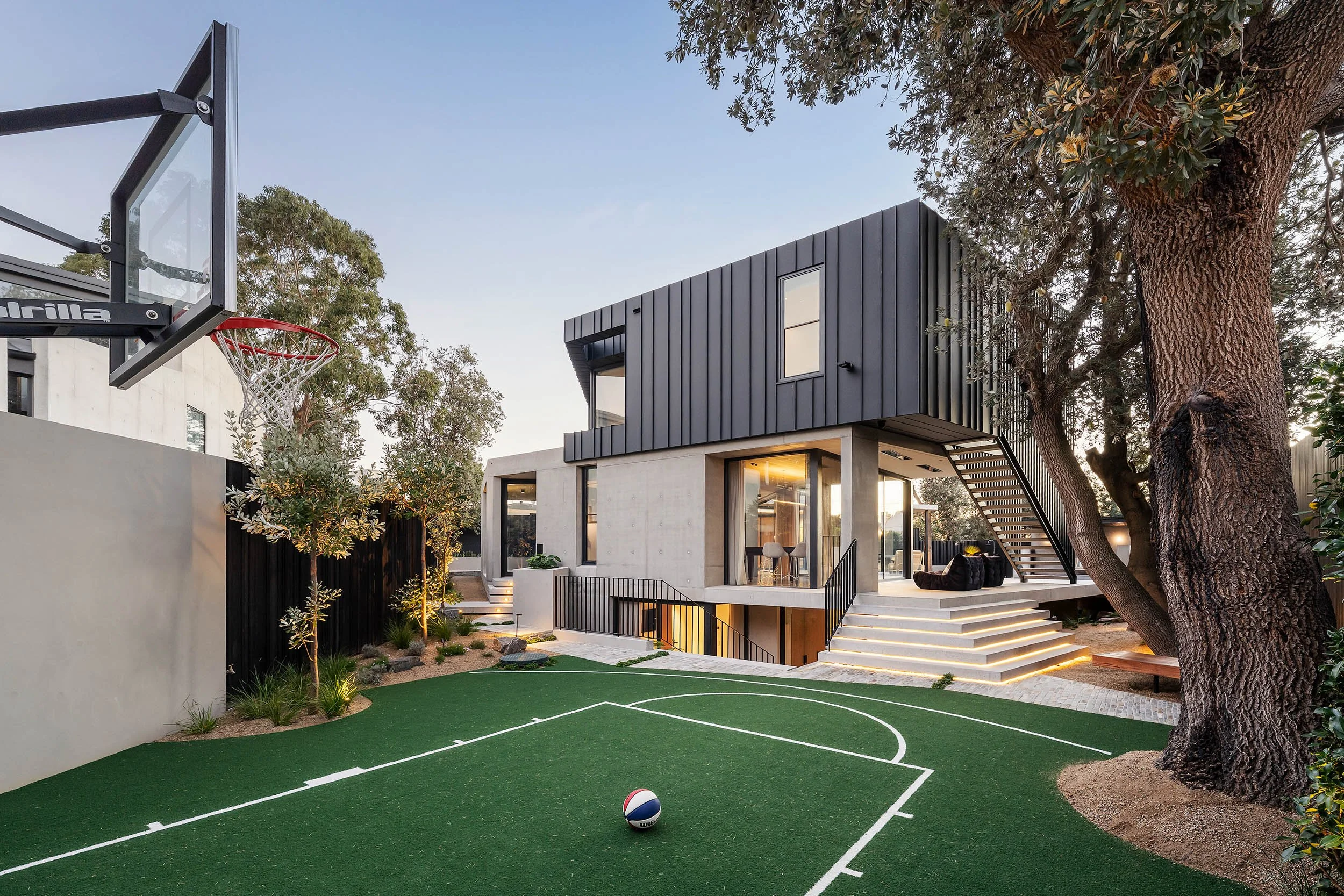
From a design perspective, we almost always lean toward green. We don't want the court to be the focal point of the garden. We want it to recede into the background as much as possible, and green is the most effective colour for doing that.
All court surfaces require a concrete slab base for the best ball rebound. From there, the main options are:
Painted Concrete
The most flexible option - you can choose any colour, including any shade of green. May need reapplication over time with heavy use.
Sports turf
Has the closest visual relationship to regular lawn. Reduces bounce noise, which matters more than people expect when the court is close to the house or neighbouring properties. May need replacing over time with heavy use.
Plastic interlocking tiles
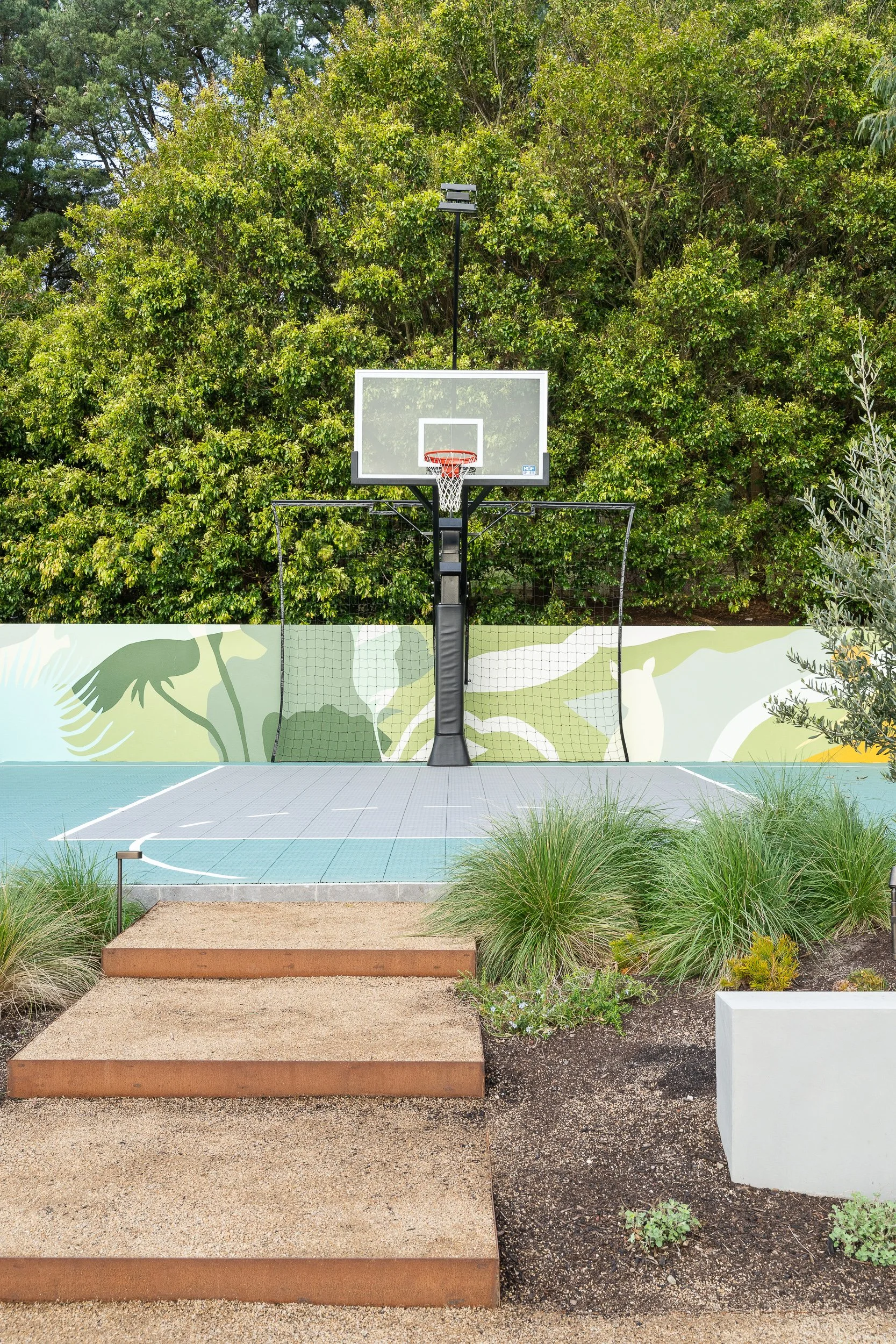
If you want bright colours, court markings or a surface that feels more like an indoor court, this is the option. Reduces bounce noise and provides a realistic rebound feel. Worth noting: cheaper brands can degrade quickly outdoors, and it does introduce a significant amount of plastic into the landscape.
For the Muston family, surface choice came down to both performance and visual integration:
"Initially we were leaning towards a darker charcoal or even black court for a more classic, modern look. As the design evolved, we decided we wanted the court to blend more naturally into the garden. We ended up choosing a green tone that ties in with the specific turf we planted, which helps it feel more cohesive and less visually dominant."
— Sarah Muston
Beau Muston opted for a 3mm mat-lay system coated with a Mapei product, installed by King of Courts:
"The 3mm rubber mat provides a much safer fall surface compared to pure concrete, is easier on the body and joints for extended use, and deadens the sound when the ball bounces without affecting the rebound. If anything it enhances it and it's more considerate to neighbours when the court is in close proximity."
— Beau Muston
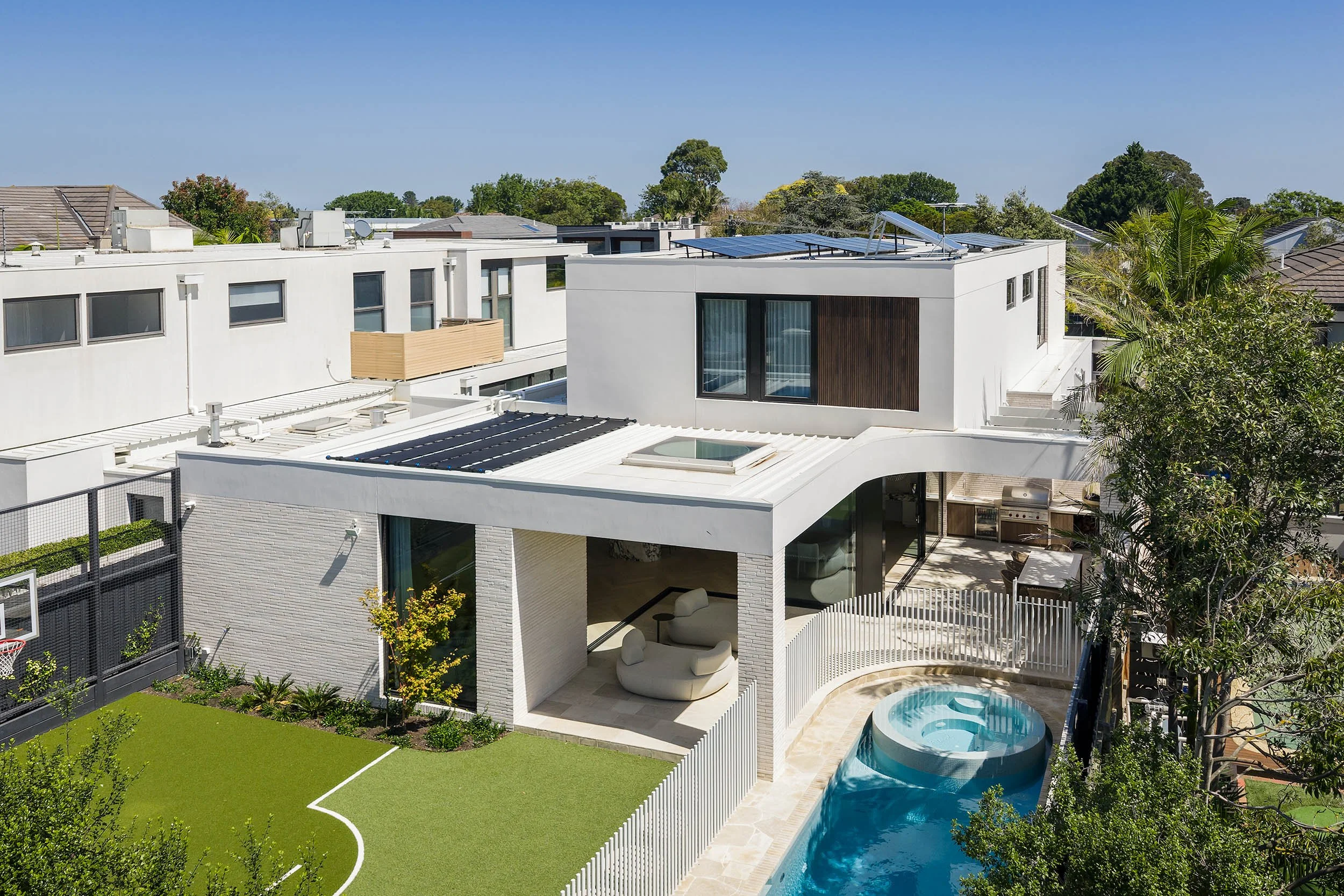
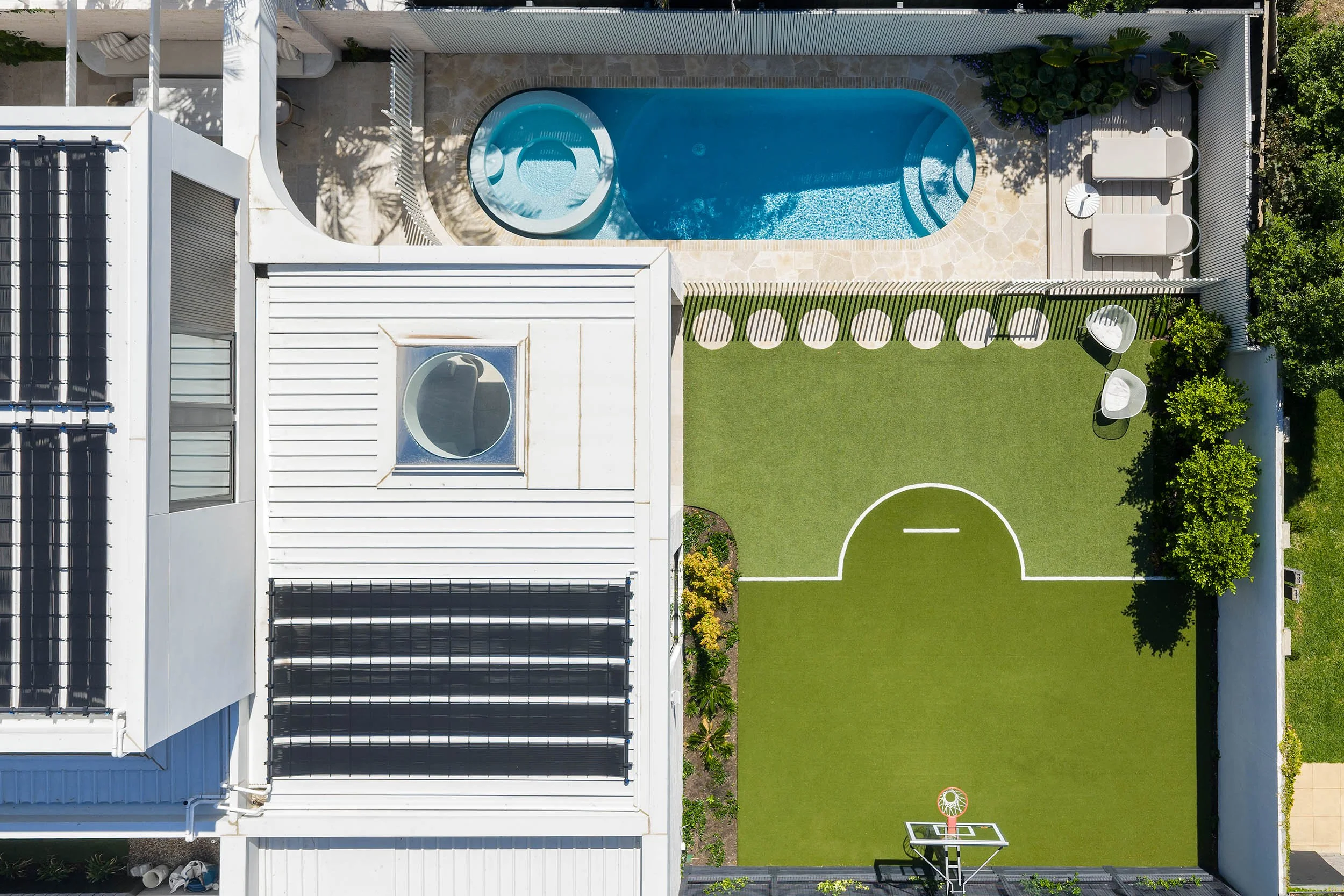
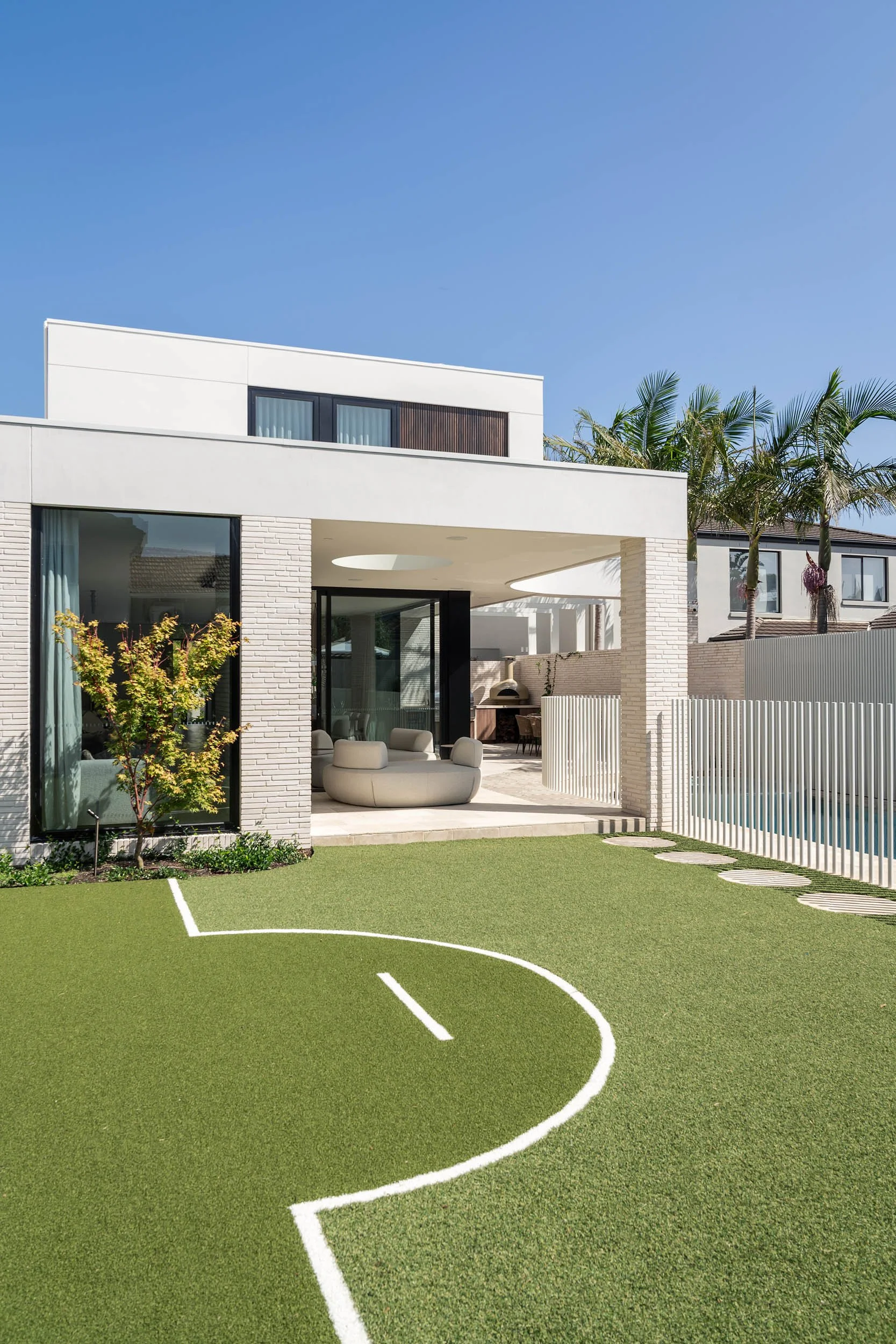
At LUME House in Brighton, Aimee Tarulli took a different approach entirely, one that prioritised visual subtlety above all else:
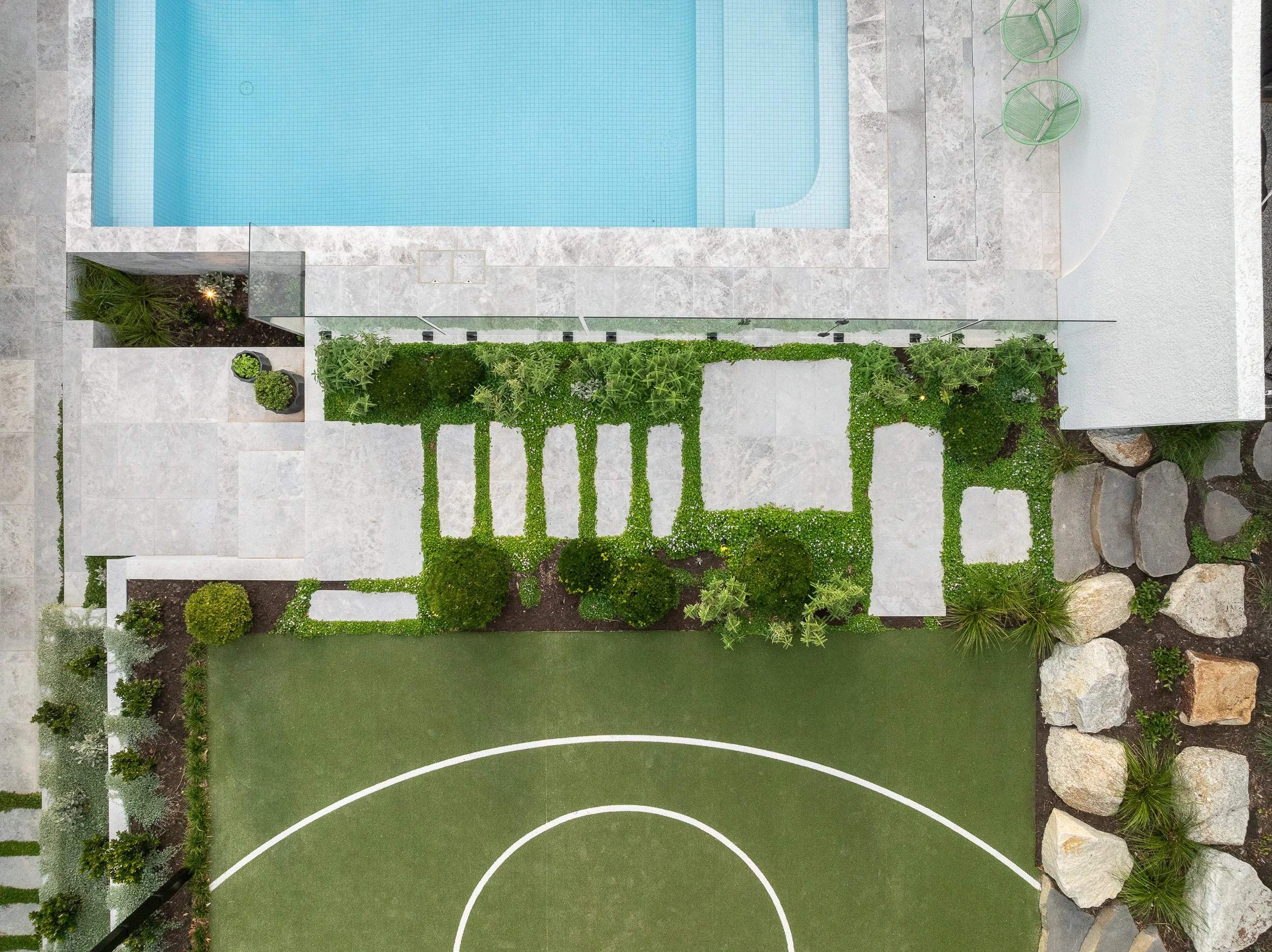
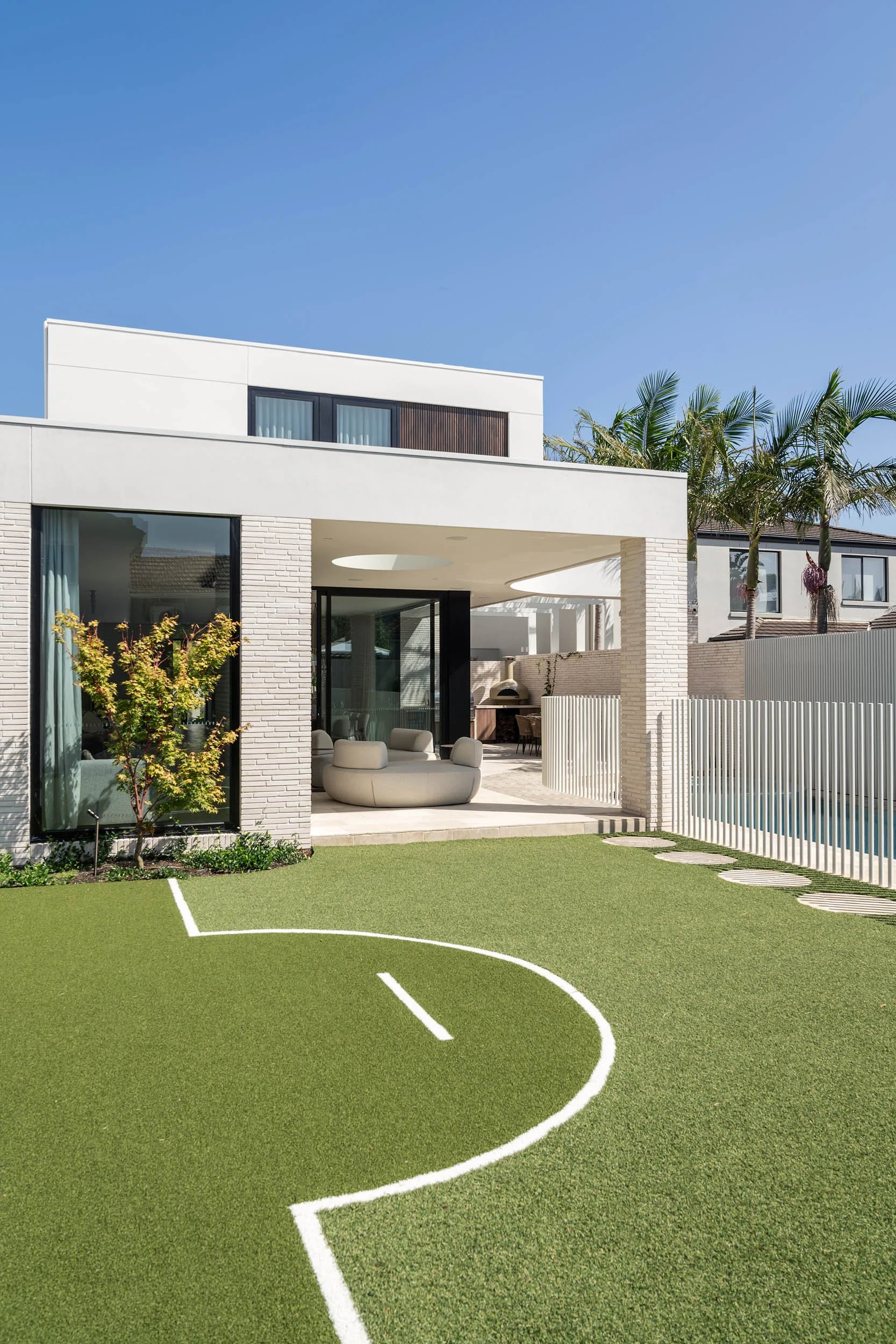
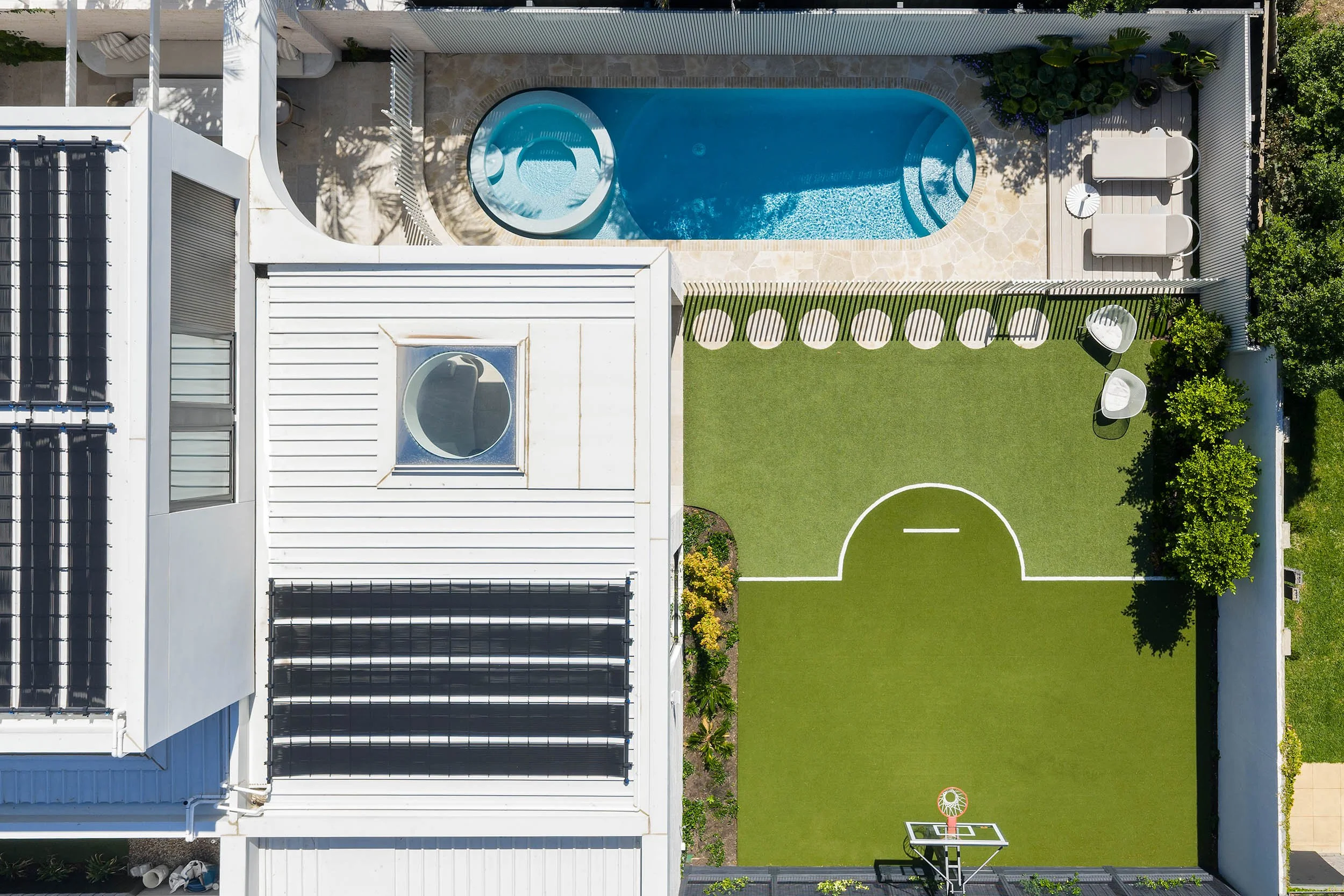
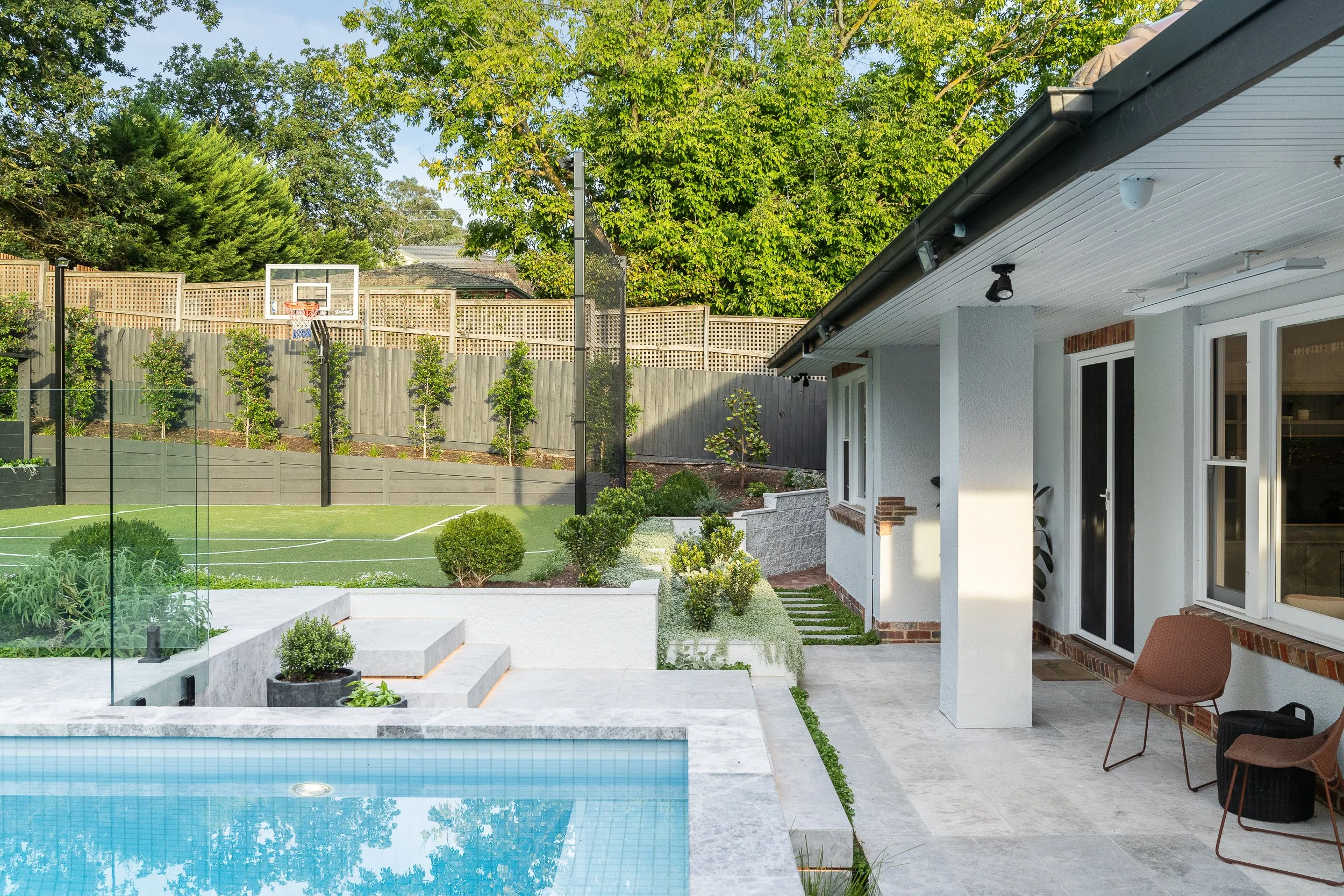
"We chose a grass court surface with minimal court markings. We wanted a more subtle design approach so the court didn't become an eyesore. The surface blends into the turf between the court and the pool — we matched it to an artificial turf so the levels would always be maintained and there's only a subtle difference between the two green spaces."
— Aimee Tarulli, Archer Interiors
Integrating a Basketball Court Into Your Landscape Design
The most successful residential basketball courts feel anchored rather than imposed. That means resolving drainage and slab detailing early in the design process, planning transitions between the court, lawn and entertaining areas carefully, and considering containment.
Orientation and Sightlines From the House
Where possible, avoid orienting the backboard toward main living spaces as what you see from the kitchen or lounge will shape how the court feels day to day.
Ball Containment and Perimeter Planting
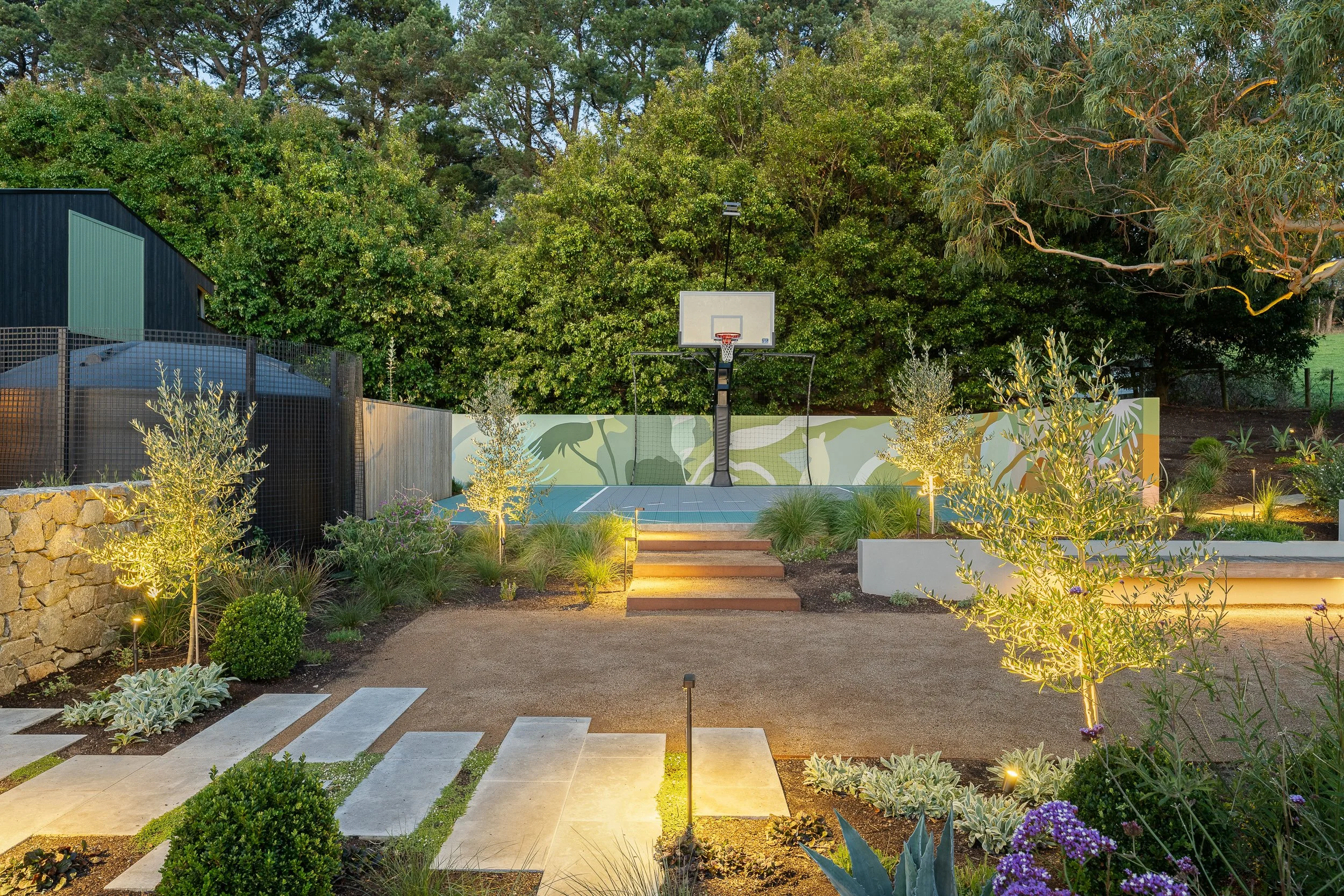
In most projects, ball containment is handled with discreet netting rather than solid barriers, the intention is to keep the ball in play without creating visual clutter. Planting around the perimeter softens edges without interfering with play.
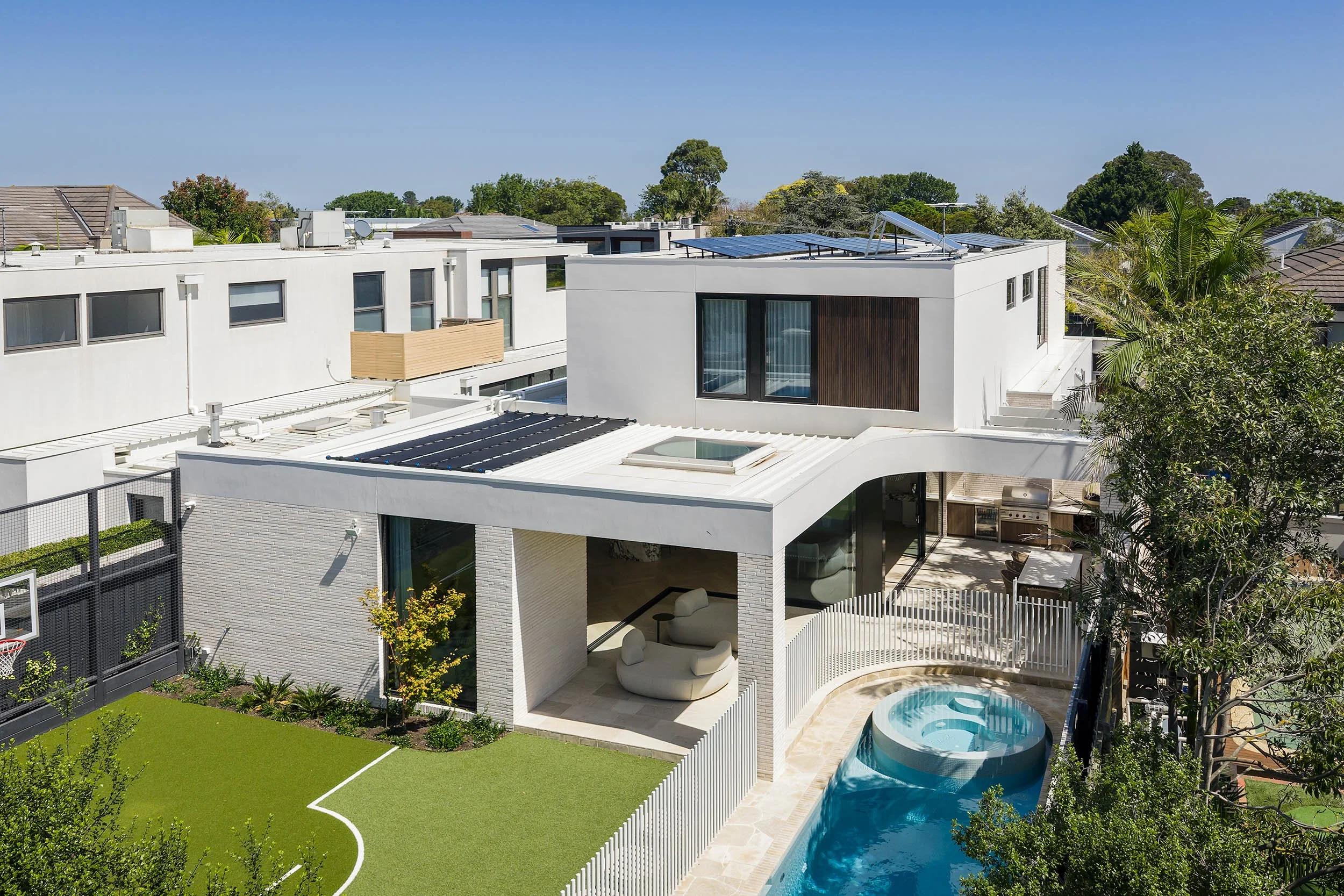
For Aimee, the positioning of the court at LUME House was as important as the surface itself:
"The size and location was suggested by Darin at Mint and it worked really well - the court is mostly concealed from the windows of the house, meaning you don't look directly onto it. I wanted it to take a subtle approach and not feel like a traditional basketball court."
— Aimee Tarulli
What Changes When a Court Is Part of the Design From the Start
The families who get the most out of their courts are the ones who included them in the brief from the beginning, not as an add-on but as a considered element within the overall landscape.
Kristy O’Sullivan from our Doreen project hadn't planned for a court initially, but once it was in the design it quickly became central to how the family used the space:
"We thought we needed one more area for the kids to run around, they had just started basketball so we thought, why not. Darin executed the design so well for what we needed as a growing family. I was speechless."
— Kristy O’Sullivan
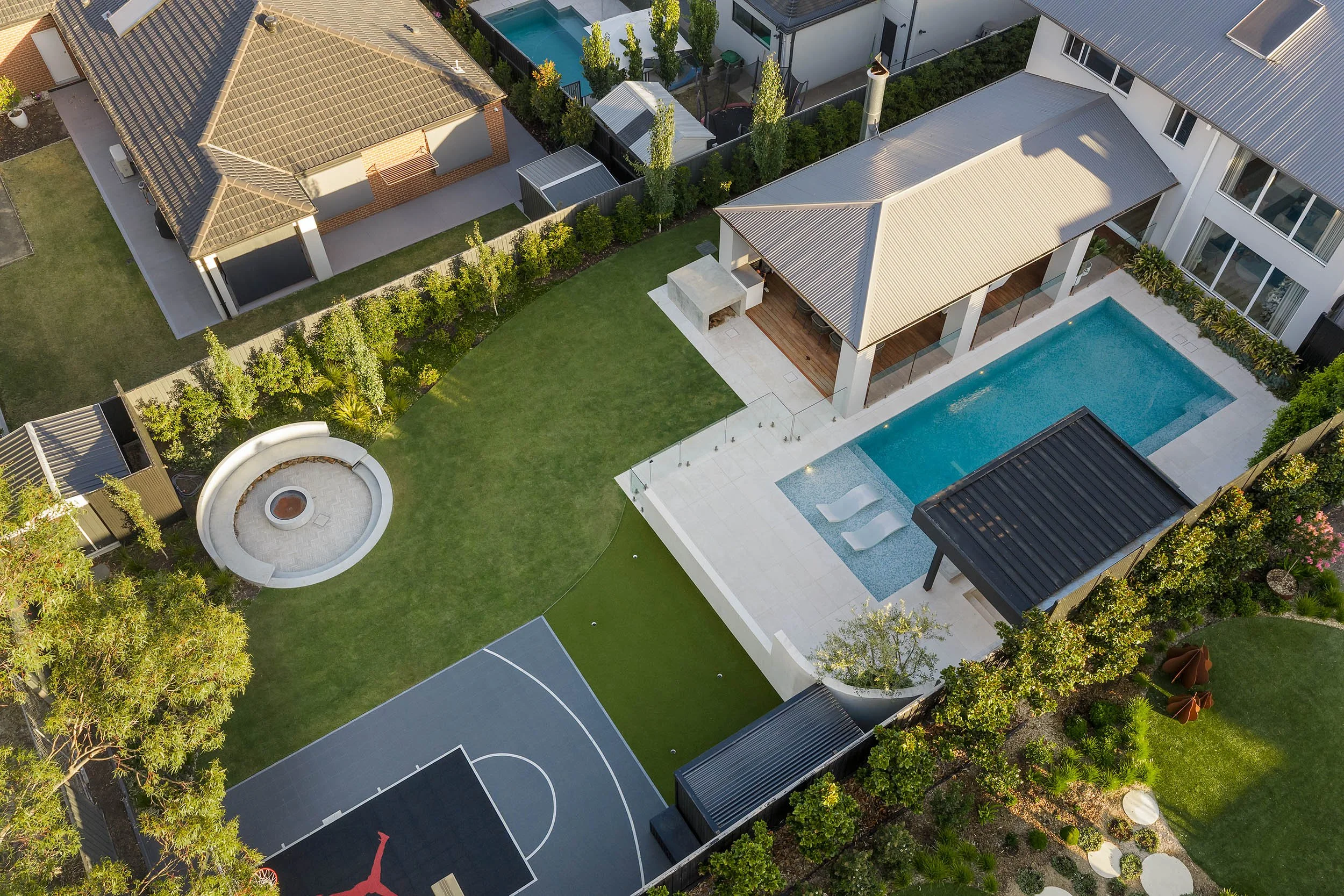
The result? A space that's become the social hub of the backyard:
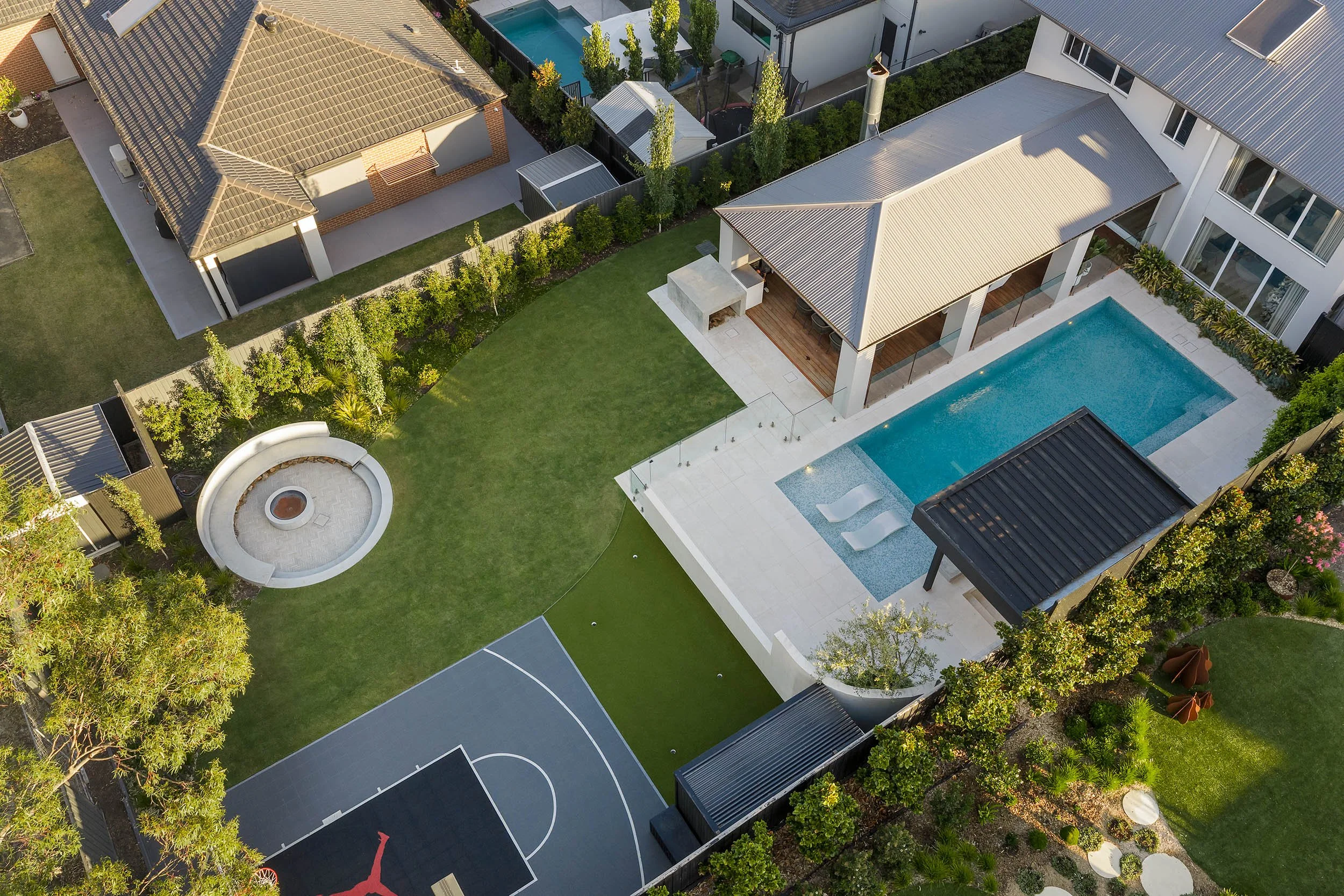
"The parents sit at the firepit enjoying a wine while the kids play basketball. Or the dads practice their golf putting skills beside the kids. We even sneak some pool time without getting splashed."
— Kristy O’Sullivan
The same is true at LUME House, where the court sits adjacent to the pool:
"We're all out there a lot more. The kids love practising and it's been really fantastic to see them have friends over and jump from the pool to the court and back again. There's such a great synergy between the pool and basketball court — the second pool gate that connects directly to the court was a brilliant idea."
— Aimee Tarulli
A Lifestyle Inclusion That Earns Its Place
The growing interest in residential basketball courts reflects a broader shift in how Australians are using their outdoor spaces. Gardens are no longer simply viewed, they are lived in.
When integrated thoughtfully, a backyard basketball court becomes more than a sports surface. It becomes part of the daily rhythm of the home.
Like all significant landscape elements, the key is early consideration. When resolved properly alongside pool, planting and entertaining zones, it feels inevitable rather than added.
Frequently Asked Questions
What is the minimum size for a backyard basketball court?
The smallest viable residential court is 7.5m x 5.8m, which allows for free throw practice, layups and short-range jump shots.
What is the best surface for a home basketball court?
It depends on your priorities. Painted concrete offers the most flexibility, sports turf integrates most naturally into a garden, and interlocking tiles offer the most court-like feel. Most designers recommend a surface that visually recedes into the landscape rather than dominating it.
How much does a residential basketball court cost in Australia?
Between $10k-$30k.
Does a basketball court add value to a home?
A well-integrated court that feels proportioned within the landscape generally adds value, particularly for family homes. Courts that dominate the garden or are poorly positioned can work against a sale.
Can a basketball court be hidden from view in a garden?
Yes. Orientation, sightlines and perimeter planting can significantly reduce the visual impact of a court from inside the home. The goal is for the court to feel anchored in the landscape rather than imposed on it.