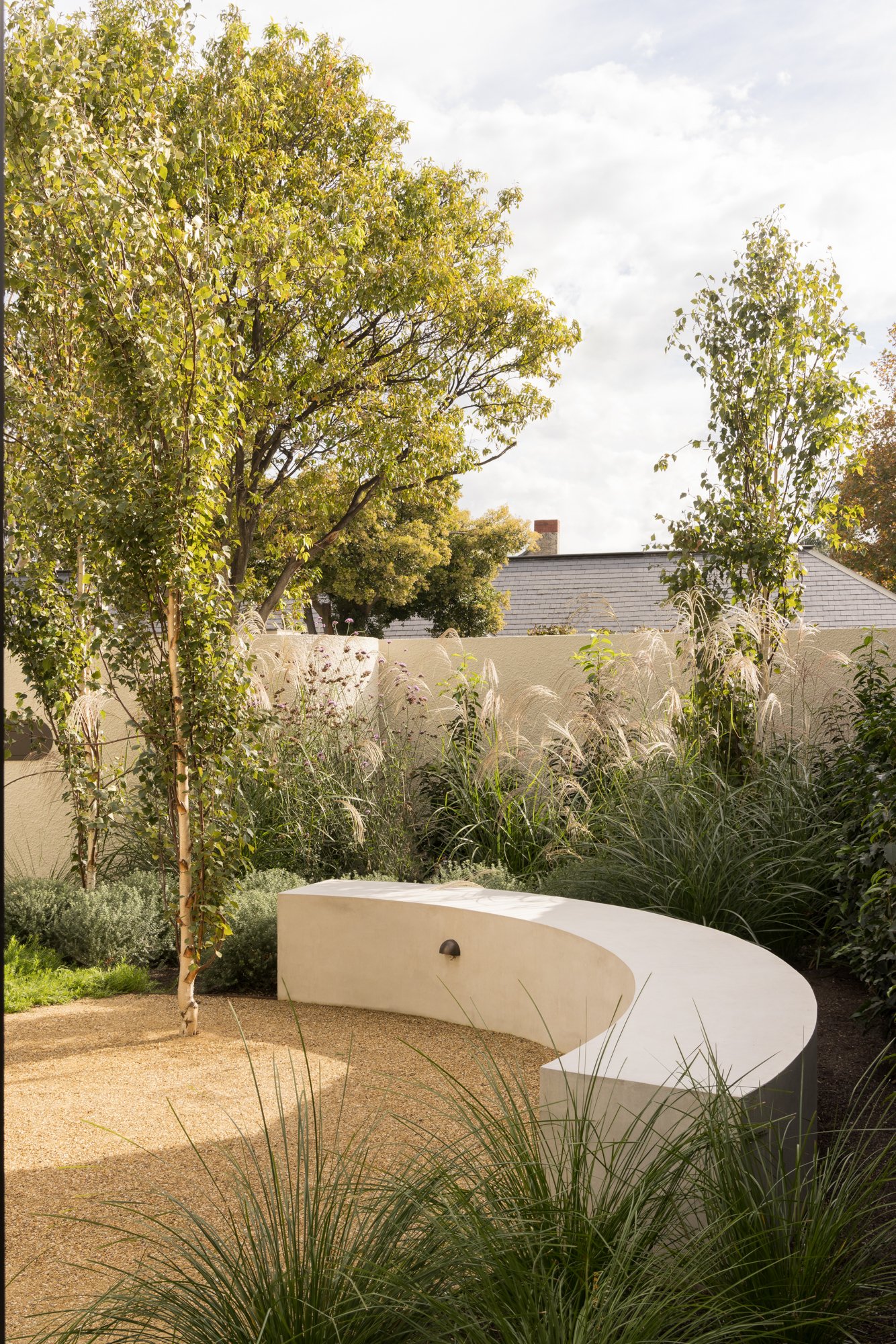
Straight lines have long been a feature of contemporary landscape design, particularly in gardens where the architecture is strongly geometric. Yet some of the most interesting spaces come from introducing a curve where you might ordinarily expect a straight edge.
It might be the outline of a lawn, the shape of a swimming pool or the way a terrace meets the garden. In other cases, curves are introduced through planting, stepping stones or a single architectural detail. They don't need to be used throughout the landscape to make an impact, and they certainly aren't reserved for large gardens or major renovations.
We've brought together ten examples from our own projects to show just how many opportunities there are to introduce curves into a garden.
1. Rethink the shape of your lawn
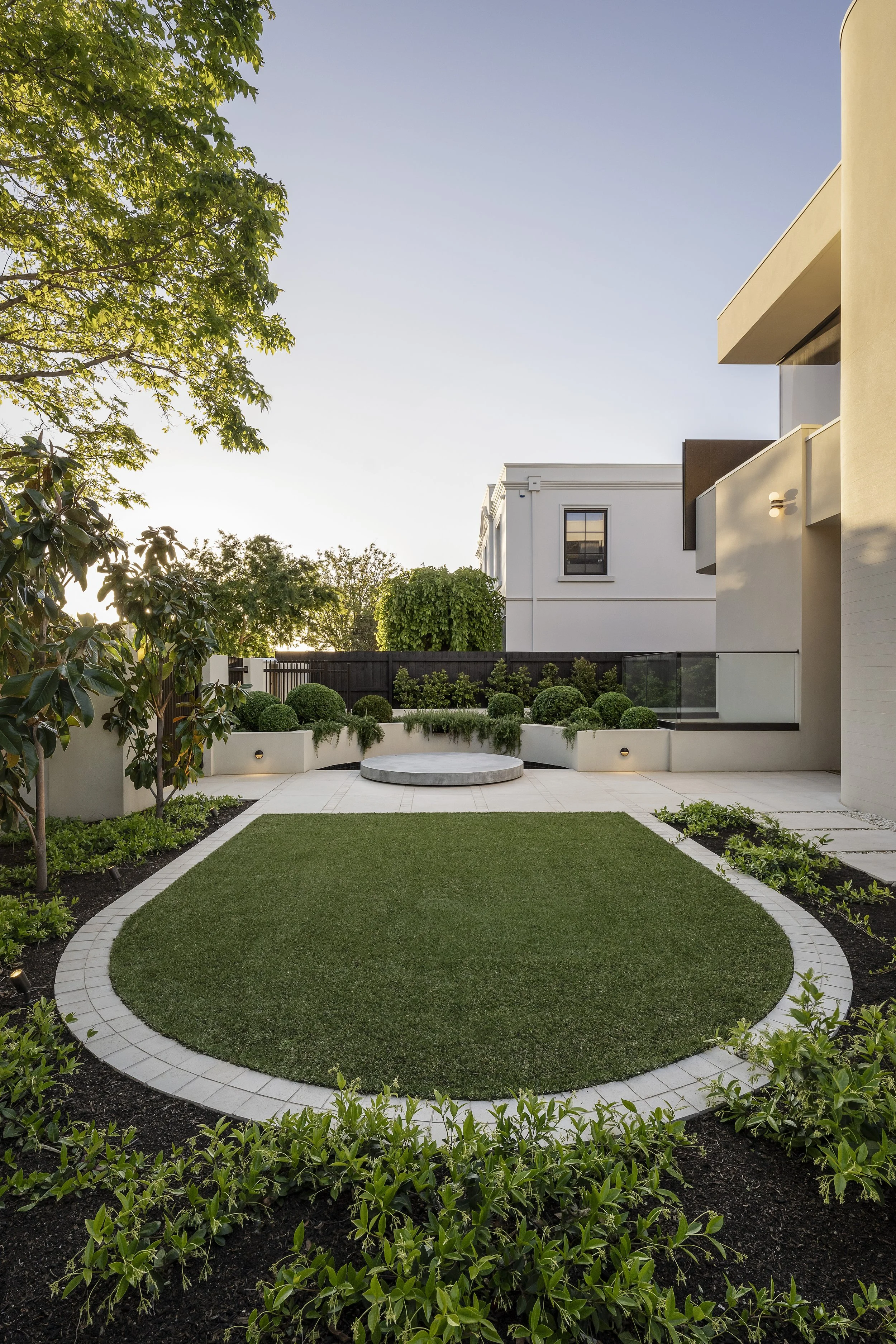
The lawn is often one of the largest uninterrupted surfaces in a residential garden, so its shape has a considerable influence on the overall layout. While rectangular lawns are a natural choice, particularly on suburban blocks, there's no reason the grass needs to follow the same lines as the property boundaries.
In this garden, a curved lawn edged with paving creates a generous open space while allowing the surrounding planting beds to take on a different shape. The curve provides a lovely contrast to the home's contemporary architecture, without compromising the practicality of the lawn itself.
2. Look beyond the rectangular swimming pool
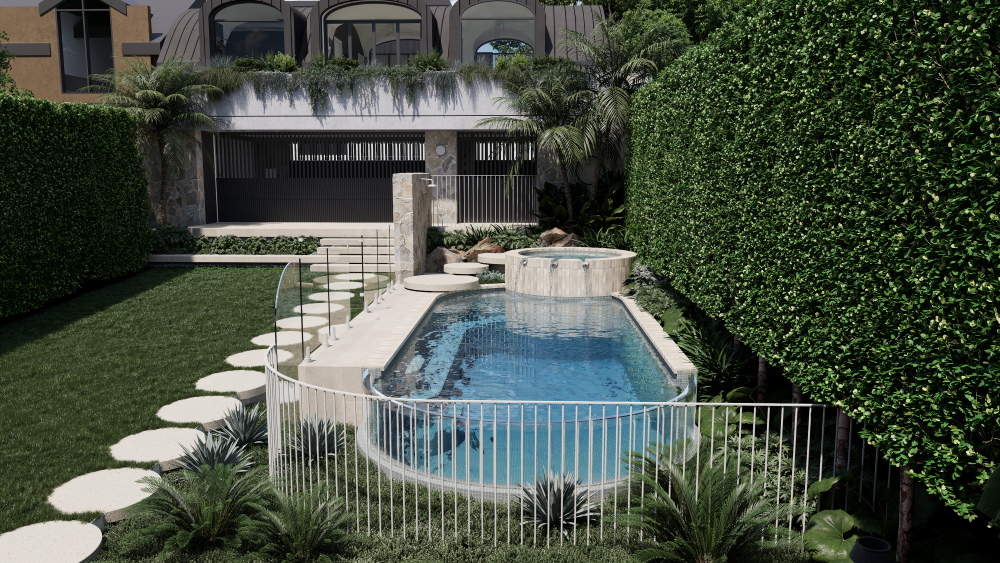
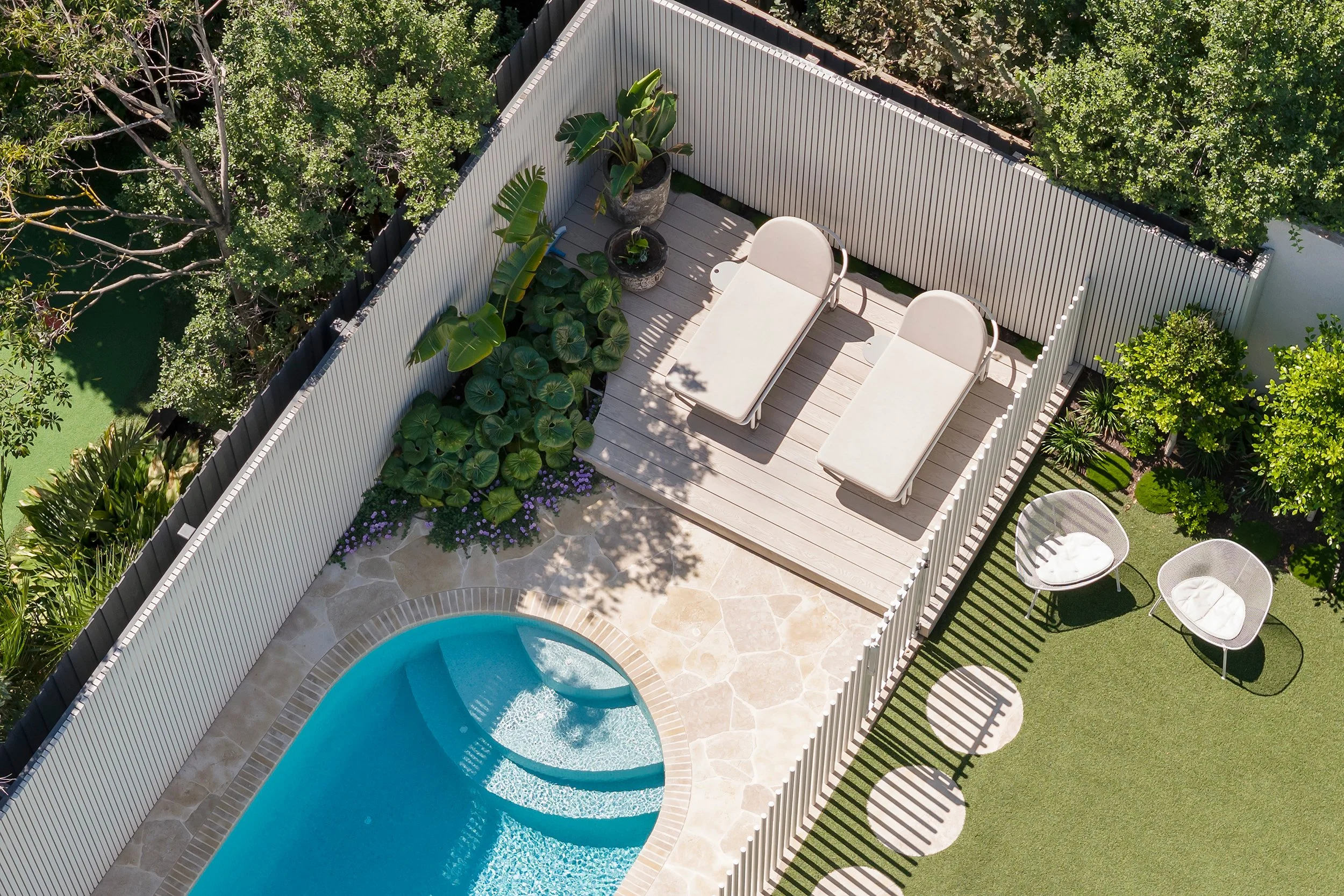
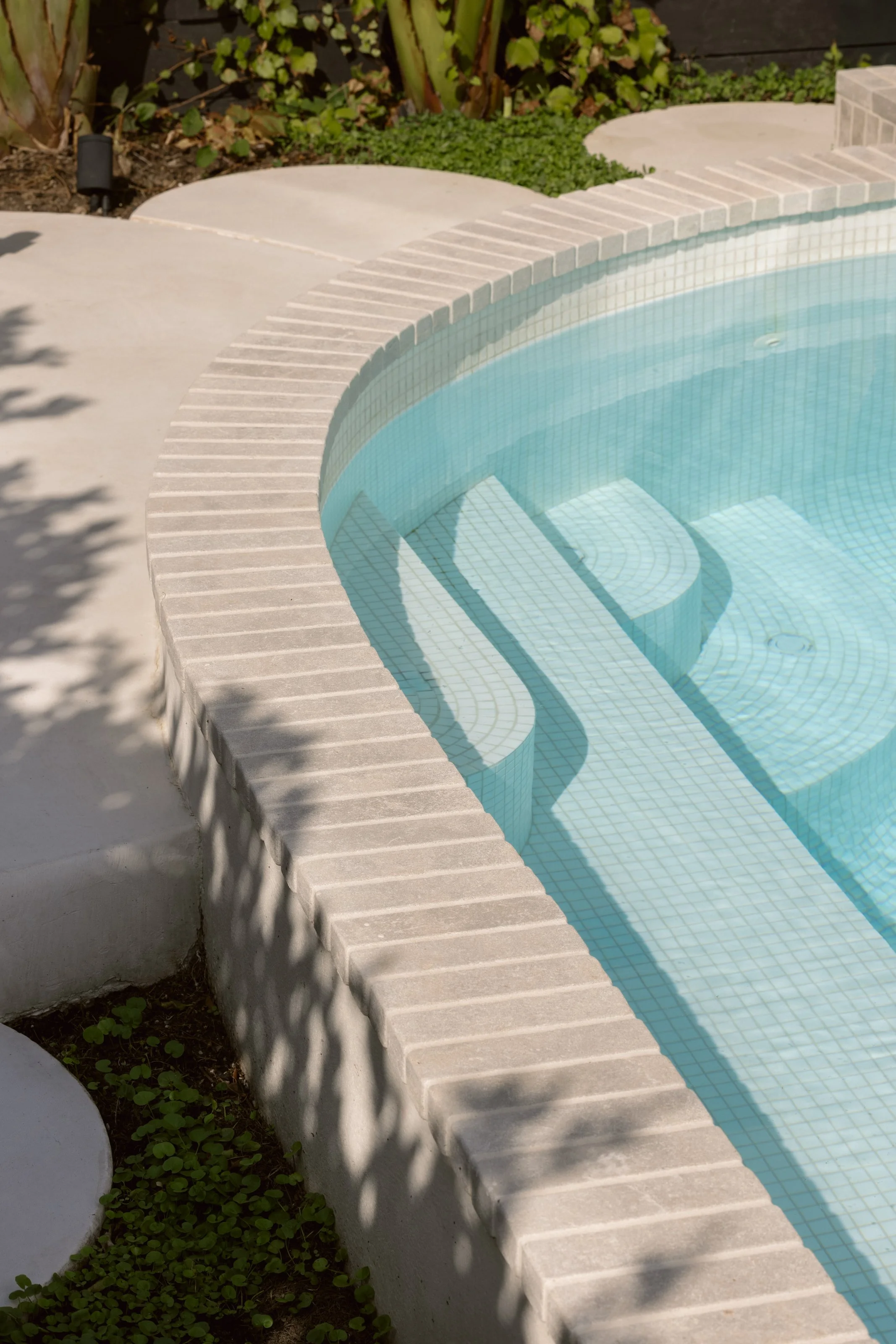
The familiar rectangular swimming pool certainly has its place, but a curved pool can offer something quite different, particularly when its shape is considered alongside the surrounding landscape rather than as a separate element.
Here, the sweeping pool edge is followed by pale brick coping, creating a continuous curve that becomes a defining feature of the outdoor space. The choice of materials is important, as is the detailing required to carry the curve through the paving and pool surrounds. It's the sort of decision best made early in the design process, when the relationship between the pool, garden and entertaining areas can be considered together.
3. Let the planting introduce the curves
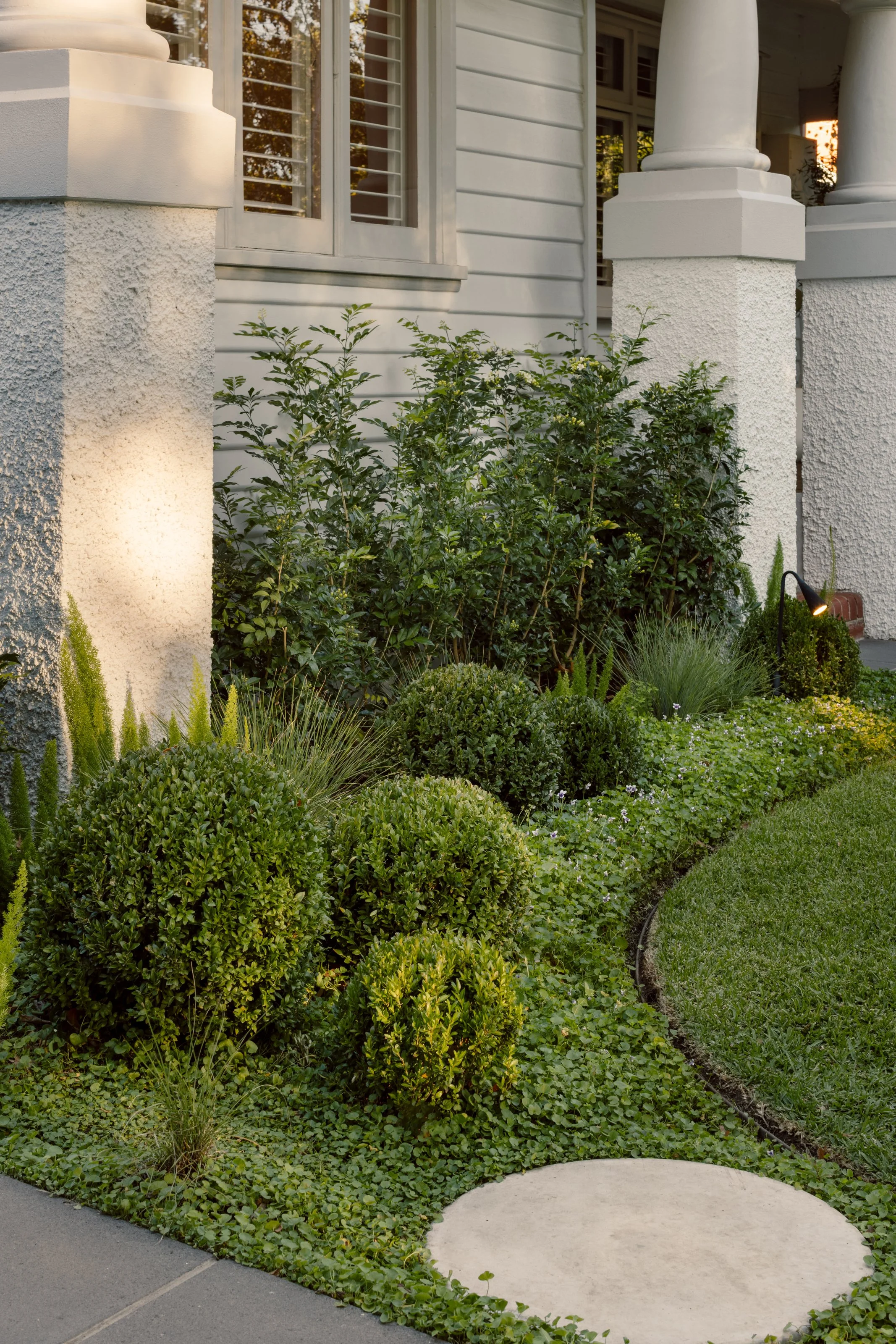
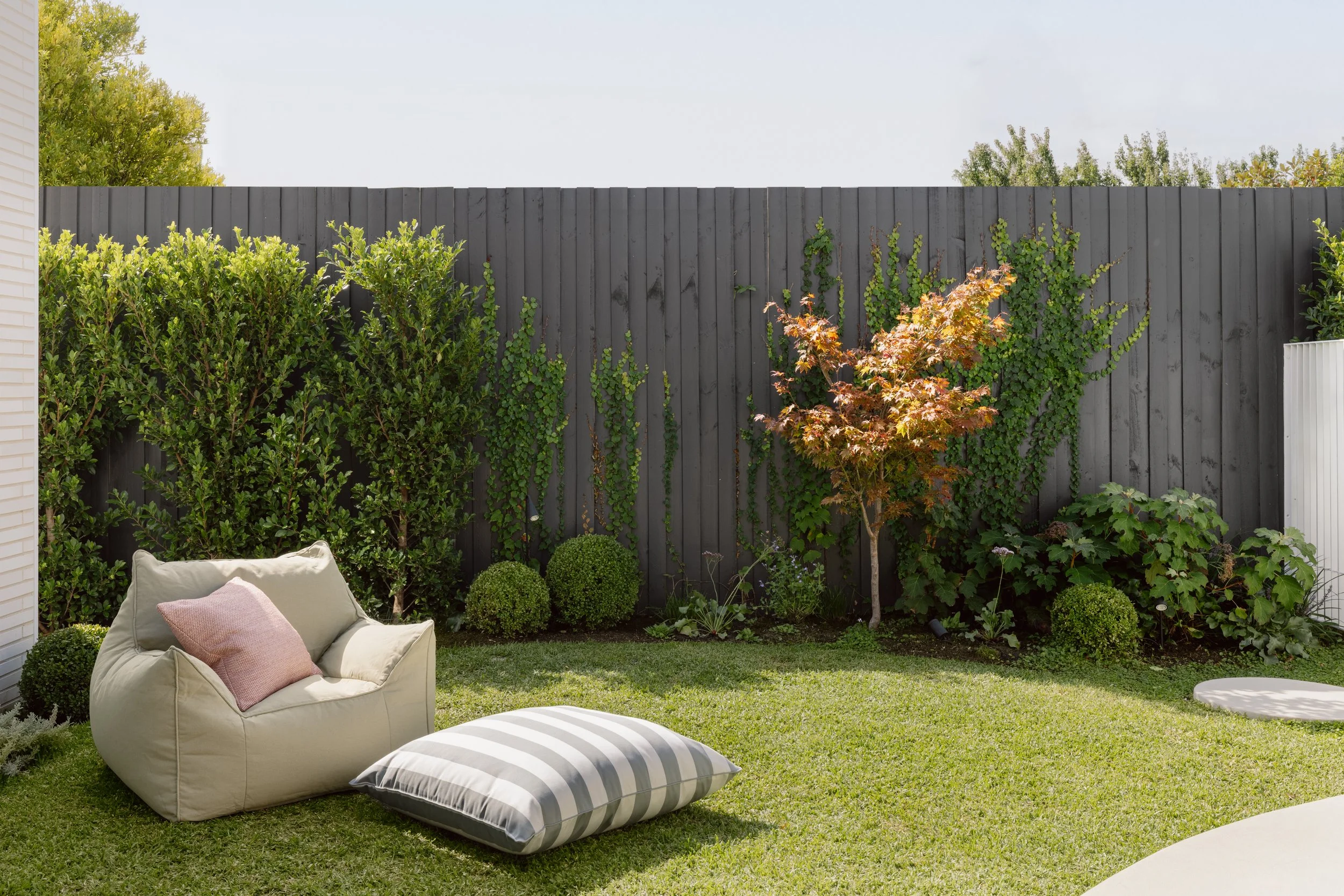
One of the simplest ways to introduce curves is through planting, and clipped Buxus spheres are a particularly good example. Their rounded forms provide a sense of structure among more relaxed planting, while offering a contrast to straight paths, walls and building lines.
In this garden, the Buxus brings a softer, more sculptural quality to the planting without changing the underlying layout. The effect comes from the repetition of rounded forms at different sizes, which gives the planting a sense of rhythm and makes the individual plants feel part of a larger composition.
4. Start with stepping stones
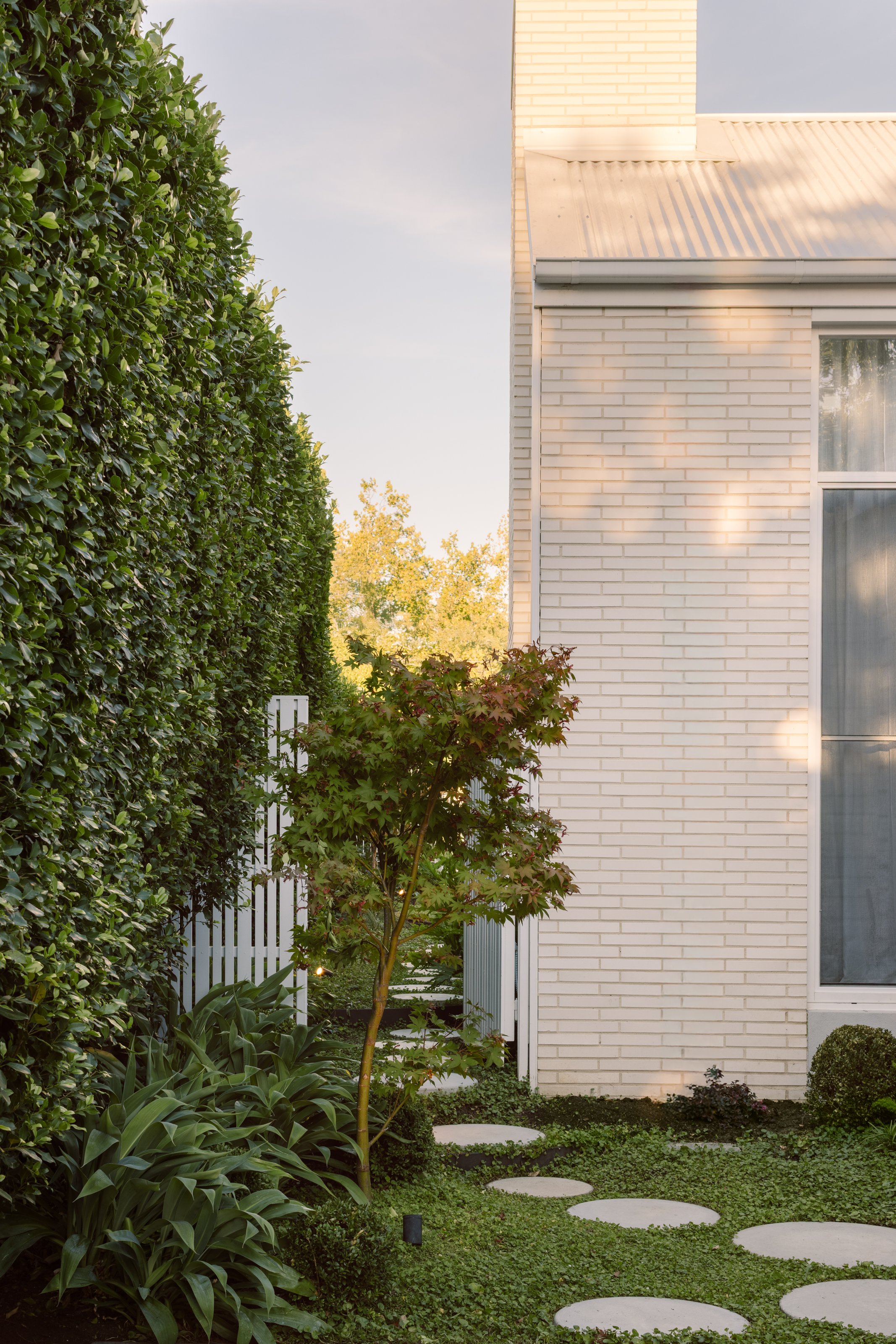
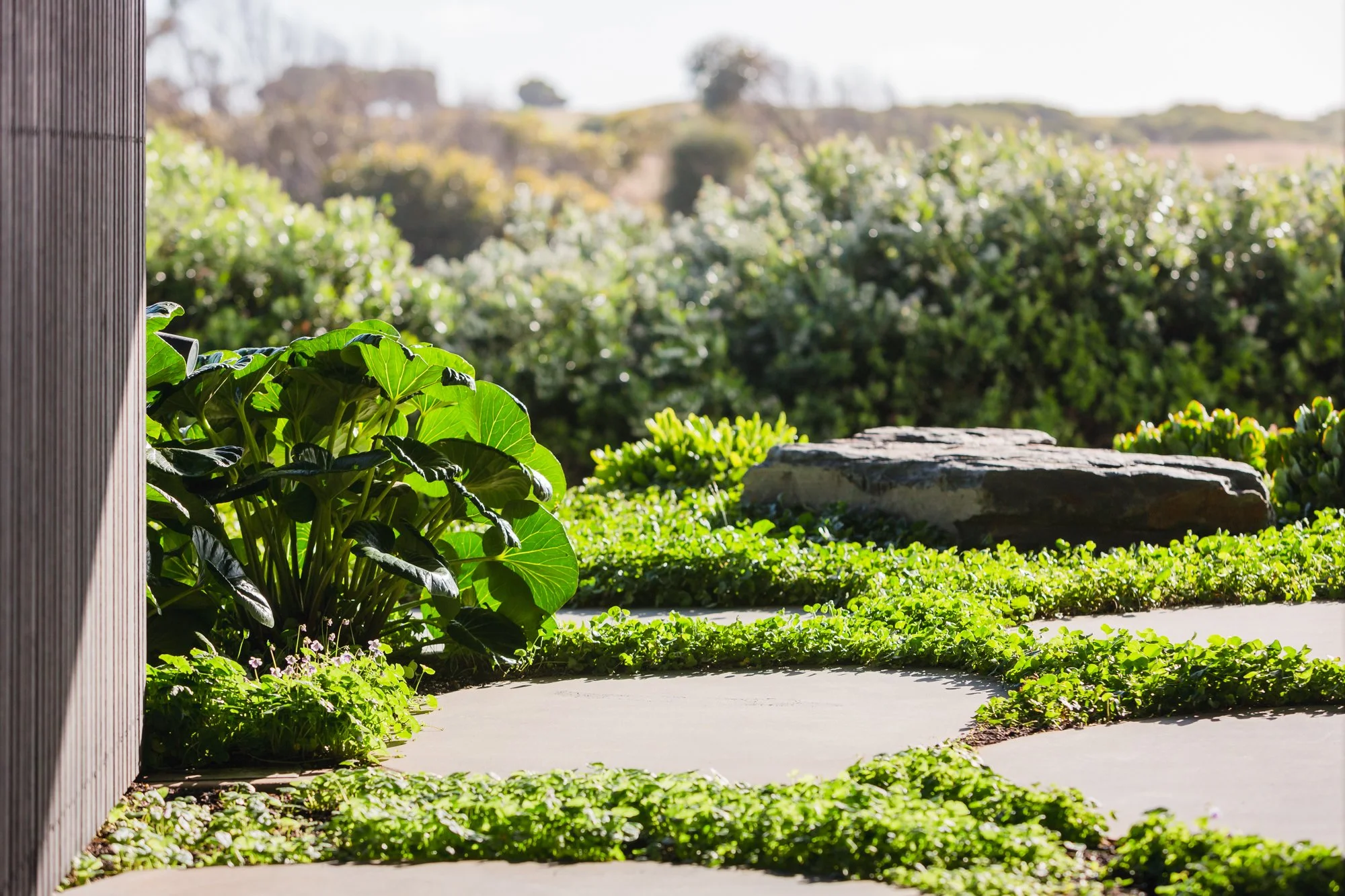
Not every curved element requires extensive landscape works. Circular stepping stones are a relatively straightforward way to introduce a different shape, whether they're used through a lawn, within gravel or surrounded by low-growing groundcovers.
They're also a good example of how a small design decision can influence the character of a space. In these garden, the round or curved edge steppers create an informal pathway providing a practical connection while allowing the surrounding greenery to remain the dominant feature. Getting the spacing right is essential, both for comfortable movement and for the finished appearance of the path.
5. Consider a curved deck
Decking is typically associated with straight lines, largely because of the material itself and the way decks connect to the architecture of a home. A rounded edge, however, can completely change the relationship between the deck and the garden.
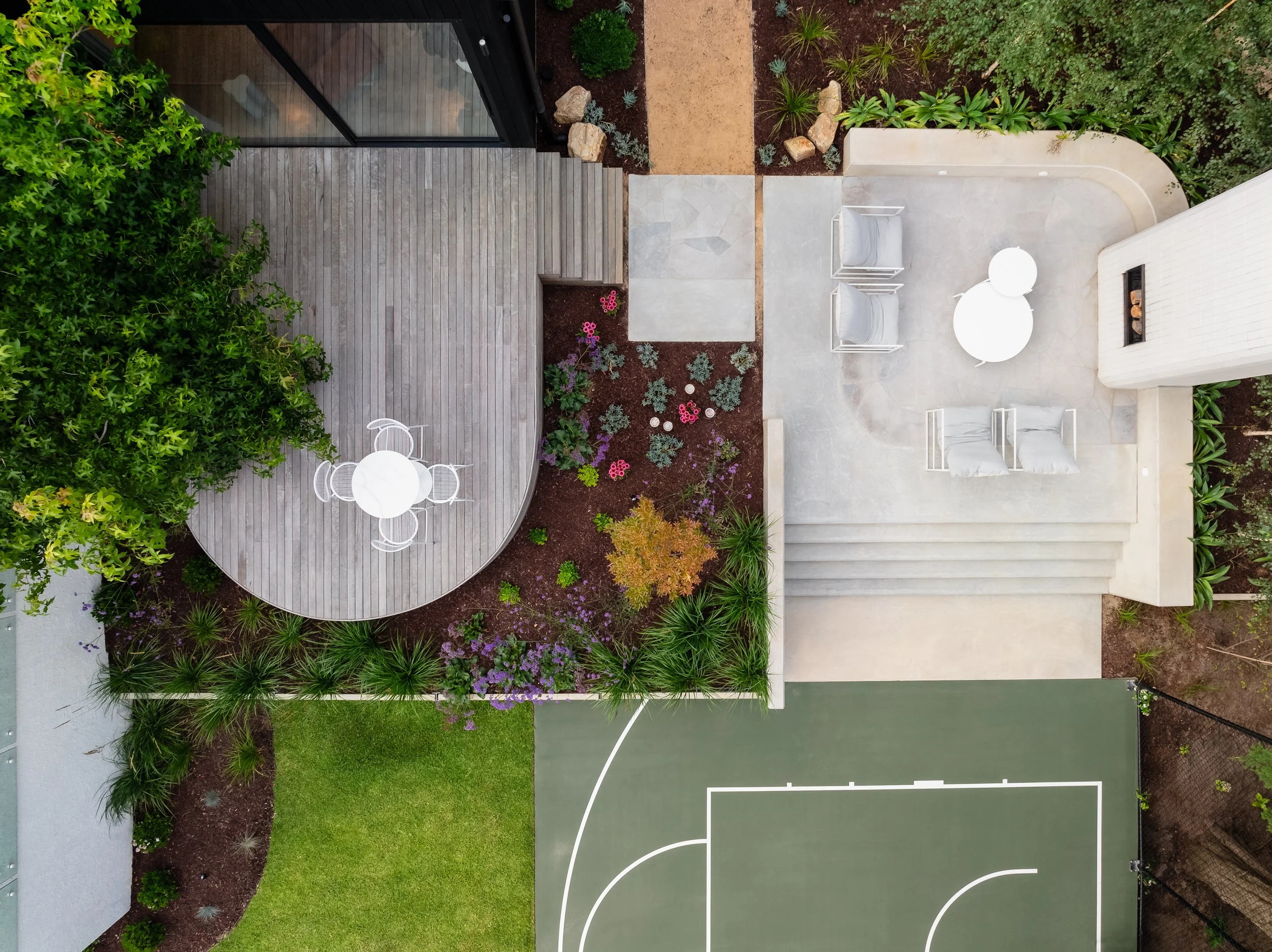
Viewed from above, this timber deck has a beautifully defined curved edge that sits against the surrounding planting and lawn. There's still plenty of room for outdoor dining, but the overall shape feels less rigid than a conventional rectangular platform. It's a detail that needs to be resolved carefully during design and construction, particularly where the timber boards meet the curved perimeter.
6. Soften the edge of an alfresco area
The point where an alfresco area meets the garden is an opportunity that's often overlooked. Rather than finishing the paving in a straight line, a curved edge can create a more interesting transition between the built space and the landscape.
In this project, the curved terrace and steps introduce a softer form against the straight lines of the home. The paving still provides a generous, practical outdoor dining area, but its edge has been shaped to respond to the garden rather than simply extending the geometry of the building. It's a subtle distinction, although one that has a significant influence on how the two spaces sit together.

7. Think differently about pool fencing
Pool fencing is an essential part of any swimming pool design, although it doesn't necessarily need to be treated as a straight boundary running across the garden.
Curved pool fencing can respond to the layout of the pool and surrounding landscape, particularly where a more fluid boundary is desirable. In this project, black vertical battens follow a gentle curve through the planting, creating a distinctive architectural element without visually dominating the garden. The fine vertical lines work particularly well against the natural forms of the trees and surrounding plants.
As with any pool barrier, the design must also satisfy the relevant safety requirements, so its shape and construction need to be considered from the outset.

8. Introduce one carefully considered detail
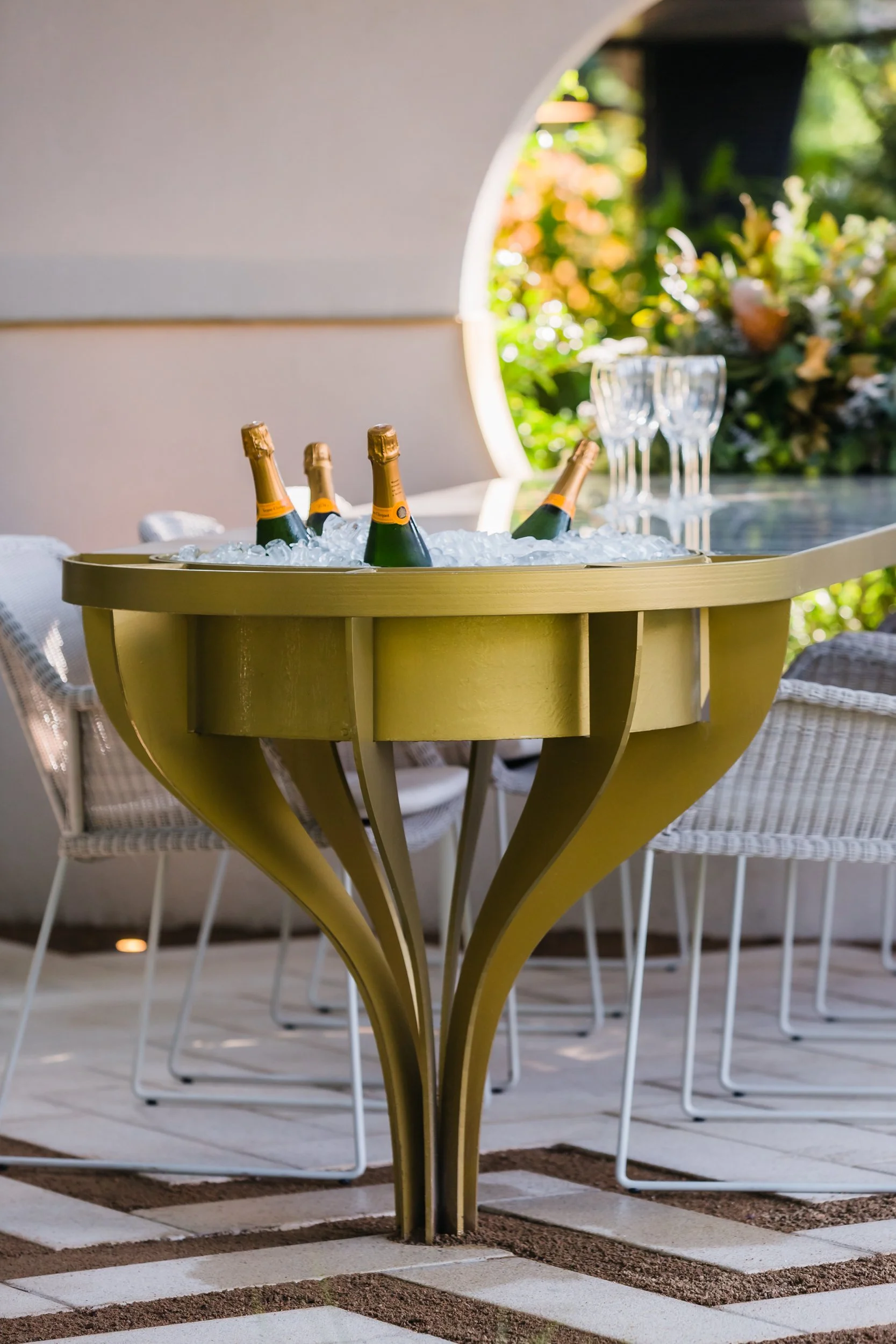
Sometimes the opportunity to introduce a curve is much smaller than the overall garden layout. It might be a built-in bench, the base of an outdoor kitchen or a custom piece of furniture designed specifically for the space.
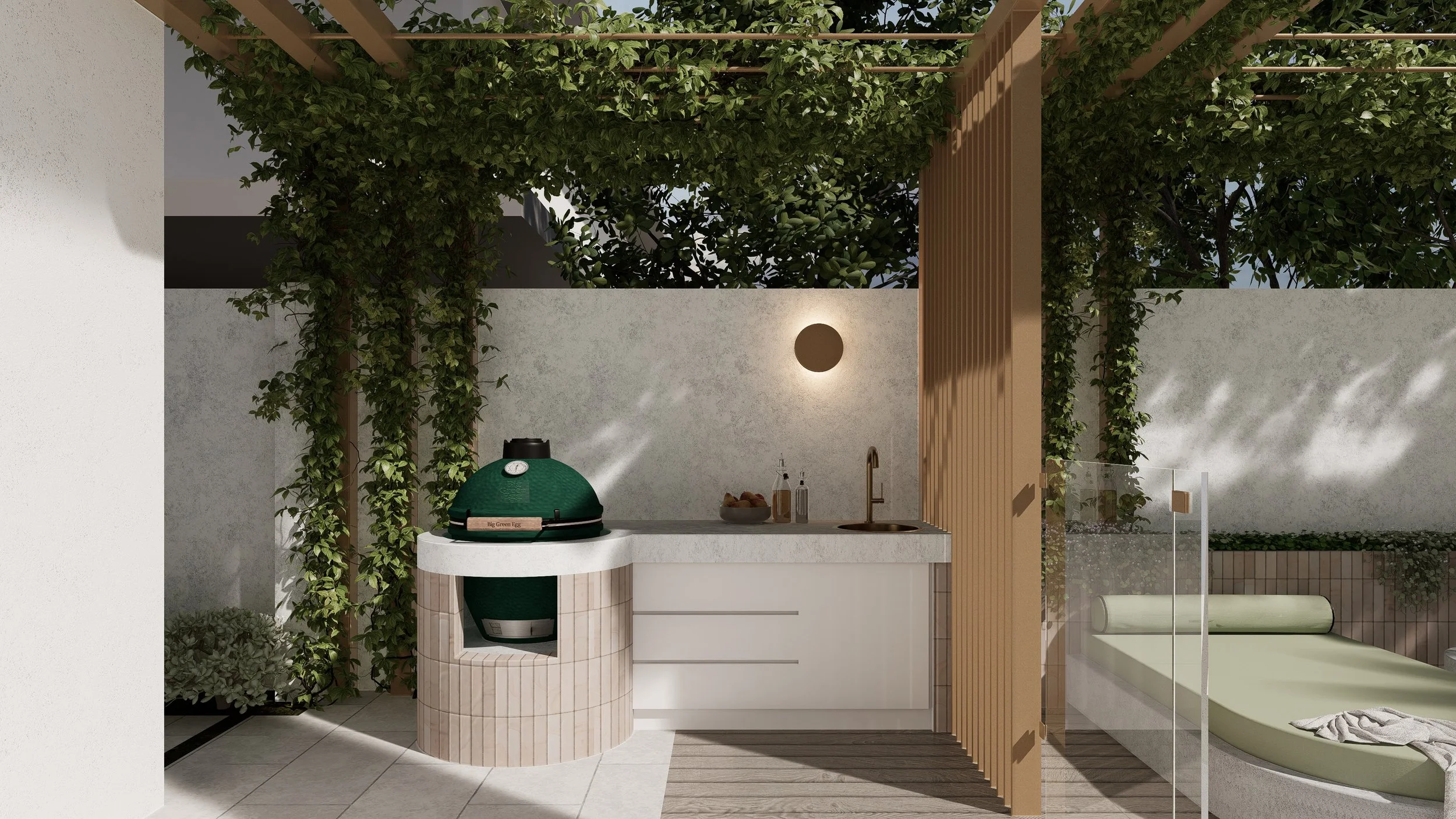
The rounded, tiled base of this outdoor kitchen is a good example. Set within an otherwise rectilinear arrangement of cabinetry, paving and pergola, the curved detail introduces a subtle change in geometry. It's not a particularly large element, but it adds character to the design and demonstrates how curves can be incorporated into an existing architectural language.
9. Create a focal point with a circular water feature
Water features offer an opportunity to introduce a sculptural element into the garden, particularly when the shape is simple and the materials are carefully selected.
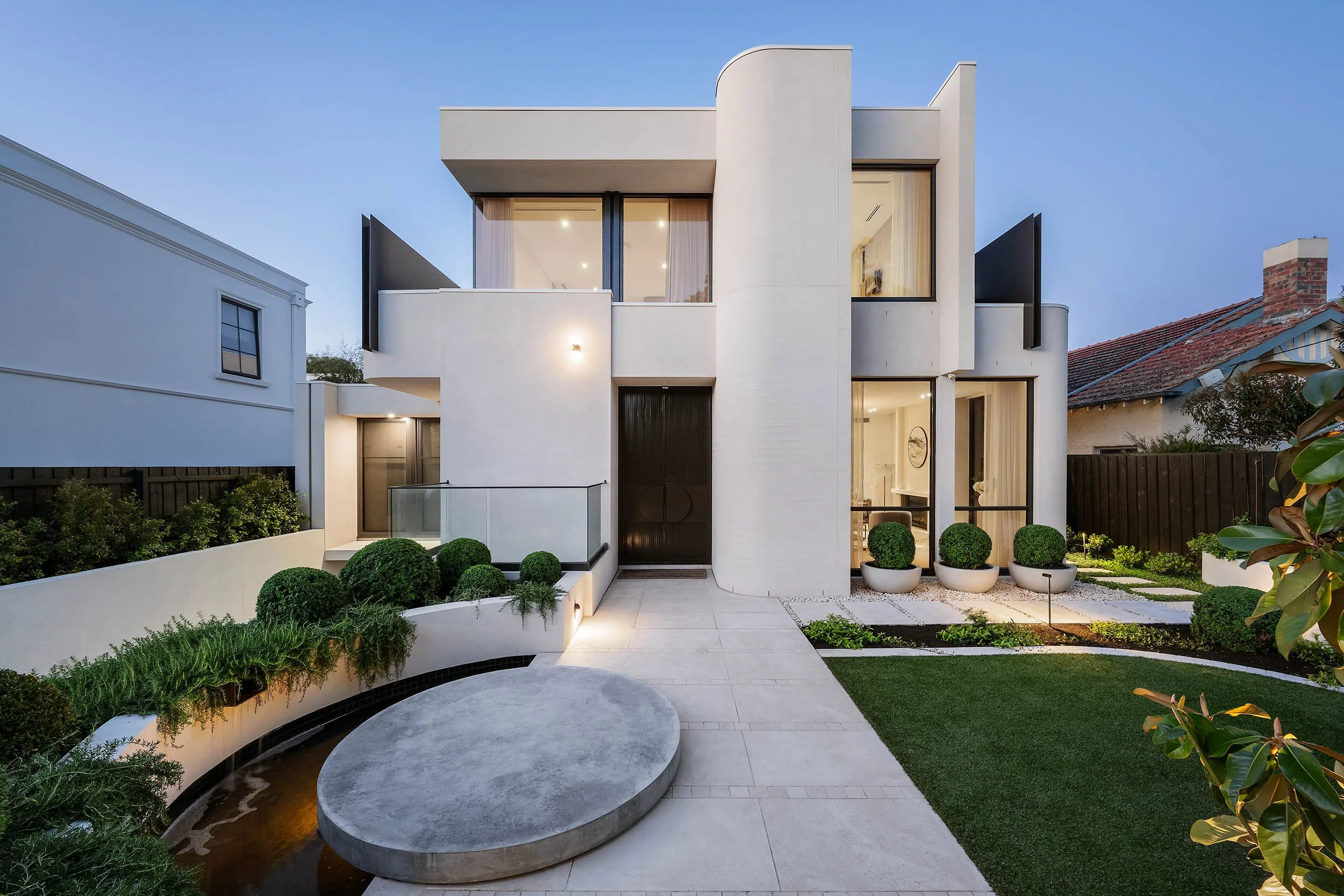
In this courtyard, a circular concrete disc forms part of a contemporary water feature, surrounded by paving and clipped planting. The strong circular form contrasts with the straight architectural lines, while the restrained materials allow the feature to sit comfortably within the broader design. Rather than relying on an elaborate water display, the interest comes from the relationship between the geometry, the water and the surrounding landscape.
10. Bring people together around a circular firepit
Some outdoor spaces naturally lend themselves to a circular arrangement, and a sunken firepit is one of them. Positioning seating around a central fire creates a gathering place that feels distinct from the rest of the garden, particularly when the change in level is incorporated into the design.
Here, curved concrete seating follows the shape of the sunken space, with the firepit positioned at its centre. The arrangement allows people to sit comfortably around the fire while the surrounding lawn and planting remain open. Built-in log storage and the carefully resolved changes in level make this a particularly considered example of how curves can shape an outdoor entertaining area.

Bringing curves into your garden design
Introducing curves doesn't mean moving away from straight lines altogether. In fact, some of the most interesting gardens use a combination of both.
A curved lawn against the clean lines of a contemporary home, rounded planting alongside a straight pathway, or a softer edge to an outdoor entertaining area. There are plenty of ways to introduce curves, whether you're starting a landscape design from scratch or making changes to an existing garden.
Explore more of our landscape design projects for inspiration, or get in touch to discuss your own garden.